Stitch Linen With Ease: Aida vs Linen for Cross-Stitchers
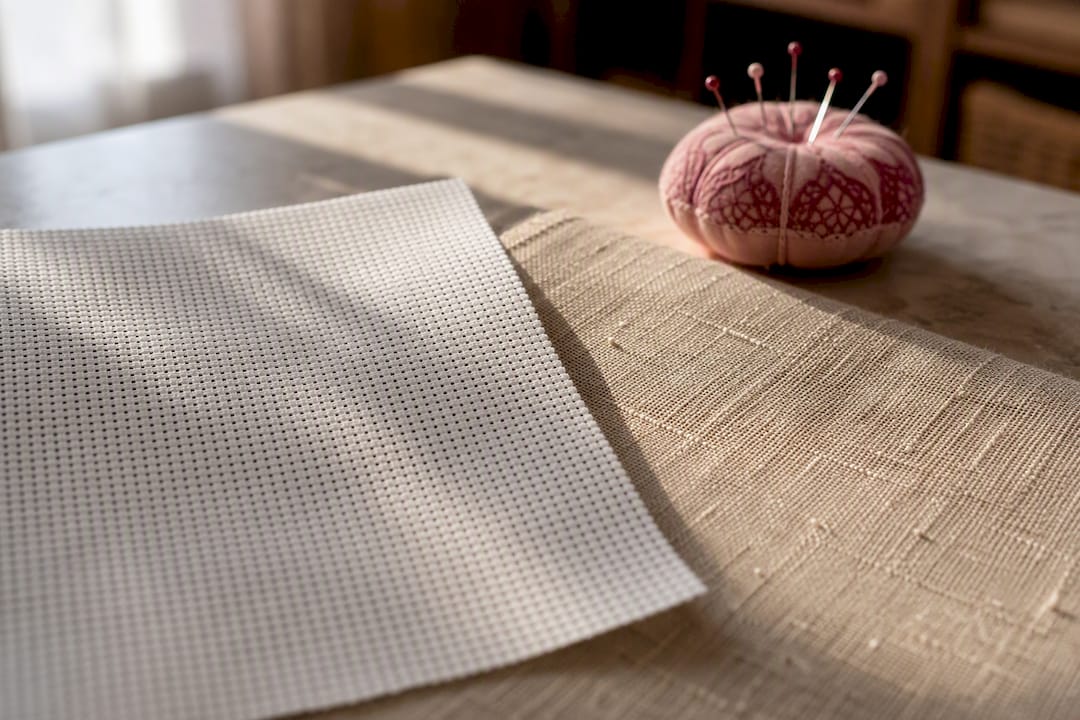
Stitch Linen With Ease: Aida vs Linen for Cross-Stitchers ! Aida and linen fabrics side by side Choose Aida when you want speed and forgiveness: it's the easiest fabric to count, common in kits, and cheaper per yard.
Stitch Linen With Ease: Aida vs Linen for Cross-Stitchers
Choose Aida when you want speed and forgiveness: it's the easiest fabric to count, common in kits, and cheaper per yard. Choose linen when you want a softer drape and that heirloom, museum-piece look, and you don't mind stitching over threads instead of into visible holes. Count equivalence matters more than brand loyalty here, and the right pick usually comes down to your project, your eyesight, and how much counting frustration you're willing to trade for a finer finish.
TL;DR:
- Aida’s common counts range from 11 to 18 with a block grid structure, making it easier to count but resulting in a more graphic look.
- Linen’s higher counts (28 to 40) provide a softer, more organic appearance, but require finer needles and more careful counting due to natural slubs.
- Matching fabric counts across types involves dividing by two when stitching linen over two threads, with 14ct Aida roughly equivalent to 28ct linen.
- Aida is less expensive, widely available, and better suited for beginner kits and full coverage projects, while linen is pricier and ideal for heirloom, sampler, or detailed work.
- Proper finishing involves gentle washing and pressing for linen, with framing techniques that accommodate its drape, whereas Aida’s stiffness simplifies mounting behind glass.
Table of Contents
- Aida vs Linen: The Practical Differences
- How Fabric Counts Translate Between Aida and Linen
- Aida's Strengths and Where It Falls Short
- Linen's Look, Its Learning Curve, and When It Pays Off
- A Checklist for Picking the Right Fabric
- Expert Tips to Make Linen Less Intimidating
- How to Wash, Press, and Frame Each Fabric
- When I Reach for Aida, and When I Reach for Linen
- Plan Your Fabric Switch Before You Buy
- Sources
Aida vs Linen: The Practical Differences
Aida is a cotton fabric woven into a visible grid of small blocks, each with an obvious hole at the corners. That block weave forms obvious squares and holes, which is exactly why it dominates beginner kits and mass-market patterns. Linen, by contrast, is a single-thread evenweave made from flax fibers, and it carries natural thickness variations called slubs. Those slubs give linen its characteristic texture but also make the fabric trickier to count than a manufactured grid.
The visual payoff differs too. Aida's holes stay visible in unstitched background areas, giving finished pieces a slightly graphic, blocky quality. Linen and its cousin, evenweave, produce a smoother surface because stitches sit on top of woven threads rather than inside punched holes, which is why fractional stitches and backstitch detail look cleaner on linen than on Aida.
Cost and availability tip firmly toward Aida. It's manufactured widely in dozens of counts and colors and generally costs less than natural linen, which is imported, hand-finished in smaller runs, and priced accordingly.
- Weave structure: Aida uses a block grid; linen uses single threads woven one at a time, with visible slubs
- Background look: Aida shows holes even where unstitched; linen and evenweave look smoother and more fabric-like
- Typical counts: Aida commonly comes in 11, 14, 16, and 18 count; linen commonly runs 28 to 40 count
- Cost: Aida is cheaper and more widely stocked; linen costs more and ships from fewer specialty suppliers
- Best for: Aida suits kits and full coverage; linen suits samplers, fractional stitches, and heirloom pieces
How Fabric Counts Translate Between Aida and Linen
"Count" refers to the number of stitchable units per inch. On Aida, that's one stitch per block. On linen and evenweave, stitchers usually work "over two" threads, meaning each cross stitch covers two threads in each direction instead of one.
That's why the math isn't as simple as matching numbers. Stitching over two threads on 28-count evenweave produces the same stitch size as 14-count Aida, since 28 divided by 2 equals 14. Follow the same logic for other counts:
- 14ct Aida ≈ 28ct evenweave or linen, stitched over two
- 16ct Aida ≈ 32ct linen, stitched over two
- 18ct Aida ≈ 36ct linen, stitched over two
Higher linen counts pack more detail into the same physical space, which shrinks the finished piece and strains the eyes more. If you're not sure how a count change affects your finished dimensions, Flossom's fabric size calculator does that math for you before you buy.
Aida's Strengths and Where It Falls Short
Aida earns its reputation as the default beginner fabric for good reason. The grid is forgiving, the price is low, and 14 and 16 count both strike a comfortable balance between visible detail and manageable stitch size.
- Strengths: easy to count, tolerant of stitching mistakes, affordable, sold in nearly every craft store
- Weaknesses: visible holes in unstitched areas, a blockier look on designs with lots of open background, and stiffness that varies by brand and batch
Aida fits kits, first projects, and any full-coverage design where you won't see much bare fabric anyway. It handles frequent handling reasonably well, so a hoop works fine for smaller pieces, though a frame keeps larger ones from distorting.
Pro Tip: If you're stitching a design with a lot of open background, size up your Aida count. The holes shrink and the piece reads less like a grid from a normal viewing distance.
Linen's Look, Its Learning Curve, and When It Pays Off
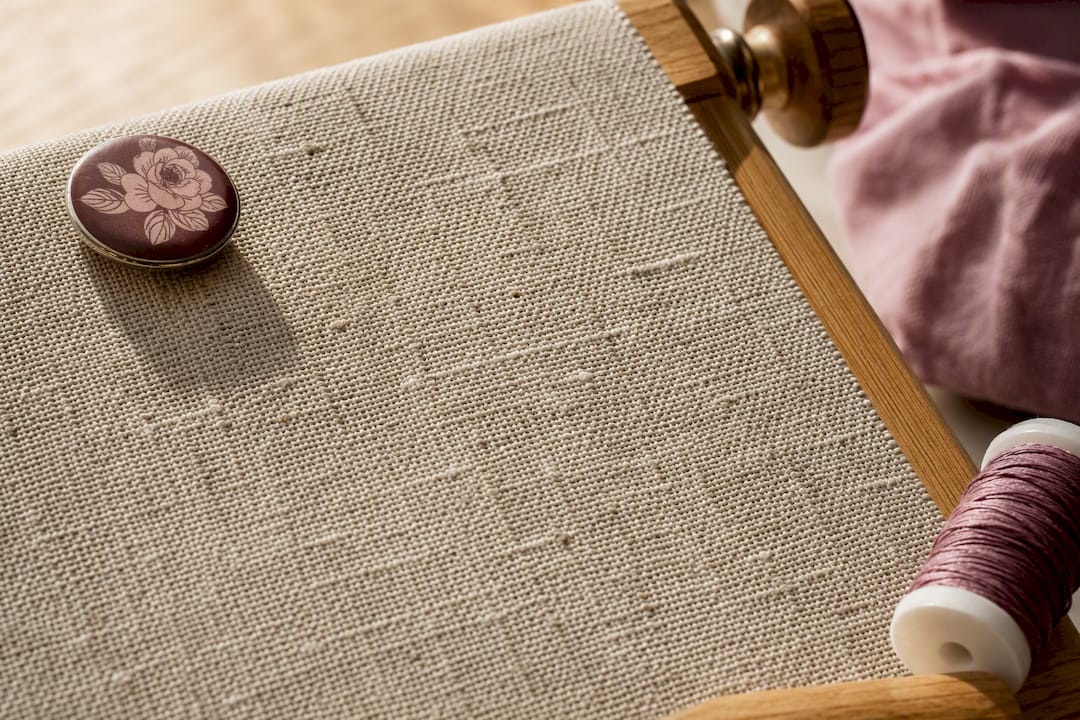
Linen's appeal is tactile as much as visual. It drapes better than cotton, ages beautifully, and those natural slubs give finished pieces a woven, organic quality that Aida simply can't replicate. That's exactly why linen shows up in samplers, wedding pieces, and anything meant to be framed and kept for decades.
The trade-off is real: counting linen means squinting at threads that aren't perfectly uniform, and those slubs complicate counting compared with a manufactured evenweave grid. Linen also frays faster, wrinkles more easily, and costs more per yard.
- Common linen counts: Cashel 28 for detailed samplers, Belfast 32 for a finer look, and 36 or 40 count for miniature or highly detailed work
- Adjustments to make: switch to a finer needle, add stronger lighting, and stitch a small practice swatch before committing to a full piece
Pro Tip: Don't fight the slubs. Treat the occasional uneven thread as part of the linen's character instead of a flaw to correct, and your counting will go a lot faster.
A Checklist for Picking the Right Fabric
Run through these questions before you buy a single yard:
- What's the finished look you want? A crisp, graphic feel points to Aida. A soft, textile feel points to linen.
- Does the pattern use fractional stitches or heavy backstitch? Linen and evenweave render both more cleanly than Aida's block grid.
- How much unstitched background is in the design? More bare fabric means Aida's holes will show more, which favors linen or a higher Aida count.
- What's your budget? Linen costs more, and mistakes on it sting more too.
- How's your eyesight and patience for counting? Community consensus favors starting on Aida before moving to evenweave or linen.
- Have you swatched it? Stitch a 2 inch square on your candidate fabric before buying enough for the full project. The feel under your needle tells you more than any description can.
Once you've answered those, pick a count, buy a small sampler cut first if you're unsure, and set up the right hoop or frame for the fabric you chose. If you want a middle step, evenweave fabrics like Lugana are commonly recommended as a bridge between Aida's ease and linen's finish, and Flossom's fabric types guide breaks down where each material fits.
Expert Tips to Make Linen Less Intimidating
Linen stops feeling like a puzzle once you stop treating every slub as a stitch marker. Count the thread pairs, not the visual texture, and let the natural variation sit in the background of your attention rather than the foreground.
Mount linen on a frame rather than a hoop whenever possible. Even tension prevents the fabric from puckering around your stitches, and binding the raw edges with tape or a quick zigzag stitch keeps fraying from eating into your working area.
- Use a finer needle than you would on Aida, since linen threads are thinner and less forgiving of a blunt tip
- Add a daylight lamp or magnifier if you're working above 32 count
- Stitch a small swatch first to confirm your strand count still gives full coverage. Adjusting floss strands and needle size when you change counts keeps stitches from looking thin or poking through slubs
Pro Tip: Keep a running log of which counts and strand combinations worked on past linen projects. Flossom's stash tracking makes this searchable instead of buried in old notebooks.
How to Wash, Press, and Frame Each Fabric
Linen needs gentler handling than Aida through every stage of finishing. Hand wash it in cool water, roll it in a towel to remove excess moisture, and press it face down on a padded surface with a pressing cloth to avoid flattening the stitches. Aida tolerates more casual handling, but always test for dye bleed before washing any finished piece, regardless of fabric.
- Finish raw edges with tape, a zigzag stitch, or basting to prevent fraying, especially on linen
- Block both fabrics while slightly damp, pinning to size on a flat board and letting them dry completely before removing pins
- Frame linen with care, since its drape can shift over time. Consider museum board and acid-free tape for pieces meant to last decades
- Aida's stiffer weave generally mounts flatter behind glass with less prep work
When I Reach for Aida, and When I Reach for Linen
Kits and gift projects get Aida every time. The counting is fast, mistakes are cheap, and I can hand the piece off without worrying about frayed edges. Anything meant to be framed and kept, a sampler or a piece with heavy fractional stitching, gets linen instead. The rule that's never failed me: swatch first, and pick whichever fabric you'll actually enjoy stitching for the next few weeks, not the one that sounds more impressive.
— Simone
Plan Your Fabric Switch Before You Buy
Switching between Aida and linen gets expensive fast when you guess wrong on count, strand number, or how much fabric a pattern actually needs. Flossom's free tools take that guesswork out of the equation.
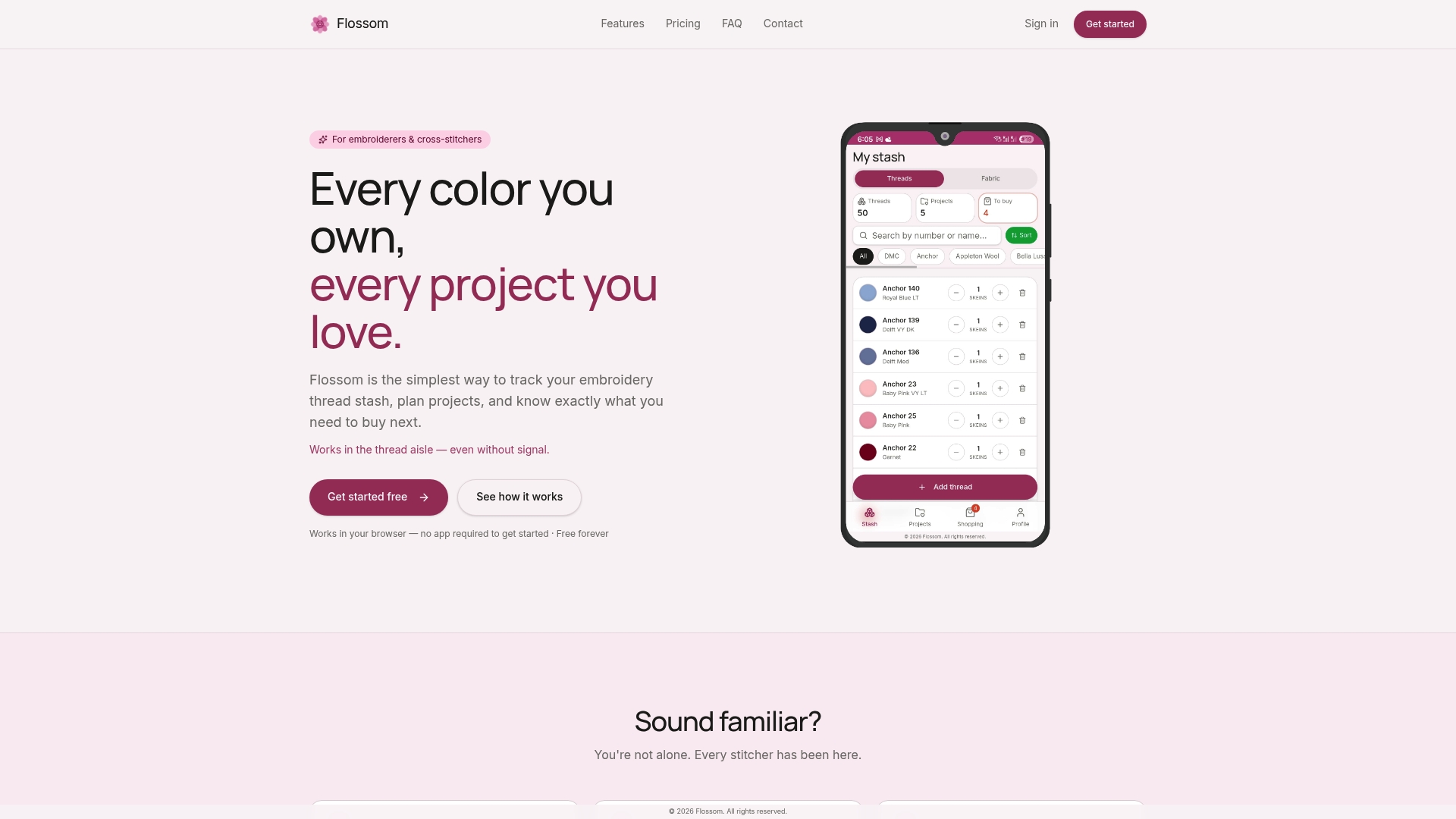
The fabric size calculator tells you the finished dimensions before you cut a single piece, and the thread converter handles strand and brand math when a pattern written for Aida needs adjusting for linen. Pair that with Flossom's stash tracking, and you'll always know what fabric and floss you already own before ordering more. If you want to see how a count change affects total stitching time, the project time calculator gives you a realistic estimate before you commit. Want some hands-on practice first? Local workshops like Hand Embroidery 101 at Harwood House are a good way to feel the difference between fabrics before buying yardage. Start with a free tier app and try the calculators on your next project before you buy a single yard of anything.
Sources
- Aida, Evenweave, or Linen: Your Guide to Cross Stitch Fabric — Willow Fabrics
- Aida cloth — Wikipedia
Recommended
We make Flossom — the calm app for cross-stitchers and embroiderers who want their stash, projects, fabric and shopping list in one tidy place.