
Embroidery Fabric Types Explained for Every Crafter
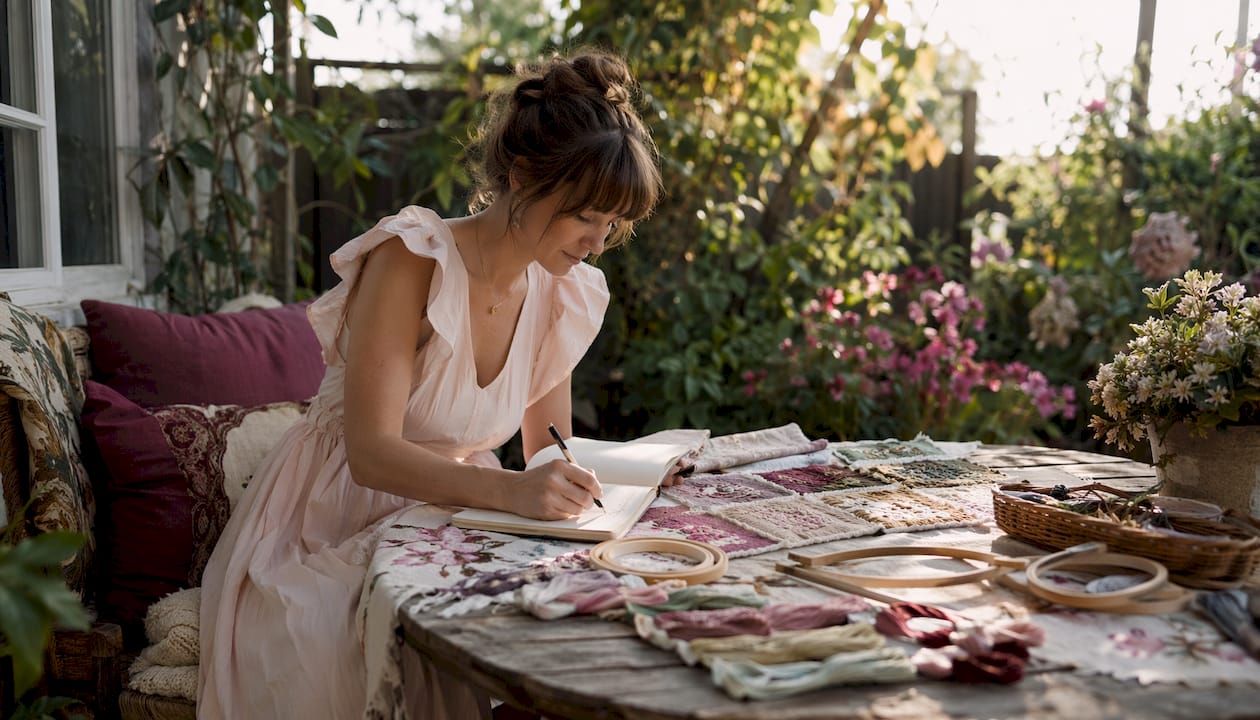
Embroidery Fabric Types Explained for Every Crafter ! Crafter selecting embroidery fabric swatches at table Embroidery fabric is defined by three characteristics: weave structure, fiber content, and weight.
Embroidery Fabric Types Explained for Every Crafter
Embroidery fabric is defined by three characteristics: weave structure, fiber content, and weight. These three factors determine how well a fabric holds stitches, resists distortion, and suits a given design. Choosing the wrong material is the single most common reason embroidery projects fail. Stable, tightly woven fabrics such as 100% cotton quilting fabric with thread counts of 130–250, linen, twill, and denim are the most recommended starting points for any crafter. Understanding how each fabric category behaves under a needle is what separates a clean, lasting piece from a puckered, distorted mess. Flossom's fabric stash tracking and project planning tools help you match the right material to every design before you cut a single thread.
Embroidery fabric types explained: weave, fiber, and category
The three main fabric categories for embroidery are woven, knitted, and nonwoven. Each behaves differently under a needle, and knowing which category you are working with shapes every decision that follows.
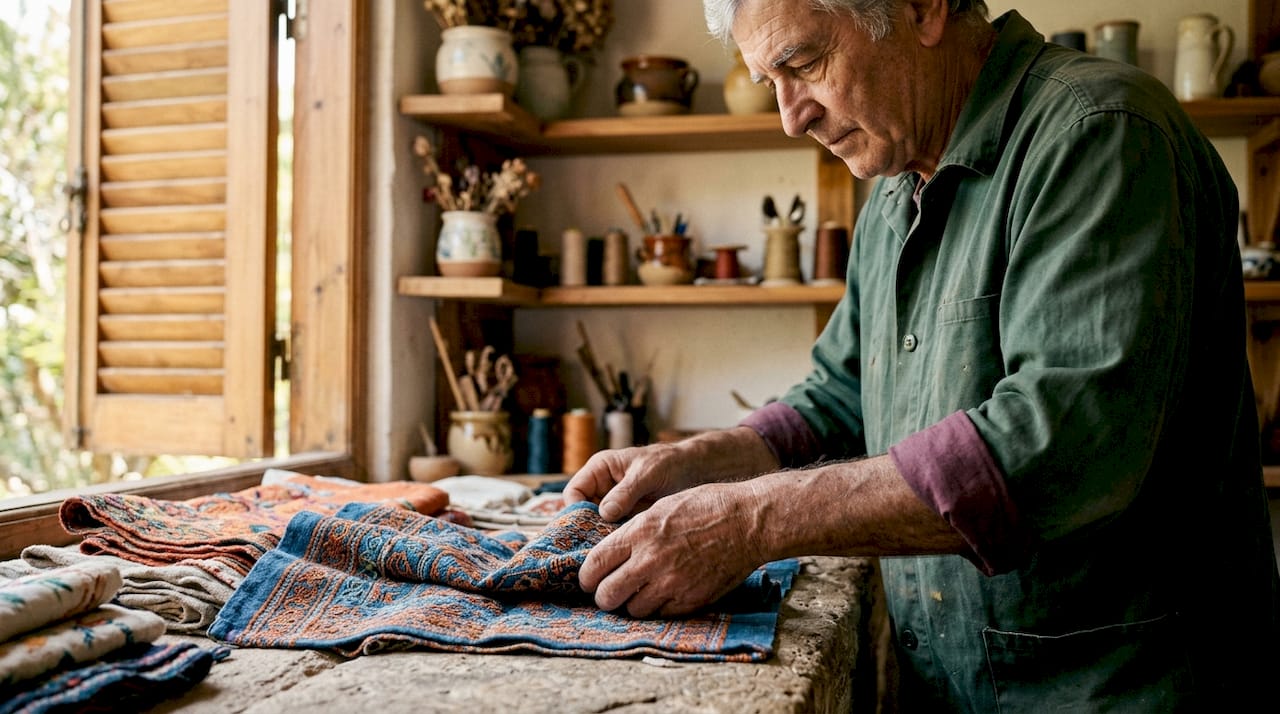
Woven fabrics are the gold standard for embroidery. Cotton, linen, twill, and denim all fall here. Their interlocked warp and weft threads create a stable grid that resists distortion and accepts needle penetration consistently. 100% cotton quilting fabric is the most forgiving option for beginners working on dense designs, because its tight, even weave holds stitches without shifting. Linen adds a slightly textured surface that suits folk-style and botanical designs especially well.
Knitted fabrics include jersey, French terry, and interlock. These fabrics stretch, which creates problems for embroidery. Knit fabrics require careful stabilization and precise hooping tension because they distort easily during stitching. Without a cut-away stabilizer, the design pulls and warps as the fabric relaxes after the hoop is removed.
Nonwoven fabrics like felt and interfacing have no grain line and do not fray. Felt is popular for decorative patches and beginner projects because it is easy to handle. The trade-off is that felt has limited durability and does not wash well over time.
Fiber content matters just as much as weave type. Natural fibers like cotton and linen accept needle penetration cleanly and hold thread tension well. Synthetic fibers like polyester can be slippery, which causes thread to shift between stitches. Blended fabrics sit somewhere in between, and their behavior depends on the ratio of natural to synthetic content.
- Cotton (woven): Stable, widely available, ideal for beginners and dense designs
- Linen (woven): Slightly textured, excellent for hand embroidery and botanical styles
- Twill and denim (woven): Heavy, structured, best for workwear patches and dense fills
- Jersey and French terry (knitted): Stretchy, requires cut-away stabilizer and careful hooping
- Felt (nonwoven): No fraying, easy to cut, limited washability
Pro Tip: Start with 100% cotton quilting fabric at a thread count between 130 and 250. It is stable enough to hold dense stitching and forgiving enough to correct mistakes without distorting.
How does fabric weight affect embroidery results?
Fabric weight must match the stitch density of your design. This is not a stylistic preference. It is a structural requirement. Lightweight fabrics like batiste or voile are suited only to simple, sparse patterns. Load them with dense fills and they buckle under the thread tension.
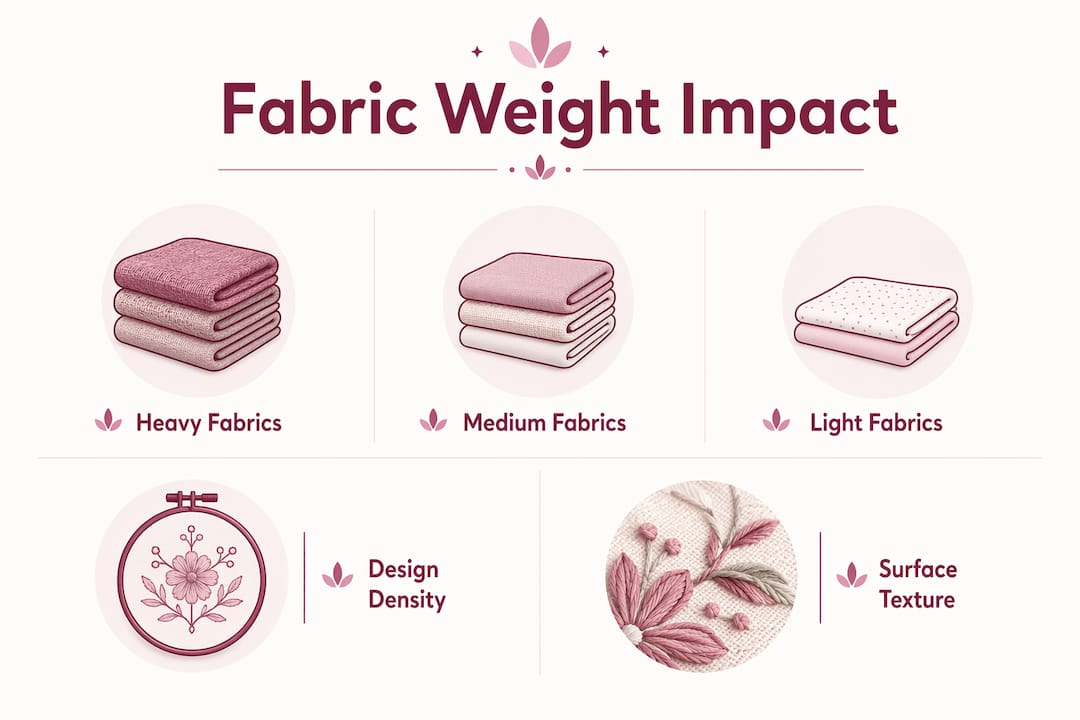
Heavier fabrics like canvas, denim, and twill hold their shape under high-stitch-count designs. They support 3D effects, raised stitches, and thick thread coverage without puckering. Denim and canvas also provide a firm surface that keeps stitch definition sharp over repeated washing, which makes them the preferred choice for workwear patches and durable home goods.
Surface texture adds another layer of complexity. Smooth fabrics like quilting cotton reveal fine detail clearly because stitches sit on top of the surface without interference. Textured or high-pile fabrics like fleece and velvet absorb stitches into the pile, which blurs edges and reduces contrast.
| Fabric type | Weight | Best for |
|---|---|---|
| Voile, batiste | Lightweight | Simple, sparse hand embroidery |
| Quilting cotton | Medium | Dense fills, beginner projects |
| Twill, canvas | Heavy | Patches, workwear, structured designs |
| Denim | Heavy | Durable fills, high-stitch-count designs |
| Fleece, velvet | Varies | Decorative pieces with topping stabilizer |
Pro Tip: When embroidering on fleece or any high-pile fabric, place a topping stabilizer over the surface before stitching. It acts as a barrier that keeps stitches from sinking into the pile and keeps edges crisp.
Which fabric suits each embroidery technique?
Different embroidery types require specific fabric properties. Matching technique to material is what produces clean, lasting results. The wrong pairing produces distortion, thread breaks, or a design that simply does not read well from a distance.
Flat embroidery is the most common technique. It uses satin stitches, fill stitches, and running stitches to create smooth, two-dimensional designs. Flat embroidery demands a smooth, stable fabric so that each stitch lies flat and edges stay sharp. Quilting cotton and linen are the top choices here.
3D puff embroidery places a foam underlay beneath the stitching to create a raised effect. This technique works best on thick, structured fabrics that can hold the foam in place without collapsing. Canvas, heavy twill, and structured caps are the standard surfaces for puff work.
Appliqué involves stitching a separate fabric piece onto a base fabric. The base needs to be stable enough to support the added layer without puckering. Woven fabrics with medium to heavy weight handle appliqué reliably. Knits are a poor choice for appliqué bases unless heavily stabilized.
Crewel embroidery uses wool thread on a textured ground fabric. Linen twill is the traditional surface for crewel because its slight texture grips the wool thread and gives the finished piece a rich, dimensional look. Smooth cotton works too, but it produces a flatter result.
Cross-stitch is a counted thread technique that requires a fabric with a consistent, visible grid. Aida cloth and evenweave linen are the standard choices. Aida is woven with grouped threads that create clear squares for counting. Evenweave linen has a finer, more uniform grid suited to higher-count work.
Needle type follows fabric type directly. Crewel needles in sizes 1–10 have sharp points that pierce woven fabrics cleanly. Blunt tapestry needles in sizes 18–26 are the correct tool for cross-stitch and other counted work. A sharp needle on Aida or evenweave splits the fabric threads instead of passing between them, which damages the grid and makes counting unreliable. For a deeper look at cross-stitch fabric options, Flossom's blog covers every skill level in detail.
- Flat embroidery: Smooth, stable woven fabric; crewel needle sizes 1–10
- 3D puff: Thick, structured fabric; canvas or heavy twill
- Appliqué: Medium to heavy woven base; avoid unsupported knits
- Crewel: Linen twill or textured woven; wool thread
- Cross-stitch: Aida cloth or evenweave linen; blunt tapestry needle sizes 18–26
Common challenges when selecting and preparing embroidery fabrics
Hooping is where most fabric problems start. Placing the hoop over a seam or pocket on a heavy fabric like denim creates bulk that causes skipped stitches and misaligned designs. Reposition the design so the hoop sits on a flat, seam-free area. This single adjustment eliminates the majority of tension-related stitch failures on structured garments.
Stabilizer selection is the second most common source of errors. Cut-away stabilizers are the correct choice for stretchy knits because they remain in place after stitching and prevent the fabric from relaxing and distorting the design. Tear-away stabilizers work for stable woven fabrics where the design does not need permanent backing support. Using a tear-away on a knit is a reliable way to ruin an otherwise well-executed design.
Pre-washing fabric before embroidering prevents shrinkage from distorting a finished piece. Cotton and linen both shrink when first washed. If you embroider on unwashed fabric and then launder the finished item, the fabric contracts around the stitching and creates puckering that cannot be pressed out.
- Pre-wash all natural fiber fabrics before hooping
- Use cut-away stabilizer on knits; tear-away on stable wovens
- Reposition designs away from seams and pockets on heavy fabrics
- Match needle sharpness to fabric type: sharp for wovens, blunt for counted work
- Test stitch density on a fabric scrap before committing to the final piece
Pro Tip: Always run a test stitch on a scrap of the same fabric before starting your main project. This reveals tension issues, stabilizer gaps, and needle problems before they damage your actual piece.
The fabric size calculator from Flossom takes the guesswork out of sizing your fabric to your design, which is especially useful when working with specialty textiles where cutting errors are costly.
Key Takeaways
Fabric weave, fiber content, and weight are the three factors that determine whether an embroidery project succeeds or fails.
| Point | Details |
|---|---|
| Woven fabrics are the safest choice | Cotton, linen, and twill resist distortion and accept needle penetration consistently. |
| Match fabric weight to stitch density | Lightweight fabrics suit sparse designs; heavy fabrics like canvas support dense fills. |
| Technique dictates fabric type | Cross-stitch needs Aida or evenweave; 3D puff needs thick, structured fabric. |
| Stabilizer must match fabric stretch | Use cut-away on knits and tear-away on stable wovens to prevent distortion. |
| Needle type follows fabric and technique | Sharp crewel needles for wovens; blunt tapestry needles for counted thread work. |
Why fabric choice is the decision most crafters underestimate
I spent years treating fabric as an afterthought. The thread color, the pattern, the hoop size — those felt like the real decisions. Fabric was just whatever I had on hand. That thinking cost me more ruined projects than I care to count.
The moment I started treating fabric selection as the first decision rather than the last, my results improved faster than any technique upgrade ever produced. A well-chosen fabric makes tension easier to manage, stitches easier to place, and the finished piece easier to care for. A poor fabric choice creates problems that no amount of skill can fully fix.
My honest advice: start with 100% cotton quilting fabric and stay there longer than feels necessary. Embroidery experts consistently recommend beginning with forgiving cotton before moving to specialty textiles. That advice exists because specialty fabrics amplify both your skills and your mistakes. Build the skills first. The specialty fabrics will still be there when you are ready.
Experiment deliberately when you do branch out. Try one new fabric type per project, keep notes on what worked, and build a reference you can return to. That habit is worth more than any single tip.
— Simone
Plan your next project with Flossom
Picking the right fabric is easier when your project is organized from the start. Flossom is a free embroidery and cross-stitch companion that tracks your fabric stash, manages your thread inventory, and generates shopping lists based on what your pattern actually needs.
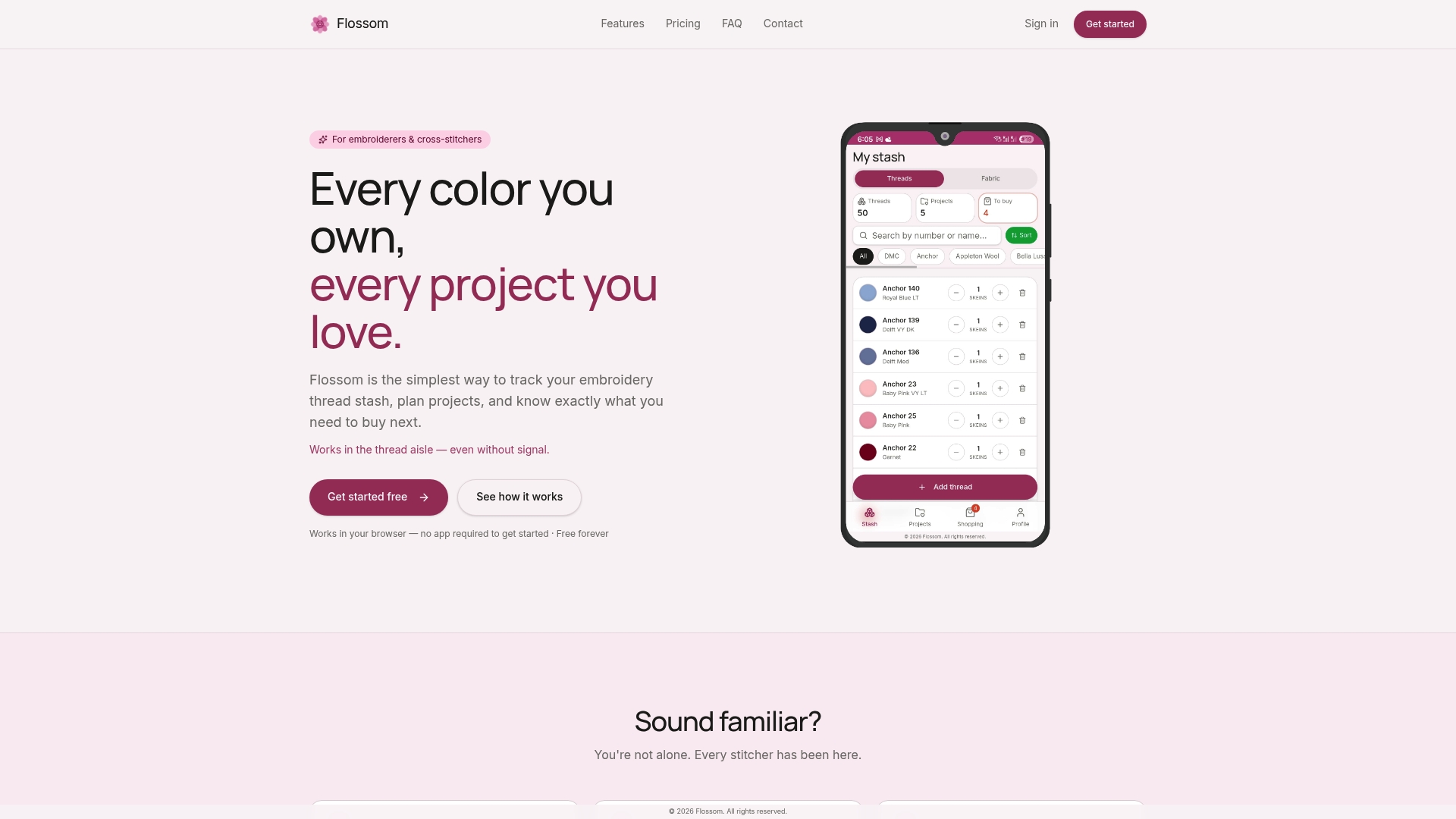
The free pattern library gives you ready-to-stitch designs to practice on different fabric types without starting from scratch. The project time calculator helps you plan realistically so a new fabric or technique does not derail your timeline. Flossom's Pro tier adds fabric stash tracking, a barcode scanner, and a camera color picker across all 55 supported thread brands. The free tier covers DMC and Anchor with unlimited stash entries and three active projects.
FAQ
What is the best fabric for beginner embroidery?
100% cotton quilting fabric with a thread count of 130–250 is the best starting point for beginners. Its tight, even weave holds stitches without distorting and tolerates corrections without damage.
What fabric do you use for cross-stitch?
Cross-stitch requires Aida cloth or evenweave linen. Both fabrics have a consistent grid structure that makes counting stitches accurate and reliable.
Do I need a stabilizer for all embroidery fabrics?
Stabilizer is required for knit fabrics and high-pile fabrics like fleece. Stable woven fabrics like cotton and linen can be stitched with a tear-away stabilizer or, for simple hand embroidery, no stabilizer at all.
What needle should I use for embroidery on woven fabric?
Crewel needles in sizes 1–10 are correct for woven fabrics. Their sharp points pierce the weave cleanly without splitting threads or distorting the fabric structure.
Can you embroider on denim?
Denim is an excellent embroidery surface for dense fills and patches. Position the design away from seams and pockets to avoid bulk that causes skipped stitches and tension problems.
Recommended
We make Flossom — the calm app for cross-stitchers and embroiderers who want their stash, projects, fabric and shopping list in one tidy place.