
Yes, Thread Dye Lots Matter, and Here's the One Rule to Follow
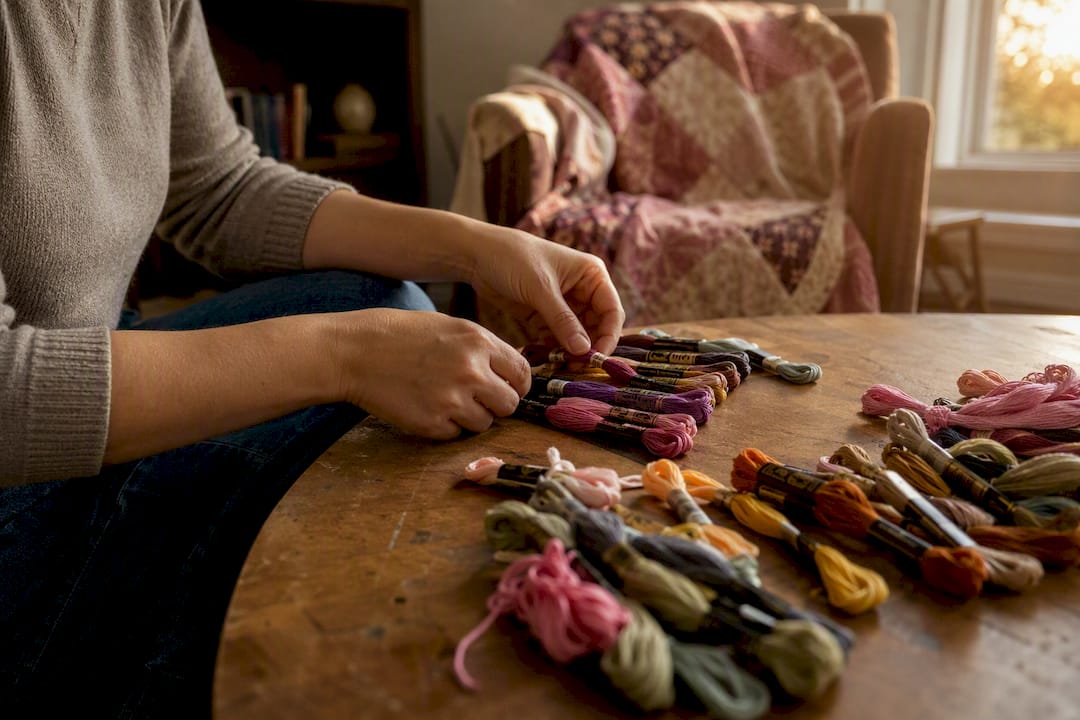
Yes, Thread Dye Lots Matter, and Here's the One Rule to Follow ! Hands sorting embroidery thread skeins Yes, thread dye lot differences can absolutely change how your finished piece looks, but only under specific conditions.
Yes, Thread Dye Lots Matter, and Here's the One Rule to Follow
Yes, thread dye lot differences can absolutely change how your finished piece looks, but only under specific conditions. If your project has large solid color blocks, saturated shades like deep reds or navy, or a visible seam where two skeins meet, buy every skein from the same dye lot before you start. Smaller motifs, variegated threads, and textured stitches usually hide small shifts just fine. Below, you'll find why the shifts happen, how to measure whether one actually matters, and what to do if you're already stuck with mismatched skeins.
Key Takeaways
Dye lot mismatches are predictable, measurable with ΔE, and almost always preventable with a same-lot purchase at the start of a large or solid-color project.
| Point | Details |
|---|---|
| Match lots for solid fills | Buy every skein for large background areas or dark saturated colors from one dye lot. |
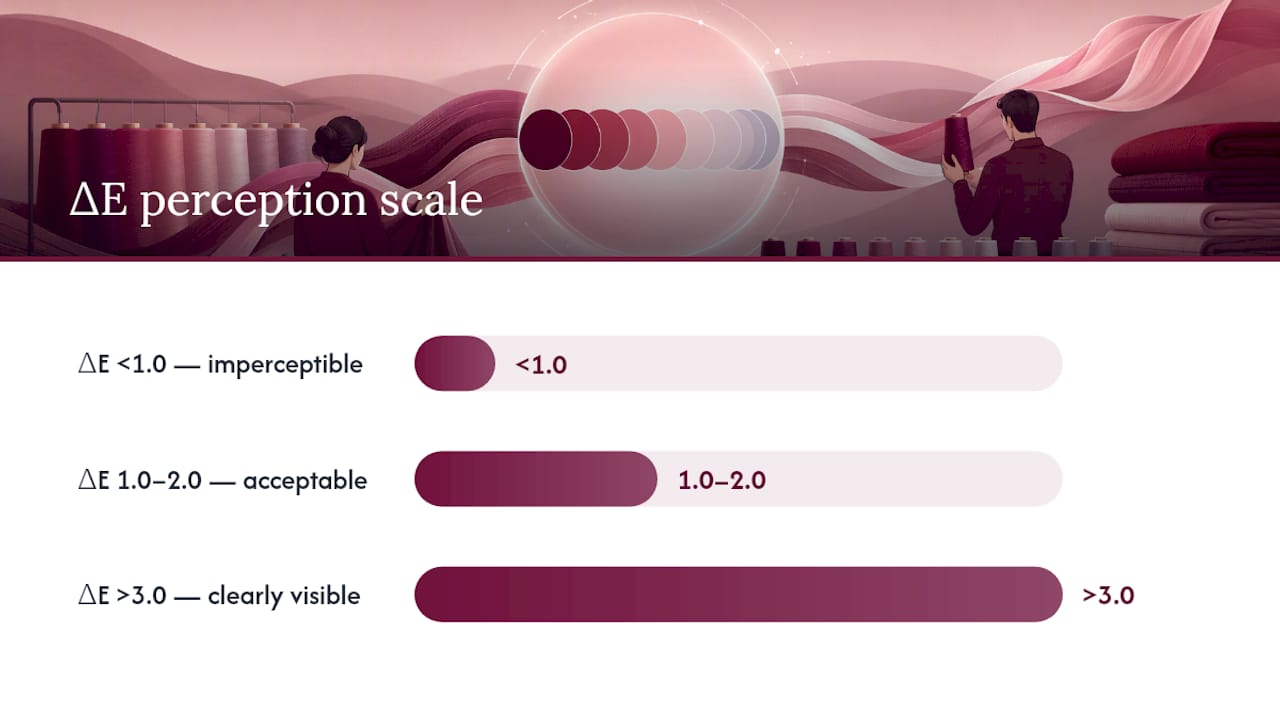
| Use ΔE as your guide | A difference above 3.0 is typically visible; below 1.0 is imperceptible to most eyes. |
| Record lot numbers early | Save paper bands and log lot numbers in your stash tracker the day you buy thread. |
| Blend to hide small gaps | Alternate mismatched skeins every few rows or push the odd lot to a border. |
| Test before you commit | Stitch a swatch and check it in the same lighting your finished piece will hang in. |
Table of Contents
- Why Thread Dye Lots Matter in the First Place
- How Much Color Difference Actually Matters?
- Which Colors and Projects Are Most at Risk?
- How to Prevent a Dye Lot Mismatch Before You Start
- What to Do When You're Already Stuck With Mismatched Lots
- How Flossom Helps You Avoid Dye Lot Surprises Entirely
- What the Color Science Actually Tells Stitchers to Do
- Frequently Asked Questions
- Sources
Why Thread Dye Lots Matter in the First Place
A dye lot is simply a batch record. It identifies every skein of thread colored in the same vat, on the same day, under the same conditions. Manufacturers stamp a lot number on the band precisely because no two vats produce identical results, even when they're using the exact same formula and the exact same color number.
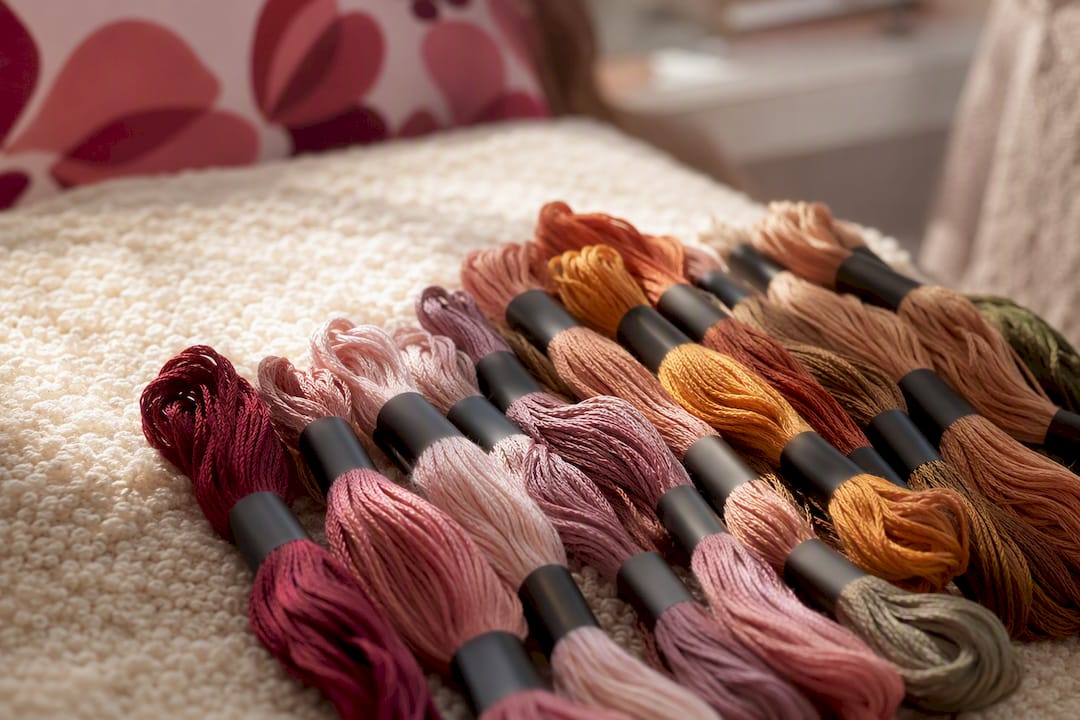
That's the part most stitchers never learn: consistency isn't automatic. It's a target the factory is aiming for, not a guarantee.
Several variables shift between batches, and any one of them can nudge a shade a fraction off:
- Dye concentration in the vat, which can vary slightly batch to batch
- Water temperature during the dyeing process
- Total time the fiber spends in the dye bath
- Water chemistry, including mineral content and pH
- How readily the specific fiber lot absorbs pigment
- Ambient humidity during dyeing and drying
Production research on dye lots confirms these are the exact factors responsible for shade drift between batches. A factory can follow its recipe to the letter and still turn out two batches that read slightly differently to the eye. That's not sloppy manufacturing. It's chemistry with a lot of moving parts.
How Much Color Difference Actually Matters?
Textile and printing industries answer this question with a metric called Delta E, or ΔE, a numeric scale for how different two colors appear to the human eye.
Statistic: According to industry color-matching standards, a ΔE below 1.0 is imperceptible to most people, 1.0 to 2.0 reads as acceptable in most contexts, and anything above 3.0 is typically visible enough to warrant a second look.
You don't need a spectrophotometer to use this in practice. Lay the two skeins side by side under natural daylight, not lamplight, which distorts warm and cool tones. If you can tell them apart at arm's length in that light, treat it as a real difference and plan around it. When in doubt, stitch a small test swatch with both skeins before committing to a full background fill.
Which Colors and Projects Are Most at Risk?
Deep, saturated colors show dye lot shifts far more readily than pale or midtone ones. Watch closely with:
- Deep reds and burgundies
- Navy and dark blues
- Certain forest and hunter greens
- Black, which can carry a warm or cool undertone depending on the batch
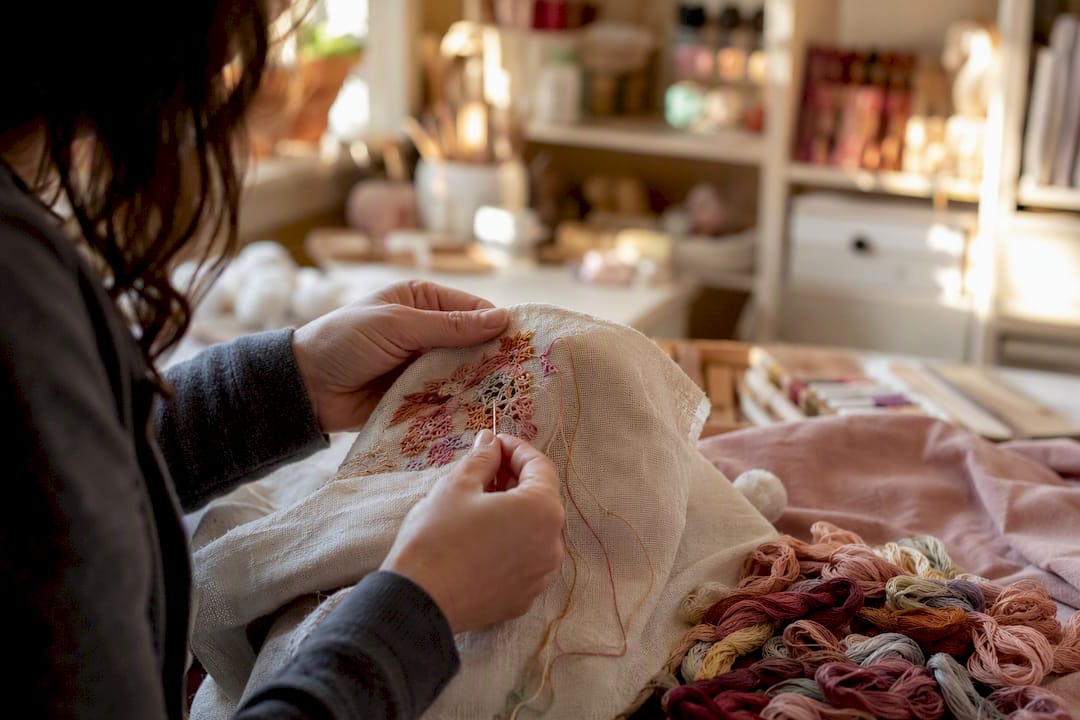
Project structure matters as much as color choice. Large solid fills, wide background fields, and backstitching that runs across a seam between two skeins are where a mismatch becomes obvious, sometimes glaringly so once the piece is framed and lit.
Variegated threads, small isolated motifs, and heavily textured stitches are far more forgiving. The visual noise in the stitch itself, or the built-in color movement of a variegated skein, does a lot of the camouflage work for you.
How to Prevent a Dye Lot Mismatch Before You Start
Prevention takes ten minutes at the start of a project and saves hours of frustration later. Here's the sequence that actually works:
- Buy every skein you'll need from the same dye lot at once, and add one or two extra for repairs or miscounts down the line.
- Save the paper band from every skein. It carries the lot number, and you'll want it if you ever need to buy more of that exact color.
- Record the lot number in your stash system the day you buy the thread, not the day you need it. A tool built for this, like Flossom's stash cataloging system, keeps every color and lot number searchable instead of buried in a drawer of loose bands.
- When you need more thread mid-project, compare new skeins to your existing stock under the same light source, and ask the seller directly for the lot number before you buy, especially with online orders where you can't inspect the skein first.
- Design around the risk when you can. Plan a border in a slightly different but complementary shade, or build in blended rows at natural transition points, so any future purchase doesn't have to match a huge, unbroken color field exactly.
Getting your quantities right at the outset also cuts down on emergency reorders. Planning material needs before you cast on means you're buying once, from one lot, instead of chasing a match three months later when the original run may already be sold out.
What to Do When You're Already Stuck With Mismatched Lots
If you've already discovered two lots that don't match mid-stitch, you have real options beyond ripping everything out. Craft-tested blending techniques can rescue a project that would otherwise need a full restart.
- Alternate skeins every few rows. Switching between the two lots every two or three rows breaks up any visible banding and tricks the eye into reading it as one consistent field.
- Push the odd lot to the edges. Use the mismatched skein for a border, an accent detail, or a less prominent section rather than the center of your piece.
- Reframe it as an intentional contrast. If the shift is too obvious to hide, lean into it, using the second lot as a deliberate two-tone design choice instead of a mistake to disguise.
- Rip and replace early if the gap is too wide. The earlier you catch a ΔE-3-or-higher mismatch, the less thread you waste undoing it.
Pro Tip: Before committing to any fix, stitch both blending options on a scrap swatch and photograph them in the same lighting you'll display the final piece in. What looks fine on your lap under a desk lamp can look very different once it's framed near a window.
How Flossom Helps You Avoid Dye Lot Surprises Entirely
Most dye lot disasters happen because nobody wrote the lot number down. Flossom fixes that by making stash tracking part of your normal workflow instead of an extra chore.
- Catalog your stash with lot numbers attached, so every skein in your collection is searchable by brand, color, and batch.
- Scan barcodes on new purchases to log them in seconds rather than typing out labels by hand.
- Set low-stock alerts on colors you use often, so you can reorder from the same lot before you run out mid-project.
- Convert between 55 thread brands, useful when a specific lot is discontinued and you need the closest match in a different line.
A practical workflow looks like this: record the band and lot number the day you buy your thread, plan your project's exact quantity needs against what's already in your stash, let Flossom flag anything running low, and generate a shopping list before you're standing in a shop with nothing but a memory of the color.
That upfront discipline is exactly what organizing your thread stash properly is meant to solve: fewer emergency purchases, fewer mismatched skeins, and a lot less guessing.
What the Color Science Actually Tells Stitchers to Do
The industry data on this is more reassuring than most stitchers expect. Manufacturers can hit a ΔE below 1 with tight process control, which is why some premium threads show almost no lot-to-lot drift even across years of production. That tells you dye lot mismatches aren't an unavoidable fact of thread. They're a byproduct of process variation that ranges from tiny to noticeable depending on the manufacturer and the specific dye run.
Where I think a lot of craft advice gets it backward is treating every dye lot difference as a crisis to prevent at all costs. It isn't. A ΔE of 1.5 in a variegated skein used for scattered flower motifs will never register to anyone looking at the finished piece. The same ΔE in a solid navy background field, stitched over three seasons with three different purchases, absolutely will.
So the real skill isn't buying obsessively from a single lot every time. It's knowing which projects can't afford the risk and being ruthless about matching lots only there. Everywhere else, save your money and your patience for the blending techniques instead.
Frequently Asked Questions
Do dye lots matter for every color, or just some? They matter most for deep, saturated colors like navy, burgundy, and dark green, where even a small shift is easy to spot. Pale colors and variegated threads hide differences far more easily.
Can I mix dye lots in a small project? Usually, yes. Small motifs, isolated details, and heavily textured stitches disguise minor shifts well. It's large solid fields and visible backstitch seams where mixed lots become a problem.
What's the fastest way to check if two skeins match? Lay them side by side under natural daylight and compare at arm's length. If you can't tell them apart there, they're close enough for most projects.
Where do I find the dye lot number on a skein? It's printed on the paper band wrapped around the skein, usually alongside the color number. Keep that band until the project is finished in case you need to buy more.
Is it worth paying more for premium thread to avoid dye lot issues? For commissioned or repeat work, consistent thread quality can reduce rework enough to justify the extra cost. For a one-off hobby project, matching lots carefully with standard thread works just as well.
Sources
- Thread Dye Lots: Why They Matter - Kae Blake
- Thread color chart: the complete guide to embroidery color matching - EZ Stitch Digitizing
- Understanding Dye Lots in Cross‑Stitch - Two Little Kits
Recommended
We make Flossom — the calm app for cross-stitchers and embroiderers who want their stash, projects, fabric and shopping list in one tidy place.