
What Is a Thread Inventory? A Crafter's Guide
Discover what a thread inventory is and how it helps crafters organize supplies, save money, and streamline project planning effectively.

What Is a Thread Inventory? A Crafter's Guide
A thread inventory is a systematic record of every embroidery or cross-stitch thread you own, organized by brand, color number, and quantity. Without one, you buy the same DMC 3750 twice, run out of a key color mid-project, and lose track of what you actually have. A well-kept thread inventory saves money, cuts shopping time, and makes project planning far less stressful. The standard industry term for this practice is "stash management," but thread inventory is the more specific, actionable version of that idea. Both terms apply here.
What is a thread inventory and why does it matter?
A thread inventory is a centralized record-keeping system that tracks your embroidery and cross-stitch supplies by brand, color code, quantity, and storage location. It is the difference between knowing exactly what you own and guessing every time you start a new project.
The most direct benefit is financial. Duplicate purchases add up significantly over time and waste craft budgets. A crafter who stitches regularly can easily accumulate dozens of redundant skeins simply because they had no record of what was already in the drawer. That wasted spending is entirely preventable.

Thread inventory management is also a productivity tool. When your stash is cataloged, you can check what you own before buying supplies for a new pattern. You can generate a shopping list based on real gaps, not guesses. You can plan multiple works in progress without pulling the wrong colors or double-booking a skein across two projects.
What methods and tools are available to manage a thread inventory?
Three primary methods exist for managing a thread inventory: digital apps, spreadsheets, and printable checklists. Each suits a different type of crafter depending on stash size, tech comfort, and how often they start new projects.
Digital apps
Digital apps offer the most features. They typically include barcode scanning, project-specific color allocation, multi-brand support, and cloud sync across devices. Flossom, for example, supports 71 thread brands, auto-generates shopping lists by comparing pattern needs against your stash, and lets you set low-stock alerts. The free tier covers DMC and Anchor with unlimited stash entries and three active projects. That level of automation is not possible with paper or a basic spreadsheet.
Spreadsheets
Spreadsheets sit in the middle ground. They are customizable, free to build, and work offline. A well-structured spreadsheet can include columns for brand, color number, color name, quantity on hand, and storage location. You can add tabs for partial skeins, bobbins, or specific project allocations. The Lord Libidan DMC spreadsheet is a widely used example in the cross-stitch community. The downside is manual upkeep. Every purchase and every used skein requires a manual update, and there is no automatic comparison against pattern requirements.
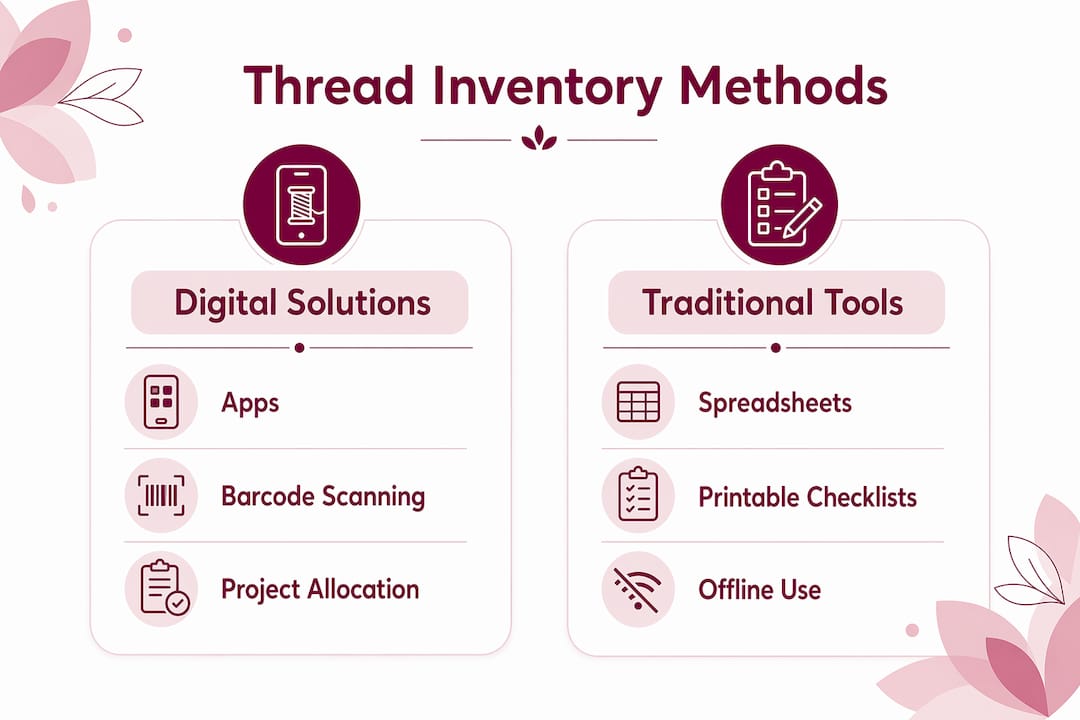
Printable checklists
Printable checklists are the simplest option. They are low-cost, portable, and require no technology. Many are formatted specifically for DMC or Anchor color ranges, with checkboxes next to each color number. They work well for crafters with smaller stashes or those who prefer a physical record. The practical limitation is durability. Paper gets damaged, marks get smudged, and updating a printed list means crossing things out or reprinting entirely.
| Method | Best for | Key limitation |
|---|---|---|
| Digital app | Large stashes, multiple projects | Requires device and setup time |
| Spreadsheet | Customizable tracking, offline use | Fully manual updates |
| Printable checklist | Small stashes, low-tech preference | Hard to update cleanly |
How to start and maintain an effective thread inventory
Starting a thread inventory takes one focused session. Maintaining it takes a consistent habit. Both are simpler than most crafters expect.
- Gather everything first. Pull all your threads from every drawer, bag, and project box. You cannot record what you cannot see. Missing even one storage spot creates gaps in your record from day one.
- Choose your management medium. Pick the method that matches your habits, not the one that sounds most impressive. A spreadsheet you actually update beats a digital app you abandon after two weeks.
- Record the key details. For each skein or bobbin, note the brand, color number, color name, and quantity. Consistency in recording brand, color number, and weight is critical to avoid confusion when matching threads in future projects. A record that says "blue, DMC" is nearly useless. A record that says "DMC 825, 2 skeins, full" is genuinely helpful.
- Note storage location. If you use multiple organizers, boxes, or bags, record where each color lives. This step saves significant time when you are mid-project and need a specific shade quickly.
- Update after every purchase or project. Add new skeins the day you buy them. Mark used quantities when you finish a project section. Delayed updates are the most common reason inventories become inaccurate.
Pro Tip: Laminate a printed copy of your most-used color list and keep it with your storage. Use a dry-erase marker to update quantities on the spot, then transfer changes to your main record weekly.
Routine updates are the real work of thread management. The initial setup is a one-time effort. Keeping the record accurate is an ongoing practice that takes only a few minutes per session if you stay consistent.
What best practices help you get the most from your inventory?
The most effective thread inventory systems share a few common traits. They are flexible, regularly audited, and focused on the colors that actually get used.
Focus on your top colors first. Inventory management experts advise focusing on the top 20% of your thread colors that make up 80% of your work, setting par levels for these high-use colors. This approach reduces last-minute supply runs and prevents unnecessary stock accumulation. You do not need a perfect record of every color you own before the system becomes useful. Start with the colors you reach for most.
Keep the system flexible. Rigid templates do not match varied storage habits, leading many crafters to quit early. A system that cannot accommodate partial skeins, bobbins, or specialty threads will frustrate you within a month. Build in room for the quirks of your actual collection from the start.
Track dye lots and brand specifics. Beginners consistently underestimate how much dye lot variation affects color matching. Two skeins of DMC 321 from different production runs can look noticeably different when stitched side by side. Recording the dye lot number on each skein prevents this problem entirely.
Run quarterly audits. Successful stitchers implement quarterly audits to reconcile physical stock against inventory records, addressing inventory ghosts like half-used spools. A quarterly check takes under an hour and keeps your record trustworthy year-round.
Pro Tip: When you finish a project, do a quick reconciliation before putting your threads away. Compare what the pattern called for against what you used. This is the fastest way to catch discrepancies before they compound.
Avoid over-categorizing early on. Adding too many fields, subcategories, or tabs before you understand your own habits creates a system too complex to maintain. Start with brand, color number, and quantity. Add complexity only when you have a specific need for it.
How does a thread inventory fit into your actual crafting workflow?
A thread inventory earns its value most clearly at two moments: when you start a new project and when you go to buy supplies. Both moments become faster and cheaper with an accurate record behind them.
When you find a new pattern you want to stitch, a complete inventory lets you check immediately which colors you already own. Flossom automates this step by comparing your stash against an uploaded pattern PDF and generating a shopping list of only the missing colors. Without that record, you either buy everything the pattern calls for (wasting money on duplicates) or spend time physically searching your storage before every purchase.
The workflow benefit extends to works in progress. Crafters who juggle multiple projects often accidentally pull the same skein for two different pieces. An inventory that tracks which colors are allocated to which project prevents that conflict. You can see at a glance that your last two skeins of DMC 3865 are already committed to a current project before you assign them to a new one.
Combining a digital backup with a physical tracker adds redundancy without much extra effort. Keep a laminated color chart near your storage for quick reference during stitching sessions. Sync the full record to a digital app or spreadsheet for searching, sorting, and shopping list generation. The project time calculator in Flossom's tools suite pairs naturally with this workflow, letting you estimate how long a project will take once you know which threads you have on hand.
A thread inventory also changes how you shop. Instead of browsing and buying colors that look useful, you shop from a specific list of genuine gaps. That shift alone prevents the most common form of craft budget waste.
Key takeaways
A thread inventory is the single most effective habit a stitcher can build to save money, reduce wasted time, and plan projects with confidence.
| Point | Details |
|---|---|
| Thread inventory definition | A systematic record of your threads by brand, color number, and quantity. |
| Three core methods | Digital apps, spreadsheets, and printable checklists each suit different stash sizes and habits. |
| Start simple | Record brand, color number, and quantity first. Add complexity only when you need it. |
| Quarterly audits matter | Reconciling physical stock against your record every three months keeps the system accurate. |
| Focus on top colors | Prioritize the 20% of colors you use most and set minimum stock levels for those first. |
Why I think most crafters wait too long to start
I have watched crafters spend years buying duplicates, running out of key colors mid-project, and feeling vaguely guilty about a disorganized stash. The reason they wait is almost always the same: they think a proper inventory requires a perfect system before they can begin.
That belief is wrong. A living, regularly updated inventory does not need to be perfect on day one. It needs to be started. A simple spreadsheet with 30 of your most-used DMC colors is more useful than a beautifully designed template you never fill in.
The crafters I have seen get the most out of their inventories are not the most organized people. They are the ones who accepted an imperfect start and updated consistently. They added dye lot tracking after they had a color-matching problem. They added partial skein tabs after they realized they had six half-used skeins of the same color. The system grew with their actual needs.
My honest recommendation: spend 20 minutes this week writing down every color you own in a plain spreadsheet. That is your inventory. It is already more useful than nothing. Refine it from there.
— Simone
Flossom: a digital home for your thread stash
Managing a thread inventory by hand works well for small collections. As your stash grows and your project list expands, a dedicated tool makes the process significantly faster.
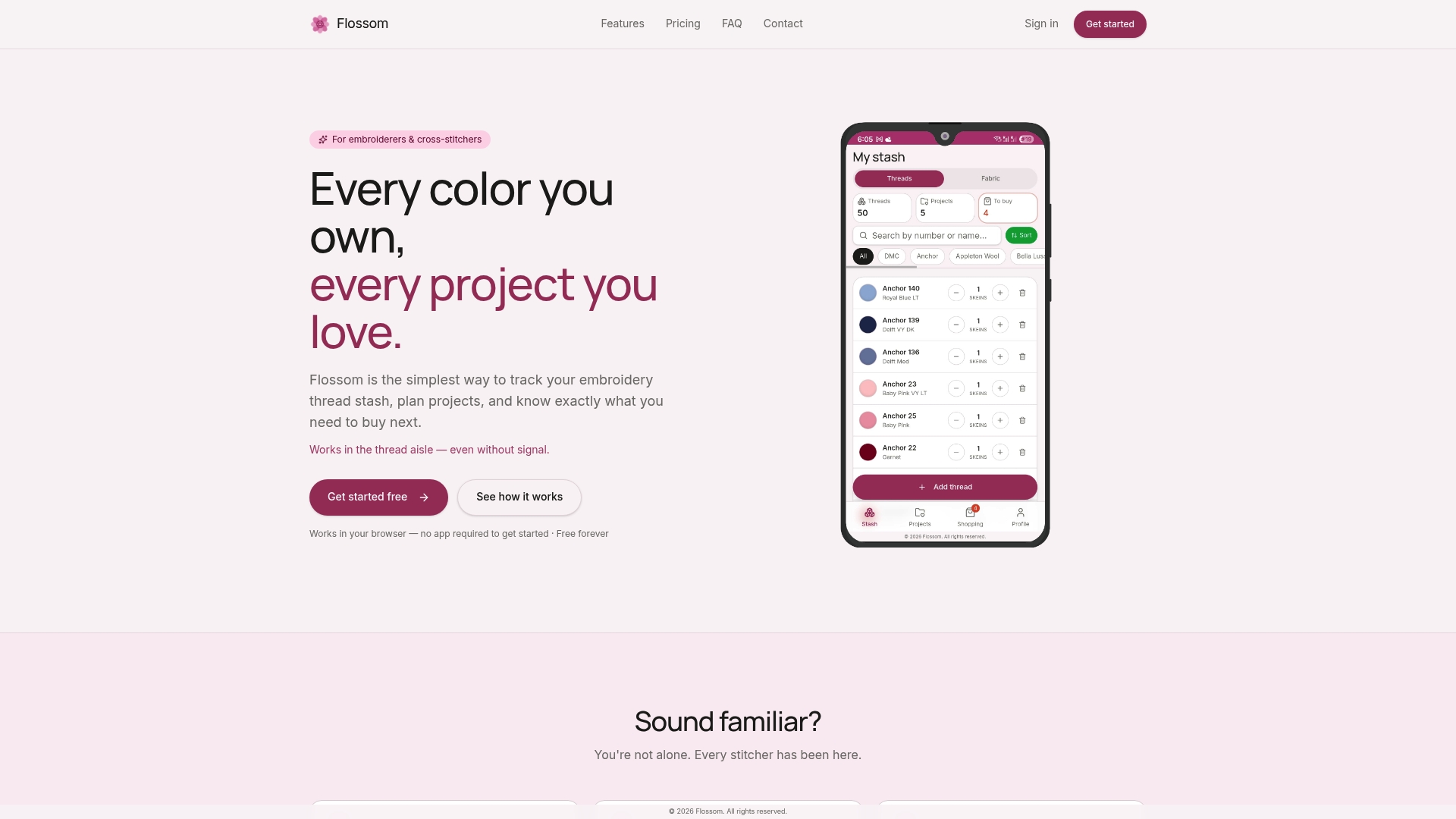
Flossom is built specifically for cross-stitch and embroidery crafters who want to track their stash without spreadsheet maintenance. Upload a pattern PDF and Flossom compares it against your inventory, then generates a shopping list of only the colors you are missing. The free tier covers DMC and Anchor with unlimited stash entries. Pro adds 68 additional thread brands, a camera color picker, barcode scanning, and fabric tracking. Everything syncs across devices and exports to CSV. You can also explore the full suite of crafting tools, including a thread converter that supports all 71 supported brands.
FAQ
What is a thread inventory in embroidery?
A thread inventory is a record of all the embroidery or cross-stitch threads you own, organized by brand, color number, and quantity. It helps you avoid duplicate purchases and plan projects more accurately.
How do I start a thread inventory from scratch?
Gather all your threads, then record each one by brand, color number, and quantity in a spreadsheet, app, or printable checklist. Update the record every time you buy new thread or use a skein.
What details should I track in a thread inventory?
Track brand, color number, color name, quantity, dye lot, and storage location. Dye lot tracking is especially important for color matching consistency across large or long-running projects.
How often should I update my thread inventory?
Update your inventory after every purchase and at the end of each project session. Running a full quarterly audit to reconcile your physical stock against your records keeps the system accurate over time.
Is a digital app better than a spreadsheet for thread tracking?
Digital apps offer features like barcode scanning, automatic shopping list generation, and multi-brand support that spreadsheets cannot match. Spreadsheets are a strong option for crafters who prefer full control and offline access.
Recommended
We make Flossom — the calm app for cross-stitchers and embroiderers who want their stash, projects, fabric and shopping list in one tidy place.