
How Thread Skeins Are Organized: A Crafter's Guide
Discover how thread skeins are organized for easy access! Learn effective storage methods like bobbins and digital cataloging tips for crafters.
How Thread Skeins Are Organized: A Crafter's Guide
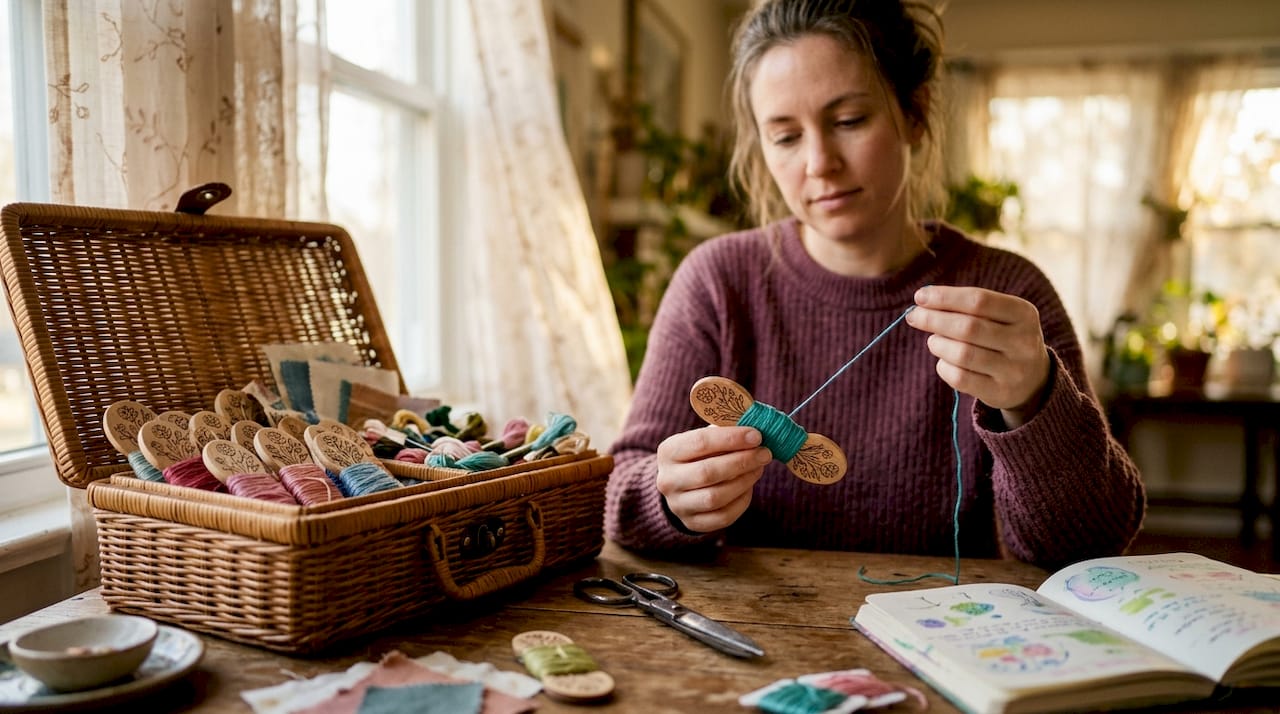
Thread skeins are organized most effectively by winding them onto labeled plastic or card bobbins, then storing those bobbins in compartmentalized boxes sorted by manufacturer number. This system, widely used by embroidery and cross-stitch crafters, gives you instant access to any color, keeps threads tangle-free, and makes restocking straightforward. Supplementary methods like skein rings, wall racks, and zip bags each have their place depending on your workspace and collection size. Digital cataloging, including tools like Flossom, adds another layer by tracking what you own and preventing duplicate purchases.
How thread skeins are organized using bobbins and compartment boxes
The bobbin method is the industry standard for a reason. Winding floss onto plastic or card bobbins with numeric labels, then storing them in compartmentalized boxes, gives you fast access and makes inventory tracking simple. Every skein has a fixed home, and you can scan your collection at a glance without pulling anything out.
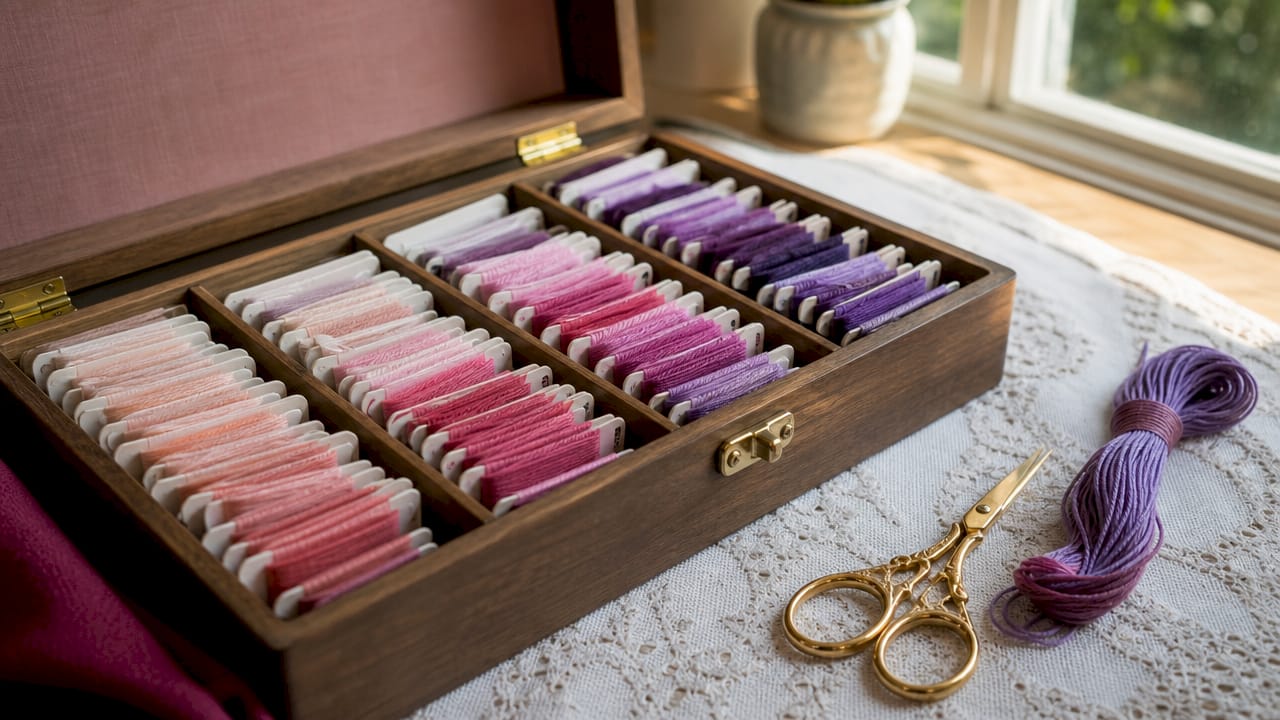
Setting up your bobbin system step by step
Getting started takes a focused session but pays off immediately. Here is the process most crafters follow:
- Gather your supplies. Buy plastic bobbins (sold in bulk packs) or cut card bobbins from cardstock. Pick up a compartment box with individual slots, sized to fit your bobbins snugly.
- Open each skein correctly. Never pull thread from the wrong end of a new skein. It knots immediately. Cut the skein open and divide it into 18-inch lengths before winding.
- Wind the thread. Wrap the 18-inch lengths around the bobbin in a figure-eight or straight wrap. Keep tension even so the thread lies flat and does not bunch.
- Label every bobbin. Write or stamp the manufacturer number (DMC, Anchor, or your brand of choice) on the bobbin before you file it. Never rely on memory for color identification.
- Sort by number. Place bobbins into compartment box slots in ascending numeric order. This is the key step that makes the whole system work.
- Maintain as you go. When you finish a color, rewind leftover thread and return the bobbin to its slot immediately.
Processing a full set of skeins initially takes 30–60 minutes. That time investment is front-loaded. After the initial setup, maintenance takes only seconds per session.
Pro Tip: Many crafters wind bobbins while watching TV. The repetitive motion is genuinely relaxing, and pairing it with leisure time removes any sense of it being a chore.
Compartmentalized boxes with labels reduce project delays and keep your workspace tidy. Stackable boxes also let your collection grow without reorganizing from scratch.
What are the best alternative thread skein storage solutions?
Bobbins are not the only option. Several other storage methods suit different crafters depending on collection size, workspace, and personal preference.
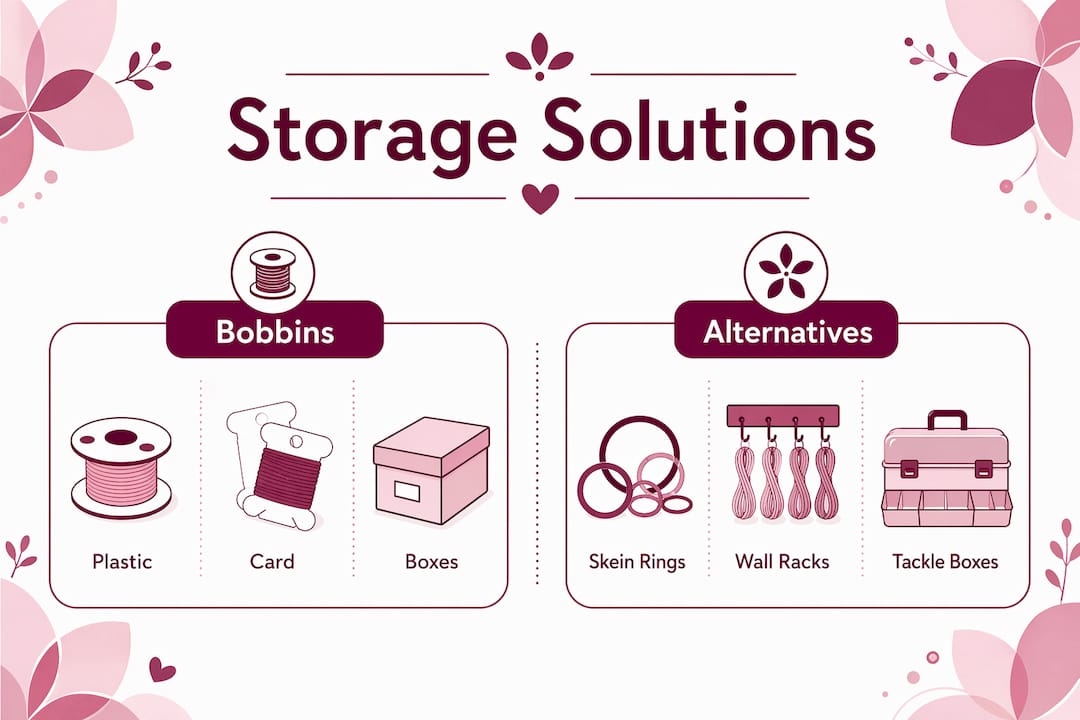
Skein rings and hanging storage
Skein rings let you hang threads directly on a metal or plastic ring without winding. You group skeins by color family or number range, then hang the ring on a hook or peg. This method is fast to set up and works well for smaller collections or threads you use constantly. The trade-off is that loose skeins tangle more easily than wound bobbins, especially when you pull one skein from a crowded ring.
Wall-mounted racks and open display
Wall racks look striking in a craft room. Rows of colorful skeins arranged by hue create a visual palette that many crafters find genuinely inspiring. The problem is exposure. Open display racks expose threads to dust and light, causing fiber degradation and fading within 1–2 years. That is a real cost for anyone who invests in quality silk or hand-dyed threads.
Tackle boxes, envelopes, and zip bags
Tackle boxes with adjustable dividers work as a budget-friendly alternative to dedicated bobbin boxes. Envelopes or small zip bags suit crafters who prefer to keep skeins intact rather than winding them. Separating threads by fiber type (cotton, silk, rayon, polyester) within bags also prevents fiber damage from friction between incompatible materials.
| Storage method | Best for | Key advantage | Key drawback |
|---|---|---|---|
| Bobbin boxes | Medium to large collections | Fast access, numeric order | Initial setup time |
| Skein rings | Small collections, frequent use | Quick setup, portable | Tangling risk |
| Wall-mounted racks | Display-focused crafters | Visual inspiration | Light and dust exposure |
| Tackle boxes | Budget-conscious crafters | Affordable, adjustable | Less precise organization |
| Zip bags or envelopes | Minimal collections or travel | Compact, protective | Harder to browse quickly |
The right method depends on how many threads you own and how often you work with them. A crafter with 50 skeins has different needs than one managing 500.
Organizing by number versus color: which system wins?
The debate between numeric and color-based organization comes up constantly in crafting communities. Numeric order wins for most crafters, and the reason is practical.
Organizing threads by numerical order rather than color reduces friction when following charts and restocking. Manufacturers cluster similar shades within number ranges. DMC 3750 through 3760, for example, sits in a blue-gray family. When your chart calls for DMC 3752, you go straight to that section of your box. You do not hunt through a rainbow arrangement trying to identify the right shade of pale blue.
Color-based organization has genuine appeal. Arranging threads in a gradient from warm to cool creates a beautiful display and can spark creative ideas. The problem surfaces when you need to restock. You have to remember or look up the number anyway, which adds a step that numeric order eliminates.
Hybrid approaches for large collections
A hybrid system works well for collections beyond 100 colors:
- Primary sort by number. Keep your main storage in numeric order for fast chart matching and restocking.
- Secondary color grouping within ranges. Within a broad number range, arrange by shade if it helps you visually.
- Separate display ring for inspiration. Keep a small ring of your most-used or most-loved colors arranged by hue for creative browsing. This satisfies the aesthetic impulse without disrupting your functional storage.
Pro Tip: When your collection grows past 200 skeins, add a simple index card at the front of each box section marking the number range inside. You will find any color in under ten seconds.
Learning how to convert thread brands accurately also matters here. If you mix DMC and Anchor threads in one collection, numeric order alone gets confusing. Keeping brands in separate boxes or clearly labeled sections solves this.
How do digital tools improve thread skein organization?
Physical storage handles what you can see. Digital tools handle what you need to remember. Pairing the two is the most effective approach for crafters managing large or growing collections.
The digital hybrid approach pairs physical organization with a digital catalog to prevent duplicate purchases. Buying the same DMC color twice is an easy mistake when you have hundreds of bobbins across multiple boxes. A digital inventory tells you exactly what you own before you add anything to your cart.
Here is what a well-structured digital system covers:
- Stash catalog. Every thread you own, logged by brand and number, with quantity notes.
- Low-stock alerts. Flags when a color drops below a set threshold so you restock before you run out mid-project.
- Shopping list generation. Compares what a pattern needs against what you already own and outputs only what is missing.
- Brand conversion. Matches equivalent colors across different thread brands so you can substitute without guessing.
Project-centric kits take this further by grouping all threads, fabric, and the pattern for one specific project into a dedicated pouch or bin. This approach reduces search time and prevents dye lot confusion when you return to a project after a break.
Maintaining an active working palette separately from your main stash also speeds up your workflow. A small ring or tray holding only the colors for your current project means you sit down and stitch immediately instead of hunting through your full collection each time.
Flossom covers all of this in one place. It catalogs your thread stash, generates shopping lists automatically, and converts between 71 thread brands. The free tier handles DMC and Anchor with unlimited stash entries and three active projects.
The organization method that actually changed how I stitch
I spent two years keeping my threads in zip bags sorted loosely by color. It looked fine in photos. In practice, I wasted ten minutes before every session untangling skeins and hunting for the right shade. The moment I switched to bobbins in numeric order, that prep time dropped to almost nothing.
What surprised me most was how much the numeric system improved my relationship with my pattern charts. I stopped dreading the color-matching step because finding DMC 3865 in a numbered box takes three seconds. Finding it in a color-sorted bag took guesswork.
The aesthetic argument for color organization is real but overrated. A gradient wall display looks beautiful. It also fades your threads and gives you no practical advantage when you are mid-project and need a specific number. Function beats aesthetics every time when you are actually stitching.
The hardest part of any organization system is maintenance. Winding a bobbin and returning it to its slot after each session takes thirty seconds. Skipping that step for a week creates a mess that takes an hour to fix. The ritual matters more than the system itself.
I also resisted digital tools longer than I should have. Once I started logging my stash in Flossom and letting it cross-reference my stash against pattern requirements, I stopped buying duplicates entirely. That alone paid for the time I spent setting it up.
— Simone
Flossom makes thread stash tracking effortless
Physical bobbin boxes solve the storage problem. Flossom solves the memory problem.
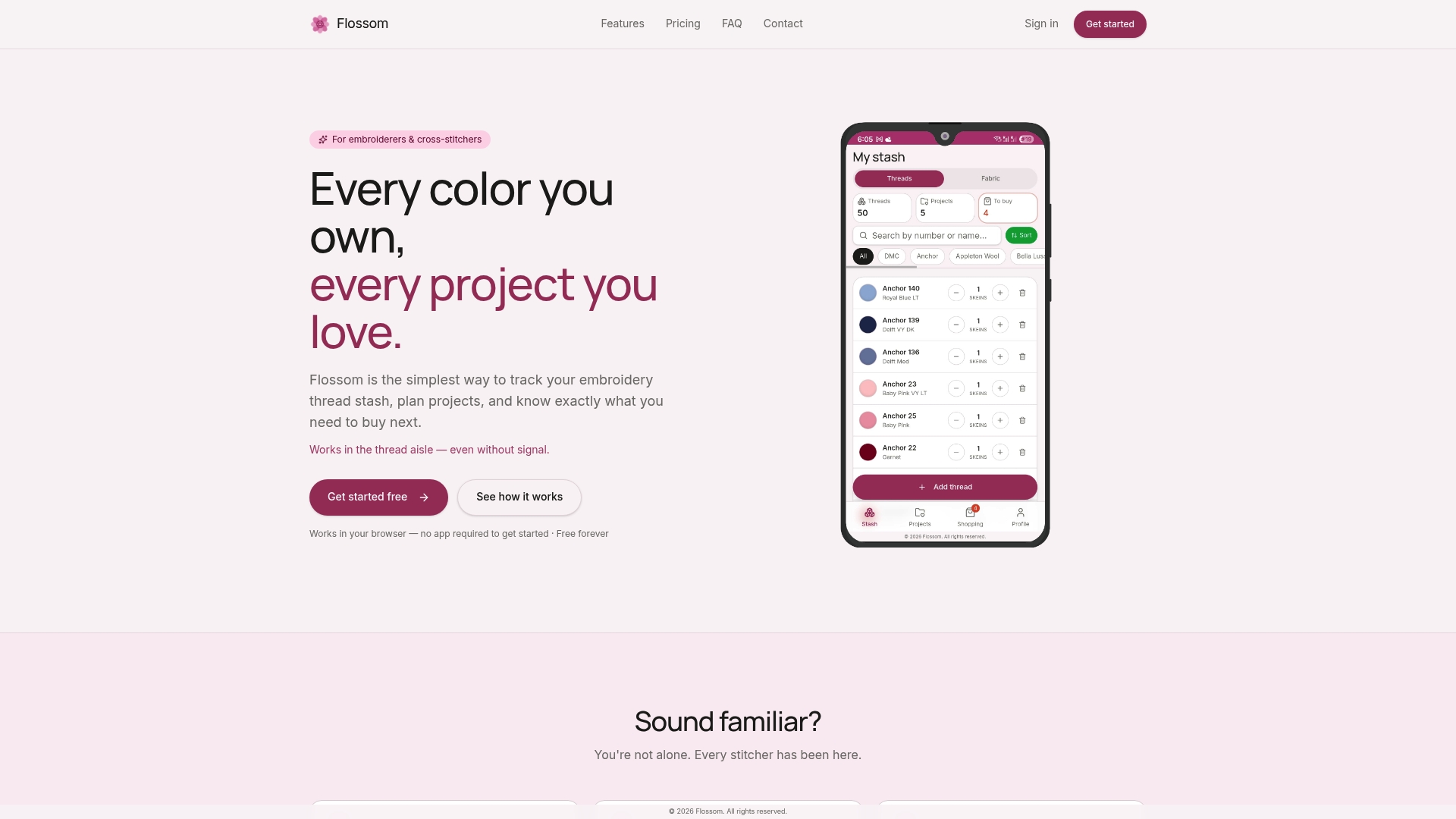
Flossom is a digital companion built for embroidery and cross-stitch crafters who manage real collections. Log your entire thread stash, set low-stock alerts, and let Flossom auto-generate shopping lists by comparing your pattern's color requirements against what you already own. The thread conversion tool matches colors across 71 brands so you can substitute confidently. The free tier covers DMC and Anchor with unlimited stash entries and three projects. Pro unlocks all 71 brands, a camera color picker, a barcode scanner, and unlimited projects. Everything syncs across devices and stays ad-free.
FAQ
What is a thread skein?
A thread skein is a loosely coiled bundle of embroidery floss, typically containing a standard length of thread folded and tied at intervals. Most commercial skeins from brands like DMC and Anchor contain approximately 8 meters of six-strand cotton floss.
How are thread skeins organized for cross-stitch?
Thread skeins are organized by winding them onto labeled bobbins stored in compartmentalized boxes in numeric order by manufacturer code. This system gives crafters fast access to any color and simplifies restocking from pattern charts.
Is it better to organize thread by color or by number?
Numeric order is faster and more practical for most collections. Manufacturer numbers cluster similar shades together, making chart matching and restocking quicker than hunting through a color-sorted arrangement.
How do I prevent thread skeins from tangling?
Cut skeins into 18-inch lengths immediately after opening and wind them onto bobbins before storage. Pulling thread from the wrong end of an intact skein causes immediate knotting.
What is the best storage container for thread bobbins?
Compartmentalized plastic boxes with individual slots sized for standard bobbins are the most effective option. Stackable, labeled containers keep threads visible, protected from dust, and easy to expand as your collection grows.
Key takeaways
Thread skeins are organized most effectively by winding them onto numbered bobbins stored in compartmentalized boxes in numeric order, with digital tools adding stash tracking and duplicate prevention for larger collections.
| Point | Details |
|---|---|
| Bobbin winding is the standard | Wind skeins onto labeled bobbins in numeric order for the fastest, most manageable storage system. |
| Numeric order beats color sorting | Manufacturer numbers cluster similar shades, making chart matching and restocking faster than color-based arrangements. |
| Closed storage protects thread quality | Open racks expose threads to light and dust, causing fading and fiber damage within 1–2 years. |
| Project kits reduce prep time | Grouping all threads and materials for one project into a dedicated pouch prevents dye lot confusion and speeds up stitching. |
| Digital catalogs prevent duplicate purchases | Pairing physical storage with a digital inventory like Flossom stops you from buying colors you already own. |
Recommended
We make Flossom — the calm app for cross-stitchers and embroiderers who want their stash, projects, fabric and shopping list in one tidy place.