
What Is a Stitching Journal? A Guide for Crafters
Discover what a stitching journal is and how it can enhance your embroidery experience. Keep track of projects, reflections, and creativity!
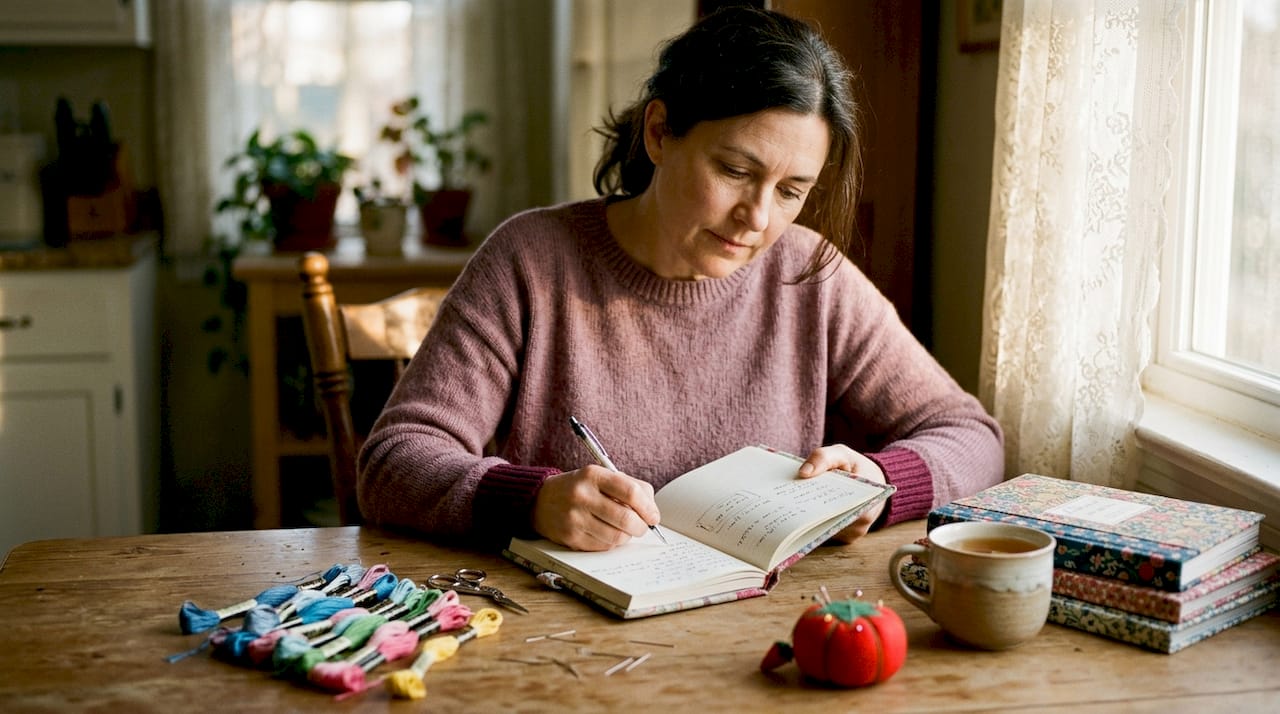
What Is a Stitching Journal? A Guide for Crafters
A stitching journal is a personalized record where crafters document their embroidery and cross-stitch projects through fabric, thread, written notes, or a combination of all three. The industry term most often used is a "stitch journal" or "thread journal," and both refer to the same practice. Whether you stitch a small icon each day or jot a weekly reflection in a notes app, the format is yours to define. As of 2026, the practice has grown into one of the most flexible and personally meaningful habits in the embroidery community.
What is a stitching journal, exactly?
A stitching journal is a dedicated space, physical or digital, where you track your embroidery projects, creative ideas, and personal reflections tied to your craft. It sits somewhere between a project log and an art diary. Unlike a pattern binder or a shopping list, a stitch journal captures the experience of stitching, not just the technical details.
Stitch journals can take many forms: mini fabric books, travel logs, or slow-stitched scrapbooks, each adaptable to your personal style and stitching frequency. That flexibility is the point. A crafter who stitches three evenings a week will keep a very different journal from someone who picks up a needle once a month.
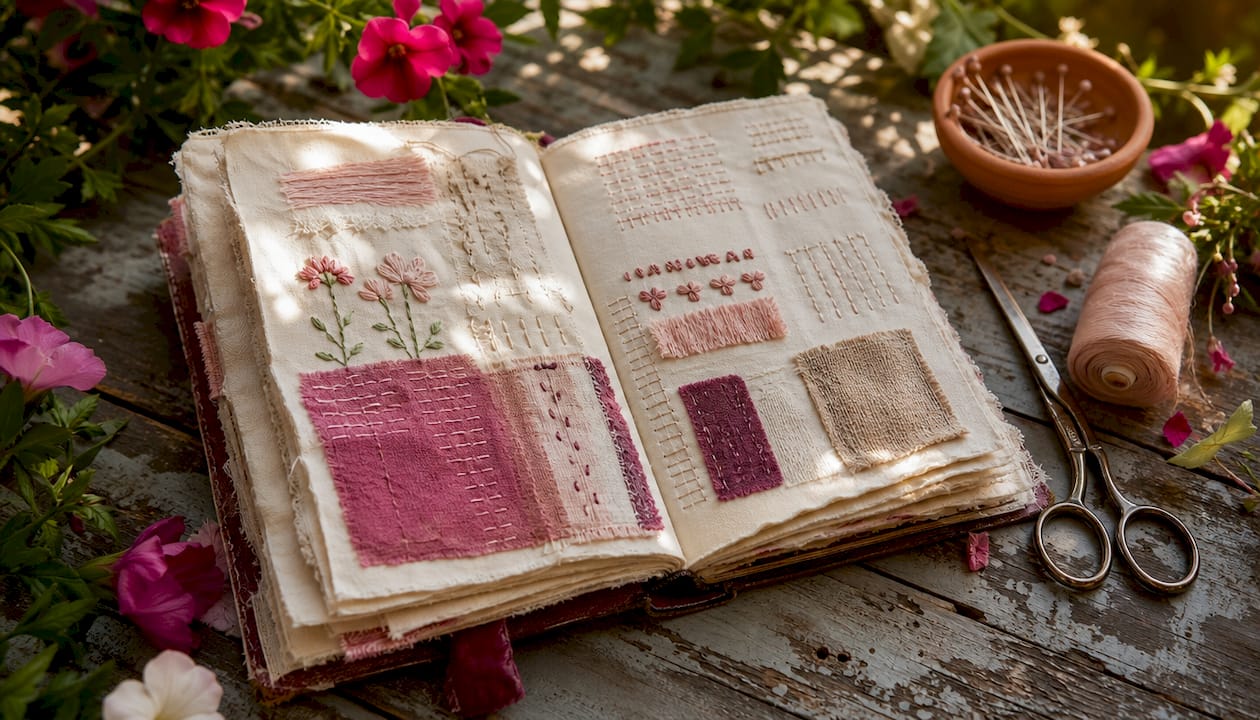
The core purpose stays the same across all formats: to give your stitching practice a home outside the hoop. A stitching journal holds your history, your ideas, and your growth as a maker.
What are the common uses and formats of stitching journals?
Stitching journals fall into three broad categories: fabric-based, digital, and hybrid. Each has real advantages depending on how you work.
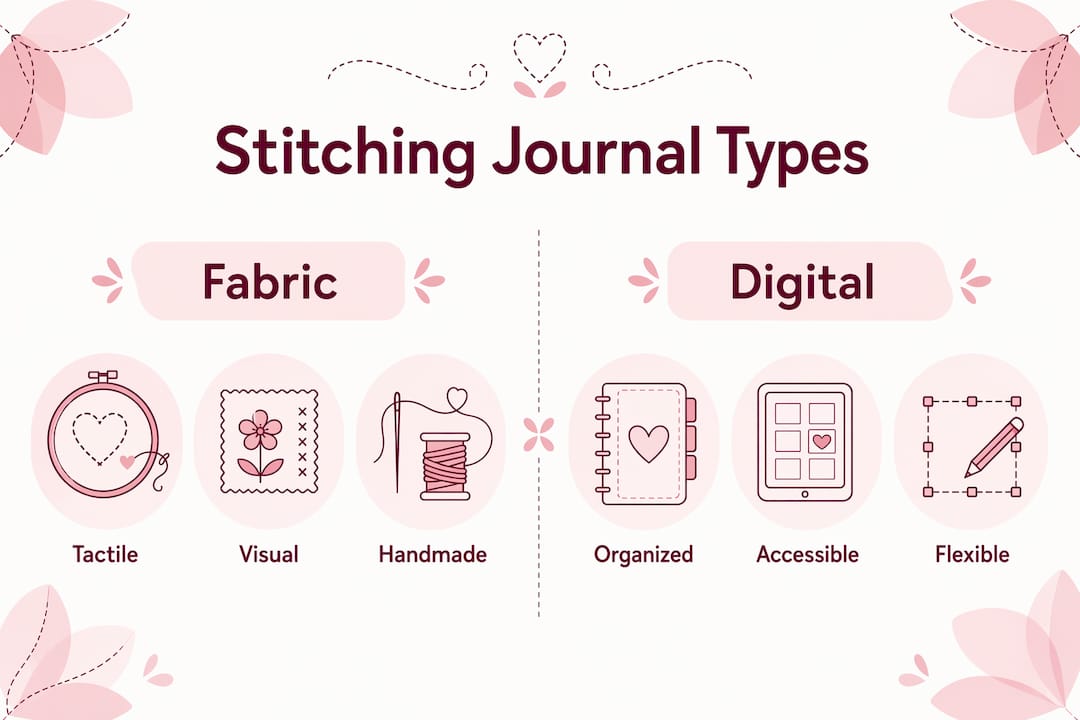
Fabric-based journals are the most tactile option. Fabric stitch journals use machine-stitched lines and appliqué as prompts for creative hand stitching, turning the page itself into a canvas. Over time, the stitched symbols and motifs develop into a personal visual language. Many crafters use color-coded threads to represent moods, seasons, or events.
Digital journals use notes apps, spreadsheets, or dedicated tools to log reflections, thread colors, and project milestones. They are easy to search, easy to update, and require no needle. Flossom, for example, lets you upload pattern PDFs, track work-in-progress photos, and log thread details all in one place, making it a natural digital companion to a physical stitch journal.
Hybrid methods combine both. A crafter might type a quick note after a stitching session and then batch her hand stitching into a fabric journal on the weekend.
Common formats include:
- Travel stitch journals: Small, portable fabric books documenting a trip through stitched symbols and color choices
- Annual embroidery records: A single fabric piece or notebook covering a full year of projects and milestones
- Slow stitching scrapbooks: Mixed-media books combining fabric scraps, buttons, and embroidered notes
- Cross-stitch data journals: Sampler-style pieces that record daily mood, weather, or steps through coded stitches, creating a visual data portrait of your year
Pro Tip: If you are new to fabric journals, start with a single folded piece of linen and a handful of DMC floss. You do not need a bound book to begin.
What benefits do stitching journals offer to crafters?
A stitch journal does more than organize your projects. It changes how you relate to your craft.
The practical benefits are real. A dedicated diary for stitching projects keeps thread colors, fabric counts, and stitch types in one place, so you never lose track of what you used on a finished piece. That record becomes invaluable when you want to recreate a technique or buy the right supplies for a follow-up project. Pairing a physical journal with a tool like Flossom's thread inventory features closes the gap between creative notes and practical stash management.
The emotional benefits run just as deep. Stitch journals foster mindfulness and a balanced, sustainable stitching practice aligned with personal rhythms and goals. The act of recording, even briefly, creates a moment of reflection that separates stitching from scrolling. That pause matters.
"The value of a stitching journal lies in its role as a low-pressure, meditative space, inviting imperfect but meaningful expression. The goal is honest documentation, not a polished portfolio."
The benefits of stitching journals, summarized:
- Project organization: Thread colors, fabric specs, and stitch counts stay recorded and retrievable
- Mindfulness: The journaling ritual slows you down and makes each session feel intentional
- Creative freedom: A journal has no audience, so you can experiment without pressure
- Personal history: Over months and years, your journal becomes a record of who you were and what you made
- Motivation: Seeing past progress, even small entries, builds momentum for future projects
Using a stitching journal promotes a stronger connection to your craft and to your own creative expression. That connection is what keeps crafters stitching through busy seasons and creative dry spells.
How to start and maintain a stitching journal effectively
Starting a stitch journal is simpler than most crafters expect. The barrier is usually the fear of doing it wrong. There is no wrong way.
Follow these steps to build a practice that lasts:
- Choose your format. Decide whether a fabric book, a digital app, or a hybrid approach fits your life. If you already use a notes app daily, start there. If you love the feel of fabric, fold a few pages of linen and stitch a simple border.
- Set a realistic rhythm. Many hobbyists stitch 1–4 times per week and use digital notes for reflections between sessions. Match your journal frequency to your stitching frequency, not to an ideal schedule.
- Use prompts to get started. Pre-stitched lines, appliqué shapes, or a simple color key give your hand something to respond to. A blank page is harder to fill than one with a single stitched circle waiting for context.
- Build a personal symbol set. Choose three to five icons that mean something to you: a sun for a good day, a raindrop for a hard one, a star for a creative breakthrough. Symbols make journaling fast and expressive without requiring words.
- Batch your stitching. Experienced stitchers often log daily observations in digital apps and batch their hand stitching weekly or monthly to reduce pressure. This hybrid strategy builds consistency without burnout.
- Keep it accessible. Store your journal where you stitch. If it lives in a drawer, you will not use it.
Here is a simple format comparison to help you choose:
| Format | Best for | Main advantage | Main limitation |
|---|---|---|---|
| Fabric journal | Tactile, visual crafters | Becomes a textile artwork | Takes more time per entry |
| Digital app | Busy crafters, multiple WIPs | Fast, searchable, syncs across devices | Less tactile satisfaction |
| Hybrid | Crafters who want both | Flexible and sustainable | Requires two systems |
Pro Tip: Use Flossom's project time calculator to estimate how long a new project will take, then schedule your journaling sessions around those milestones. It turns planning into a journaling prompt.
What should be included in a stitching journal?
A creative stitching journal works best when it captures both the practical and the personal. You do not need to include everything. You need to include what matters to you.
The most useful entries combine project data with personal context. A note that reads "DMC 3750, 28-count evenweave, October 14" tells you what you used. A stitched blue square next to it tells you how you felt that day. Together, they create a record worth keeping.
Core elements to consider including:
- Project details: Fabric type and count, thread brand and color numbers, stitch types used, and pattern source. This is the data layer of your journal.
- Progress markers: Photos, stitched swatches, or simple checkboxes showing where a project stands at each session.
- Mood and weather codes: Cross-stitch journaling records personal data like daily mood, weather, or steps through sampler-style stitches, turning your journal into a visual autobiography.
- Inspiration sources: A torn magazine page, a color palette from a walk, or a screenshot of a pattern you want to try someday.
- Scrap fabrics and embellishments: Small pieces of leftover fabric, buttons, or ribbon stitched or glued into the journal add texture and memory.
- Personal notes: A sentence about why you started a project, who it is for, or what you were listening to while you stitched.
The difference between a stitching log book and a creative stitching journal is that last category. Project data is a log. Personal notes and symbols turn it into a journal.
Knowing how to organize your thread stash alongside your journal entries makes the practical side much easier to manage.
Key Takeaways
A stitching journal is the most direct way to build a lasting, reflective embroidery practice that grows with you over time.
| Point | Details |
|---|---|
| Definition is broad | A stitch journal can be a fabric book, a digital log, or a hybrid of both. |
| Flexibility is the feature | Stitching 1–4 times per week with digital notes between sessions is a proven sustainable rhythm. |
| Benefits go beyond organization | Mindfulness, creative freedom, and personal history are as valuable as project records. |
| Start simple | A folded piece of linen and three personal symbols are enough to begin a fabric journal. |
| Include both data and feeling | Thread colors and fabric specs matter, but mood codes and personal notes make the journal worth revisiting. |
Why I think most crafters wait too long to start a stitch journal
The most common thing I hear from crafters is that they want to start a stitching journal but do not feel ready. They are waiting for the right notebook, the right fabric, or the right moment when their stitching is "good enough" to document.
That thinking gets it backwards. Pressure for perfection is the main barrier to keeping a stitch journal, and the crafters who push past it consistently say the same thing: the imperfect entries are the ones they treasure most. A wobbly French knot from a hard Tuesday tells you more about your life than a technically perfect satin stitch ever will.
I have found that digital and physical journaling genuinely complement each other. Typing a quick note right after a session captures the feeling before it fades. Stitching it into fabric later makes it permanent. Neither replaces the other.
The crafters I have seen build the most meaningful journals are not the most skilled stitchers. They are the most honest ones. They record what they actually made, how they actually felt, and what they actually used. That honesty is what makes a journal worth opening years later.
Start before you are ready. The journal will catch up.
— Simone
How Flossom supports your stitching journal practice
Keeping a detailed stitch journal gets much easier when your thread and project data lives in one organized place.
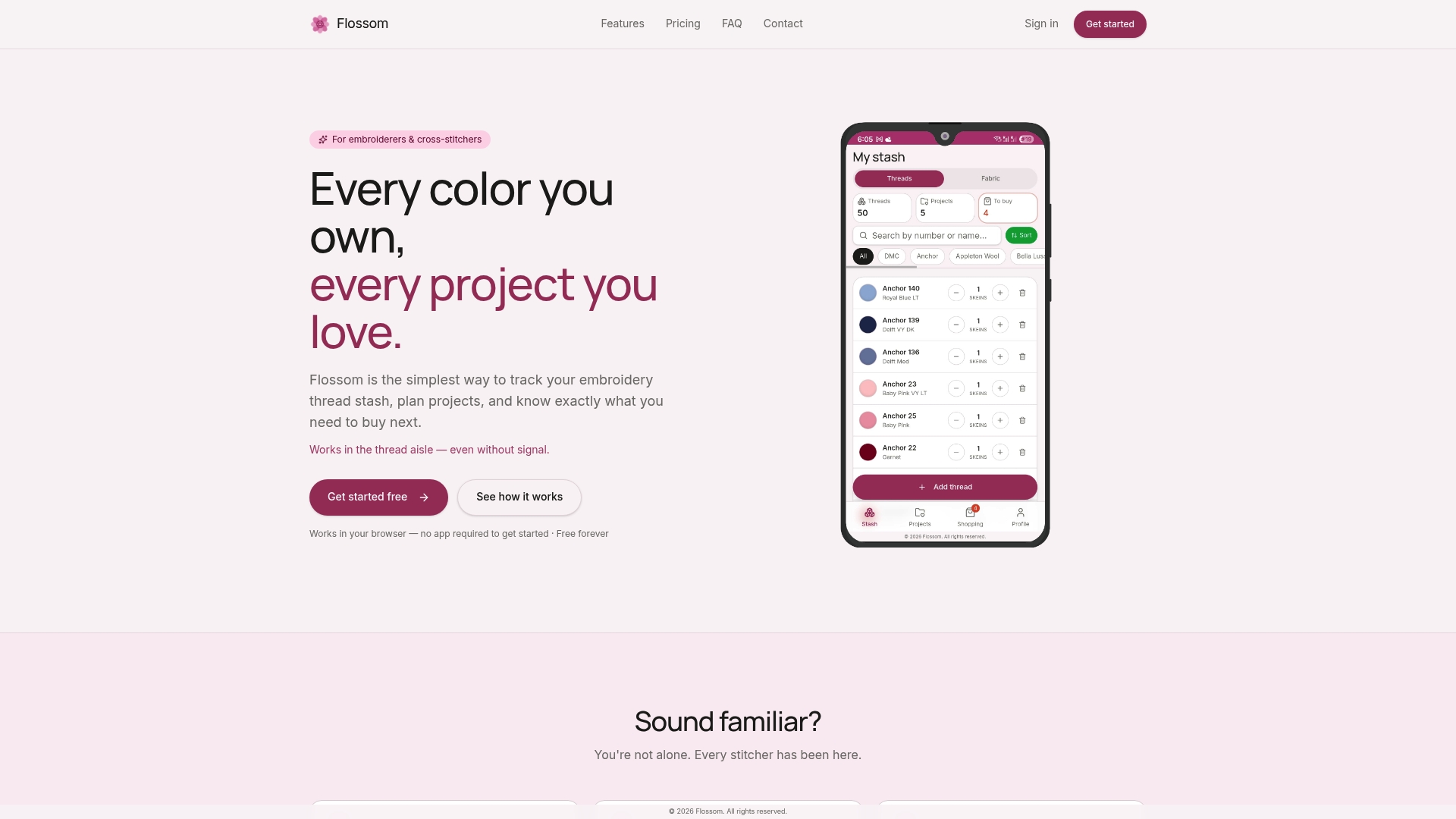
Flossom is built for exactly this. You can catalog your entire DMC and Anchor thread stash, track work-in-progress photos, and set low-stock alerts so your journal entries always reflect what you actually own. The free tier covers unlimited stash entries and three active projects. Flossom Pro adds a camera color picker, barcode scanner, fabric stash tracking, and support for all 71 thread brands. When your journal notes a color you loved, Flossom tells you whether it is already in your stash or on your shopping list. That connection between creative record and practical inventory is what makes journaling sustainable long term.
FAQ
What is a stitching journal used for?
A stitching journal is used to document embroidery projects, track thread and fabric details, record personal reflections, and build a creative history of your stitching practice. It serves both as a project log and a personal diary tied to your craft.
Do I need special materials to start a stitch journal?
No special materials are required. A folded piece of linen, a few threads, and a needle are enough for a fabric journal. A free notes app on your phone works just as well for a digital version.
How often should I write in a stitching journal?
Most crafters find a rhythm of 1–4 stitching sessions per week sustainable, with brief digital notes between sessions. Match your journaling frequency to your actual stitching schedule rather than an ideal one.
What is the difference between a stitching journal and a project log?
A project log records technical data: thread colors, fabric counts, and stitch types. A stitching journal includes that data plus personal reflections, mood codes, inspiration sources, and creative notes that give the record meaning beyond the numbers.
Can I keep a digital stitching journal?
A digital journal is a fully valid format. Combining digital note apps with periodic fabric hand-stitching creates a sustainable hybrid practice that reduces burnout and keeps your records searchable and accessible across devices.
Recommended
We make Flossom — the calm app for cross-stitchers and embroiderers who want their stash, projects, fabric and shopping list in one tidy place.