
Metallic Thread in Cross Stitch: A Complete Guide
Discover how to use metallic thread in cross stitch effectively. This complete guide offers tips, tools, and techniques for stunning results!
Metallic Thread in Cross Stitch: A Complete Guide
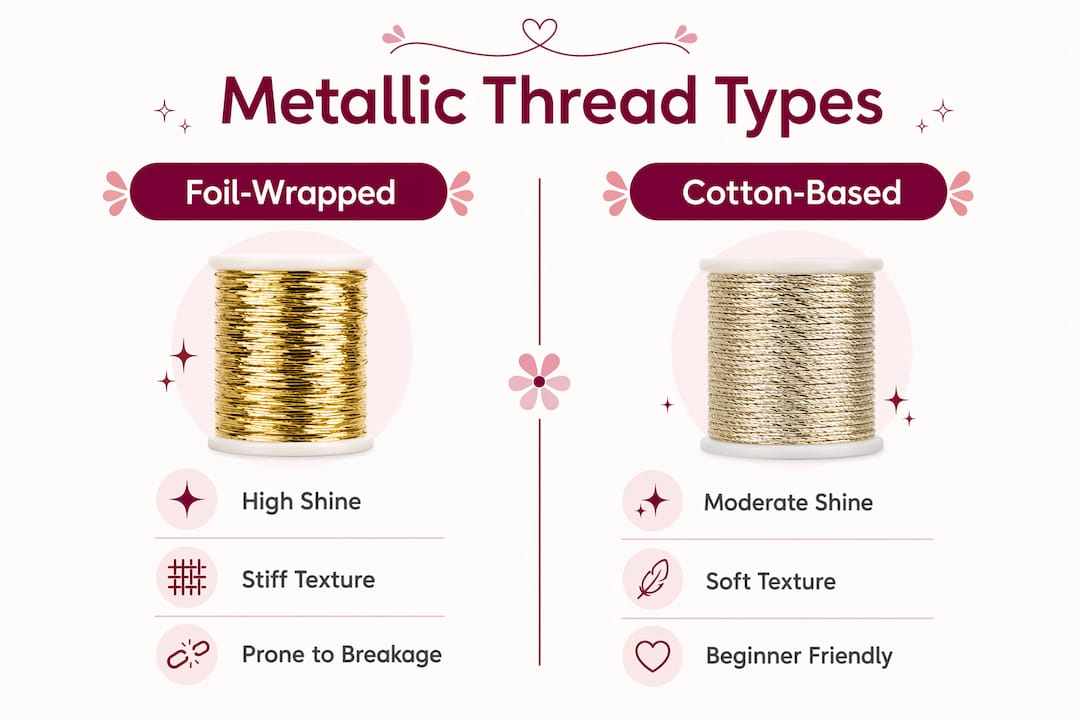
Metallic thread in cross stitch is a foil-wrapped fiber that adds instant shimmer and texture to embroidery designs. Unlike standard stranded cotton, it resists bending, frays quickly, and twists into knots if you handle it carelessly. The good news is that a few targeted technique adjustments make it entirely manageable. This guide covers the right needles, thread lengths, stitching methods, and care routines so you can add sparkle to your projects without the frustration.
What tools and materials work best with metallic thread in cross stitch?
The right tools cut most of the frustration out of stitching with metallic embroidery threads before you even make your first stitch.
Needles
Go up one or two needle sizes from your usual tapestry needle. If you normally stitch with a size 26, switch to a size 24. A larger needle eye reduces abrasion against the metallic coating as the thread passes through the fabric. That coating is what gives the thread its shine, and a tight eye strips it away stitch by stitch.
Thread length
Cut metallic thread to about 12 inches (30–35 cm) maximum. Standard cotton strands run 45–50 cm, but metallic thread degrades faster with every pull through the fabric. Shorter lengths mean fewer passes, less fraying, and far fewer tangles. Re-threading more often is a small trade-off for thread that actually holds together.
Thread conditioners
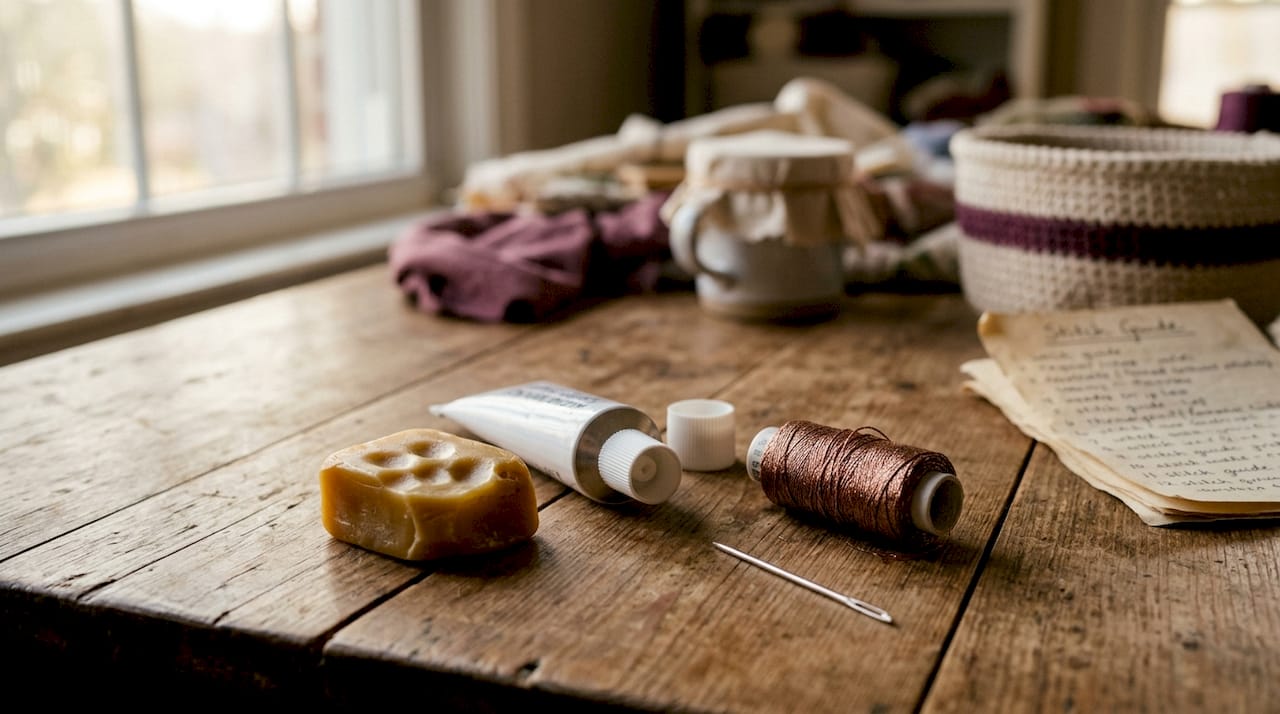
A single light pass of beeswax or a synthetic thread conditioner reduces static and fiber shredding on metallic thread. Thread conditioner does not need to be applied heavily. Too much leaves a residue that dulls the shine you are trying to achieve.
Frames vs. hoops
Slate frames and roller frames hold fabric at consistent tension without the repeated tightening and loosening that hoops require. That stability matters with metallic thread because tension changes stress the foil wrapping. If you only own a hoop, keep the fabric taut but not drum-tight.
Pro Tip: Mix one strand of metallic thread with one strand of stranded cotton on the same needle. You get sparkle with far better durability, and the cotton strand gives the metallic something to grip against.
How do you stitch with metallic thread to avoid tangling and breakage?
Metallic thread breaks more often than cotton because its foil wrapping has low tolerance for tight pulls. Stitch with lighter tension and a slower pace than you would use with standard floss. That single adjustment prevents most snapping.
Follow this sequence for the smoothest results:
- Thread your needle with a short length. Twelve inches is the ceiling. Start fresh rather than pushing a worn strand further.
- Stitch with a relaxed pull. Let the thread settle into the fabric rather than tugging it snug. Metallic thread fills the hole adequately without being pulled tight.
- Let your needle hang every few stitches. Letting the needle dangle allows the thread to untwist naturally. Skipping this step causes kinking and birdnesting within minutes.
- Use the railroading technique. Before pulling the thread through on the second leg of each cross stitch, insert your needle between the two strands to separate them. Railroading keeps stitches flat and uniform, which is especially important for metallic thread because flat stitches catch the light evenly.
- Complete metallic sections last. Finish metallic thread areas after all cotton stitching is done. Every time you handle the fabric, those fragile metallic stitches risk fraying. Doing them last protects the finished look.
Pro Tip: If your metallic thread keeps shredding mid-stitch, try threading the needle with the cut end rather than the fold end. The direction of the foil wrap matters, and stitching "with the grain" reduces shedding noticeably.
Patience is the real technique here. Metallic thread rewards a slower rhythm. Stitchers who rush it spend more time unpicking than stitching.
Which metallic thread types are best for cross stitch?
Product choice affects stitching ease more than almost any other variable. Some metallic lines are far more prone to breakage than others, and knowing the differences saves you money and frustration.
The three main types of metallic embroidery threads each suit different skill levels and project goals:
| Thread type | Characteristics | Best for |
|---|---|---|
| Foil-wrapped metallic | High shine, stiff, prone to fraying | Accent details, experienced stitchers |
| Blended sparkle (e.g., DMC Étoile) | Cotton core with metallic wrap, softer | Beginners, larger fill areas |
| Single-strand metallic (e.g., DMC Diamant) | Finer gauge, moderate shine | Fine detail work, outlines |
DMC Light Effects, Étoile, and Diamant each offer different levels of manageability and shine. Étoile is a cotton thread with a subtle sparkle twist, making it the most beginner-friendly option in the DMC range. It handles almost like regular floss, which means you can use your normal needle size and thread length without major adjustments.
DMC Diamant is a single-strand metallic designed specifically for cross stitch. It is more manageable than traditional foil-wrapped threads but still benefits from shorter lengths and a larger needle eye.
Traditional foil-wrapped metallics deliver the most dramatic shine but demand the most technique. Blending a metallic strand with stranded cotton is the most practical workaround for stitchers who want sparkle without fighting their thread on every pull.
Budget-friendly metallic threads from craft stores often use thinner foil wrapping that strips away faster. If you find yourself replacing thread constantly, switching to a mid-range or premium line pays for itself in time saved.
How do you care for finished cross stitch with metallic thread?
Metallic stitches need gentler care than cotton ones. The foil coating that creates the shine is also the most vulnerable part of the thread.
- Washing: Rinse finished pieces in cold water with a small amount of mild soap. Gentle rinsing in cold water protects the foil from heat damage and prevents color bleeding from any adjacent cotton threads. Never wring or twist the fabric.
- Drying: Lay the piece flat on a clean towel and reshape it gently. Hanging a wet piece distorts the fabric and puts stress on metallic stitches.
- Ironing: Place a press cloth between the iron and the fabric. Use the lowest heat setting your iron offers. Direct heat melts metallic foil, which ruins the shine permanently and can fuse threads to the fabric.
- Handling: Avoid rubbing or scratching finished metallic sections. The foil coating wears away with abrasion over time, leaving dull patches.
- Storage: Store finished pieces flat or rolled, not folded. Fold lines press directly onto metallic stitches and can crack the foil coating. Acid-free tissue paper between layers adds extra protection for heirloom pieces.
One practical tip: test wash a small sample of your metallic thread before committing it to a large project. Some budget metallic threads bleed color or lose shine after the first wash, and discovering that on a finished piece is deeply discouraging.
Key Takeaways
Mastering metallic thread in cross stitch requires shorter thread lengths, a larger needle, lighter tension, and the railroading technique to keep stitches flat and the foil coating intact.
| Point | Details |
|---|---|
| Use a larger needle | Go up one to two sizes to reduce friction and protect the metallic coating. |
| Cut thread to 12 inches | Shorter lengths reduce fraying and tangling on every pass through fabric. |
| Let the needle hang often | Periodic untwisting prevents kinking and birdnesting during stitching. |
| Stitch metallic sections last | Finishing metallic areas last protects fragile stitches from handling damage. |
| Wash with cold water only | Cold water and a press cloth preserve the foil coating on finished pieces. |
Why metallic thread changed how I think about finishing a project
My first experience with metallic thread was a disaster. I used the same length I cut for cotton, the same needle, and the same tension. The thread shredded after three stitches, and I spent more time re-threading than actually stitching. I nearly wrote off metallic embroidery threads entirely.
What turned it around was treating metallic thread as a completely separate material rather than a variation on cotton. Once I switched to a size 24 needle, cut my lengths to 10–12 inches, and started letting my needle hang every few stitches, the experience changed completely. The railroading technique was the final piece. Flat, even stitches catch the light in a way that makes the whole piece look more finished and intentional.
My honest recommendation: start with DMC Étoile if you are new to cross stitch with shiny thread. It behaves close enough to regular floss that you can build confidence without fighting the material. Once you are comfortable, move to DMC Diamant for finer detail work. Save traditional foil-wrapped metallics for accent details where a few stitches of high drama are worth the extra handling care.
The projects where metallic thread earns its place are ones with small, defined accent areas: a star, a crown, a candle flame, or a border. Using it sparingly makes it look intentional. Using it everywhere makes it look chaotic and is genuinely exhausting to stitch.
Patience is not optional with metallic thread. It is the technique.
— Simone
Managing your metallic thread stash with Flossom
Specialty threads like metallics are easy to lose track of, especially when you are juggling multiple projects at once.
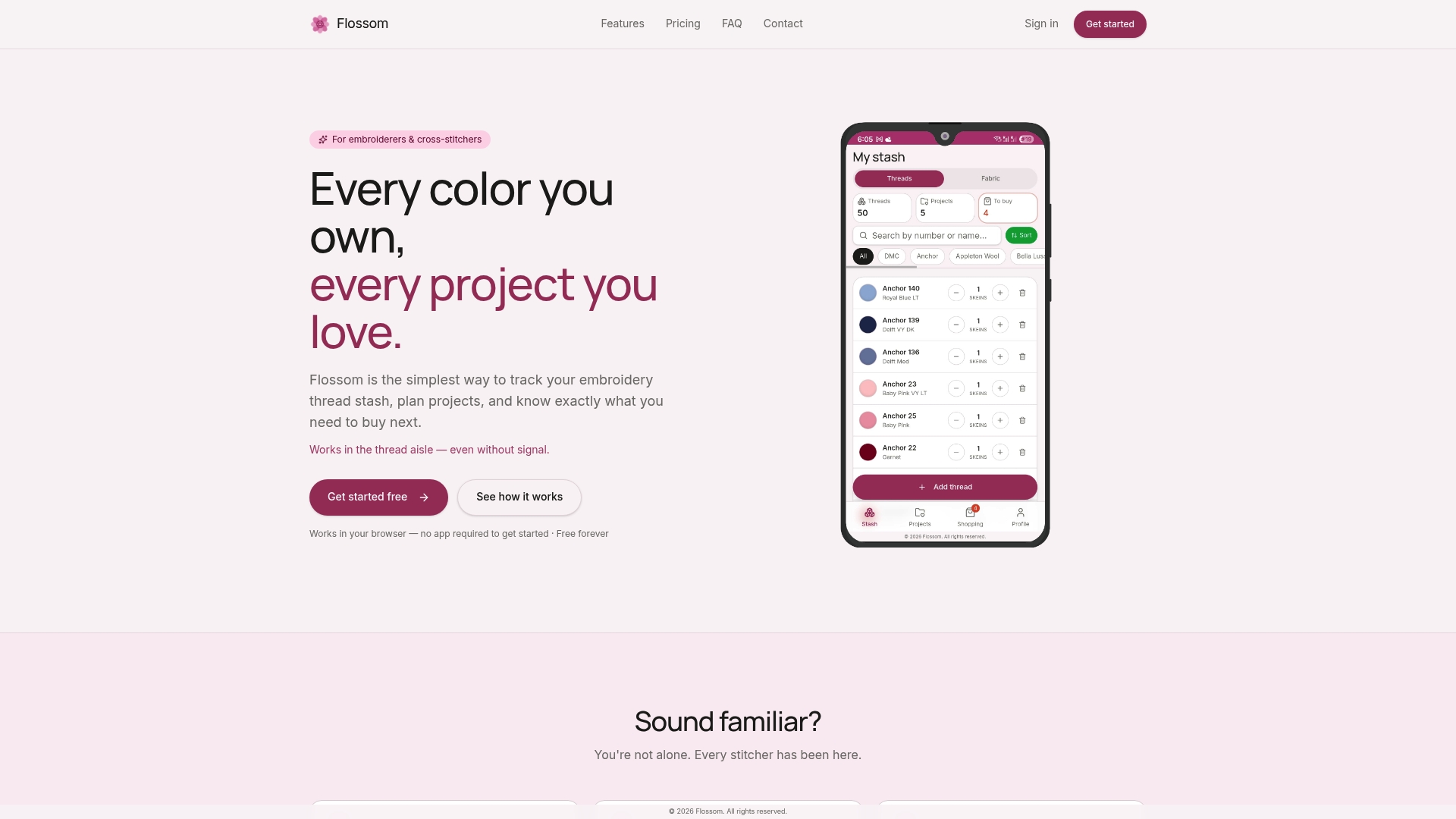
Flossom is a cross-stitch companion app that catalogs your entire thread stash, including metallic and specialty lines, so you always know what you own before you buy more. Its thread conversion tool covers 71 brands, which is useful when a pattern calls for a metallic shade you do not recognize. The free tier includes the DMC and Anchor catalogs with unlimited stash entries and three active projects. Flossom's stash tracking tools also let you set low-stock alerts, so you never run out of a metallic mid-project. You can also organize your thread collection by type, brand, or project, which makes planning metallic accents much faster.
FAQ
How long should metallic thread be cut for cross stitch?
Cut metallic thread to approximately 12 inches (30–35 cm). Shorter lengths reduce the number of passes through the fabric, which minimizes fraying and tangling.
What needle size works best for metallic thread?
Use a tapestry needle one to two sizes larger than your usual size. A size 24 needle instead of a size 26 reduces friction on the metallic coating and prevents stripping.
Can you mix metallic thread with cotton floss?
Yes. Blending one strand of metallic thread with one strand of stranded cotton gives you sparkle with added stability. This combination significantly reduces breakage compared to using metallic thread alone.
Does metallic thread need special washing care?
Wash finished pieces with metallic stitches in cold water with mild soap. Always iron with a press cloth on the lowest heat setting, since direct heat melts the foil coating.
What is the easiest metallic thread for beginners?
DMC Étoile is the most beginner-friendly option because its cotton core makes it handle similarly to regular floss. It delivers subtle sparkle without the fraying and tangling common to traditional foil-wrapped metallic threads.
Recommended
We make Flossom — the calm app for cross-stitchers and embroiderers who want their stash, projects, fabric and shopping list in one tidy place.