
Embroidery Specialty Thread Types: A Crafter's Guide
Explore embroidery specialty thread types to elevate your projects. Learn about metallic, silk, and more to add depth and character effortlessly.
Embroidery Specialty Thread Types: A Crafter's Guide
Embroidery specialty thread types are distinctive threads engineered to add texture, sheen, color effects, and visual depth beyond what standard polyester or rayon threads deliver. Unlike 40wt polyester, which is the industry standard for machine embroidery, specialty threads include metallic, silk, wool, variegated, and glow-in-the-dark options, each with its own handling requirements and aesthetic payoff. Choosing the right type transforms a flat design into something with real dimension and character. This guide breaks down every major category so you can stitch with confidence and pick the right thread for every project.
1. What are embroidery specialty thread types?
Specialty embroidery threads are any threads that fall outside the standard polyester or rayon categories used for everyday machine or hand embroidery. The industry recognizes them by their unique fiber composition, weight class, and needle requirements. Standard threads follow predictable rules. Specialty threads do not, and that is exactly what makes them worth learning.
Thread weight numbers work in reverse: a higher number means a finer thread. So 60wt is finer than 40wt, and 30wt is thicker and bolder. Specialty threads often fall outside this standard range entirely, or they behave differently even at the same weight because of their fiber structure. Knowing this baseline helps you understand why specialty threads need different settings.
2. Metallic embroidery threads: shimmer, sparkle, and machine settings
Metallic thread is the most visually striking of all specialty options. It consists of a foil-wrapped fiber core, which gives it that signature shimmer but also makes it fragile under tension. Holiday motifs, logo accents with gold or silver highlights, and decorative borders are where metallic thread earns its place.
The technical demands are real. Metallic threads require a size 90/14 metallic needle and a slower machine speed to prevent the foil wrap from shredding. Tension must be loosened slightly compared to standard thread settings. Skipping these adjustments causes breakage almost every time.
Key settings for metallic thread success:
- Use a 90/14 metallic needle, not a standard sharp or ballpoint
- Reduce machine speed by at least one-third
- Loosen upper tension by one or two steps
- Use a thread stand to reduce drag on the spool
- Test on scrap fabric before stitching your final piece
Pro Tip: Run metallic thread through a thread conditioner like Thread Heaven before loading it. The conditioner reduces friction and cuts breakage dramatically on longer runs.
3. Silk embroidery threads: varieties, sheen, and handling
Silk thread is the gold standard for heirloom embroidery and fine detailed work. Its natural protein fiber produces a sheen that polyester and rayon simply cannot replicate. Silk threads vary significantly: Mulberry silk is smooth, uniform, and premium, while wild silk (also called Tussah silk) is coarser and more textural. The choice between them depends on whether you want a polished finish or a rustic, organic look.
Silk is delicate. It frays more easily than polyester and does not tolerate aggressive machine tension. Hand embroidery is the most natural fit for silk, but it can work on slow-speed machine settings with a fine needle.
Best uses for silk thread:
- Heirloom pieces and wedding samplers
- Historical reproductions requiring period-accurate materials
- Fine floral motifs where sheen adds realism
- Goldwork embroidery where silk fills complement metal threads
Pro Tip: Store silk thread away from direct sunlight. UV exposure degrades the fiber and dulls the sheen faster than almost any other thread type.
Not all silk threads behave the same way, and treating Tussah silk like Mulberry silk leads to uneven tension and fraying. Test each type on your specific fabric before committing to a full design.
4. Wool and crewel threads for textured embroidery
Wool thread is the thickest and most tactile of the specialty categories. It sits above standard weight ranges and creates a raised, almost three-dimensional surface when stitched. Crewel wool, the most common variety used in embroidery, is a two-ply worsted yarn that produces bold, expressive lines.
Wool works best in hand embroidery. Most home embroidery machines cannot feed wool thread reliably through standard tension systems. The fiber is too thick and too variable in twist for consistent machine stitching. For hand work, wool rewards stitchers with fast coverage and a warm, textured result.
Strong project fits for wool and crewel thread:
- Traditional crewel embroidery on linen or wool ground fabric
- Rustic nature designs with leaves, branches, and bark textures
- Cold-weather apparel accents on jackets and blankets
- Folk art patterns that benefit from thick, expressive lines
Specialty threads like wool require specific needle and machine settings and are best tested for compatibility before any large project. For hand embroidery, a size 18–22 chenille needle handles wool's bulk without splitting the fiber.
5. Variegated, multicolor, and glow-in-the-dark threads
Variegated thread shifts through multiple colors along a single strand. The color placement changes with every run, which creates organic, painterly gradients in freeform designs. Variegated threads are visually striking but unsuitable for structured logos or consistent branding because the color shifts are unpredictable and unrepeatable.
Glow-in-the-dark thread is a niche specialty with a narrow but loyal following. It uses phosphorescent fibers that charge under light and emit a soft glow in darkness. The effect is subtle in daylight but dramatic in low light. Common uses include children's clothing accents, novelty patches, and theatrical costumes.
Handling notes for these specialty threads:
- Variegated thread works best in large fill areas where gradients can develop fully
- Avoid variegated thread on text or geometric logos where color consistency matters
- Glow-in-the-dark thread requires a larger needle eye to prevent fiber damage
- Both types benefit from slower machine speeds and reduced tension
Pro Tip: When using variegated thread, stitch a test swatch at least 4 inches square before starting your project. The color sequence looks very different on a small swatch versus a large fill area.
6. How to choose the right specialty thread for your project
The right thread choice comes down to four factors: the visual effect you want, the fabric you are stitching on, your machine's capabilities, and how much time you are willing to spend on setup. Specialty threads add tactile depth and visual interest, but they require patient machine tuning. Rushing the setup phase causes most of the problems crafters blame on the thread itself.
| Thread type | Sheen | Texture | Machine friendly | Best for |
|---|---|---|---|---|
| Metallic | High | Low | Moderate (with adjustments) | Accents, holiday designs |
| Silk (Mulberry) | Very high | Low | Low (hand preferred) | Heirloom, fine detail |
| Silk (Tussah) | Medium | Medium | Low (hand preferred) | Rustic, textural work |
| Wool/crewel | None | Very high | Low (hand preferred) | Bold, folk, crewel work |
| Variegated | Variable | Low | Moderate | Freeform, artistic fills |
| Glow-in-the-dark | None (daytime) | Low | Moderate | Novelty, children's items |
Fabric compatibility matters as much as thread type. Silk thread on a coarse canvas tears easily. Wool thread on a fine silk ground fabric puckers the weave. Match thread weight to fabric weight as a starting rule, then adjust from there.
Pro Tip: Always buy a small test quantity of any specialty thread before ordering in bulk. Run it through your machine or needle on your actual project fabric. Thread behavior varies between brands even within the same category.
Sourcing specialty threads from reputable suppliers also matters. Thread quality within a single category varies widely. A low-cost metallic thread will shred even with perfect machine settings, while a quality metallic from a trusted brand handles smoothly. If you work across multiple brands, converting between thread brands accurately saves time and prevents costly color mismatches.
Key takeaways
Specialty embroidery threads deliver effects that standard polyester cannot match, but each type requires specific needles, tension settings, and fabric pairings to perform well.
| Point | Details |
|---|---|
| Thread weight is inverted | Higher weight numbers mean finer thread; specialty threads often fall outside standard ranges. |
| Metallic needs special setup | Use a 90/14 needle, reduce machine speed, and loosen tension to prevent breakage. |
| Silk varies by type | Mulberry silk is smooth and premium; Tussah silk is coarser and suits textural work. |
| Wool is a hand embroidery thread | Most home machines cannot feed wool reliably; use a chenille needle for hand work. |
| Variegated thread is unpredictable | Color placement shifts with every run, making it unsuitable for logos or structured designs. |
My take on specialty threads after years of stitching
The advice I wish someone had given me early on is this: treat specialty threads as a separate skill set, not just a different spool on the same machine. Most crafters hit problems with metallic or silk threads and blame the thread. The real issue is almost always the setup.
I started with metallic thread on a standard needle at full machine speed. The foil shredded within three inches. Once I switched to a 90/14 metallic needle and dropped my speed, the same thread ran cleanly for an entire holiday hoop. That single change taught me more about machine embroidery than months of reading.
My recommendation for anyone building a specialty thread collection: start with one metallic and one variegated thread. Master the machine settings for each before adding silk or wool. Silk especially rewards patience. The sheen it produces on a fine linen ground is unlike anything polyester can achieve, but it punishes rushed tension adjustments immediately.
The other thing worth saying plainly: organizing your thread stash before you expand into specialty types saves real money. Specialty threads are more expensive than standard options, and buying duplicates because you forgot what you already own adds up fast. A simple inventory system changes that habit completely.
— Simone
Flossom keeps your specialty thread stash under control
Specialty threads are an investment. Buying duplicates or losing track of what you own wastes both money and project time.
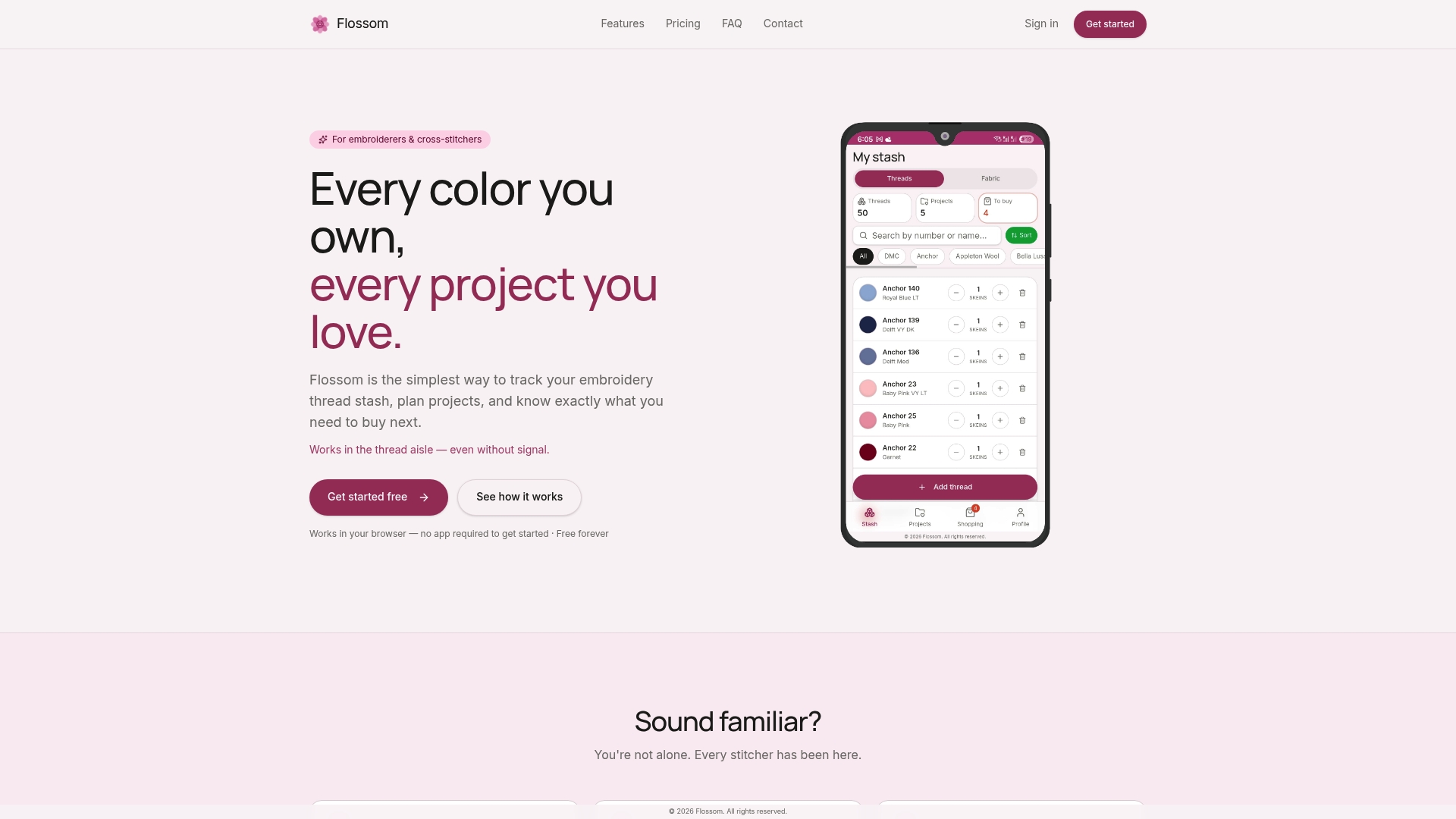
Flossom is built for exactly this problem. It lets you catalog your thread stash across all your specialty types, set low-stock alerts, and auto-generate shopping lists based on what your pattern actually needs versus what you already own. Flossom supports 71 thread brands and converts between them, which is especially useful when you work with specialty threads from multiple manufacturers. The free tier covers DMC and Anchor with unlimited stash entries and three projects. Pro unlocks all 71 brands, a camera color picker, barcode scanner, and unlimited projects. Everything syncs across iOS, Android, and desktop.
FAQ
What is the difference between embroidery floss and specialty thread?
Embroidery floss is a standard six-strand cotton thread used for hand embroidery and cross stitch. Specialty threads include metallic, silk, wool, and variegated options that add unique textures, sheens, or color effects beyond what cotton floss delivers.
Can I use specialty threads in a regular embroidery machine?
Most specialty threads work in standard machines with adjustments. Metallic thread requires a 90/14 needle and slower speed; wool thread is generally too thick for machine use and works best by hand.
What is the best specialty thread for beginners?
Variegated polyester thread is the most beginner-friendly specialty option. It runs through standard machine settings with minimal adjustment and produces striking color gradients without the fragility of metallic or silk.
How does silk embroidery thread differ from rayon?
Silk thread comes from natural protein fibers and produces a deeper, warmer sheen than rayon. Rayon is a synthetic fiber that mimics silk's shine at a lower cost but lacks silk's softness and historical authenticity.
What does thread weight mean in embroidery?
Thread weight numbers are counterintuitive: a higher number means a finer thread. Standard machine embroidery uses 40wt thread; 60wt is finer for detail work, and 30wt is thicker for bold designs.
Recommended
We make Flossom — the calm app for cross-stitchers and embroiderers who want their stash, projects, fabric and shopping list in one tidy place.