Predictable DMC Variegated Floss for Stitchers: Swatch + Stash Checklist
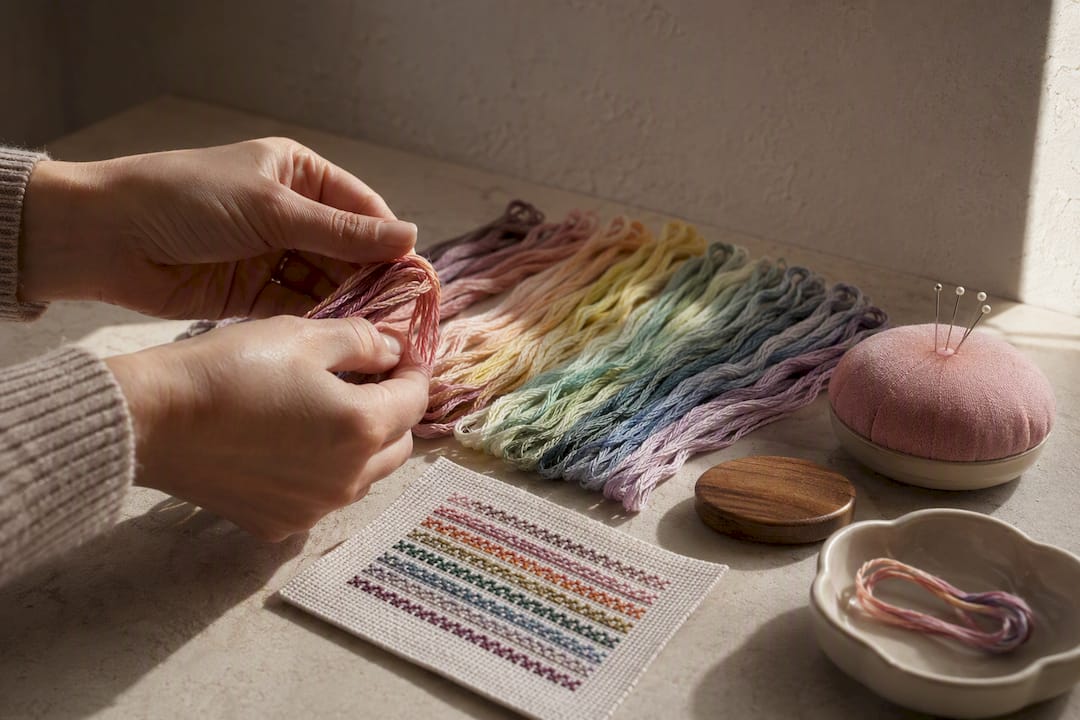
Predictable DMC Variegated Floss for Stitchers: Swatch + Stash Checklist ! Variegated floss beside stitched Aida test square The quickest way to predictable results with DMC variegated floss is to stitch full crosses using the English method, skip loop starts, and plan your strand placement before you thread a needle.
Predictable DMC Variegated Floss for Stitchers: Swatch + Stash Checklist
The quickest way to predictable results with DMC variegated floss is to stitch full crosses using the English method, skip loop starts, and plan your strand placement before you thread a needle. Reversing a strand or blending in a solid color are your main levers for controlling how the color shifts. Even then, expect some unpredictability. That randomness is the whole point of using variegated thread in the first place.
TL;DR:
- Choosing the English stitch method produces smoother color transitions, while the Danish method results in stripey blocks that may surprise stitchers.
- Reversing one strand and blending in solids can control how prominent the variegation appears in the finished piece.
- Variegated floss works best in large, connected areas like borders and floral petals, but not in scattered, tiny stitches or uniform blocks.
- Verifying color matches with a physical color card and stitching a small swatch can prevent mismatched dye lots and patchy gradients.
- Keeping detailed records of dye lots, start and end points, and fiber choices ensures project continuity and reduces the risk of running out mid-stitch.
Table of Contents
- What Makes DMC Variegated Floss Different
- English or Danish? The Stitch Method That Decides Your Look
- Reversing Strands, Blending Solids, and Matching Cut Points
- Where Variegated Floss Shines (and Where It Falls Flat)
- Getting the Color Match Right Before You Buy
- A Planning Checklist That Saves You From Running Out Mid-Project
- A Quick Note on What Trips Up Most Beginners
- Sources
What Makes DMC Variegated Floss Different
DMC sells two named variegated ranges: Coloris, a newer line with painterly, multi-hue shifts, and Variations, an older range with softer tonal gradients within a single color family. Both differ from a generic "space-dyed" floss you might find from a smaller dye house, because DMC's dye lots follow a repeatable, documented sequence, at least in theory.
DMC stocks dozens of variegated numbers alongside its 489 solid colors, which means a variegated floss guide has to cover two different shopping problems at once: picking the right base color family, and confirming the actual dye sequence in the skein you're holding. Digital swatches on a screen can only approximate what dyed cotton actually looks like under lamp light or daylight.
That's why serious stitchers keep a physical DMC color card on hand rather than trusting a monitor.
- Coloris threads tend to shift through several distinct hues in one skein.
- Variations threads usually stay within one color family, moving light to dark.
- Dye lots can vary skein to skein, even under the same number.
- A physical card shows the actual thread, not a screen's interpretation of it.
English or Danish? The Stitch Method That Decides Your Look
Your stitch method matters more than almost anything else you'll decide on a variegated piece. Stitchers usually split into two camps here, and variegated floss makes the difference between them obvious in a way solid colors never do.
- The English (full-stitch) method. You complete each cross entirely before moving to the next square. This keeps the thread moving forward through its color sequence in a steady line, which tends to produce smoother, more gradual color transitions across a shape.
- The Danish (row) method. You stitch a full row of half crosses, then come back and complete the other half. This doubles back over the same ground twice, which can bunch similar colors together and create stripey blocks instead of a gradient. It's not wrong, exactly. It's just a different visual outcome, and one that often surprises stitchers who didn't expect it.
- The loop start. Skip it with variegated floss. Looping doubles the strand, which shifts where each color lands in the sequence and can throw off the flow you were counting on. A waste knot or simply catching the tail under your first few stitches keeps the color progression intact from the first stitch onward.
Before committing a full skein to a big motif, stitch a scrap swatch using whichever method you're leaning toward. Ten minutes on a spare piece of fabric tells you more than any amount of staring at the skein trying to guess.
Pro Tip: Cut a two-inch test square from leftover Aida and run a dozen stitches of your intended method before starting the real piece. If the gradient looks patchy there, it'll look patchy at full size too.
Reversing Strands, Blending Solids, and Matching Cut Points
Two low-effort tricks give you real control over how "loud" the variegation reads on fabric.
- Reverse one strand. If you're stitching with two or three strands, flip one so it runs opposite the others. The mismatched color positions blend into a heathered texture instead of a clean stripe, a technique confirmed in stitched comparisons of controlled shades.
- Mix in a solid. Pair one strand of a matching solid DMC color with two variegated strands. You get an overall consistent hue with flecks of variegation showing through, rather than obvious color blocks.
- Match your cut points. When you start a new length, note where the old one ended in its color cycle and orient the new length to continue roughly where it left off, so a motif's color flow doesn't jump backward.
- Offset on purpose when you want stripes. If a patchy, deliberate block effect suits the design, ignore the matching advice above and let the cuts fall where they fall.
Pro Tip: Before cutting a fresh length off the skein, hold it against the tail end of your last piece. Matching the visible color at the join point is faster than counting inches.
Where Variegated Floss Shines (and Where It Falls Flat)
Variegated thread earns its keep in large, connected areas where a gradient has room to develop. It struggles in small, scattered spots where the eye expects one steady color.
- Good fits: borders and frames, lettering, floral petals and leaves, large fill blocks, and accent motifs meant to draw the eye.
- Poor fits: isolated single stitches scattered across a design, tiny motifs only a few stitches wide, and any area meant to read as one flat, uniform color.
A rose petal stitched in a pink-to-red Coloris thread picks up a shaded, almost hand-painted depth that a solid color can't fake. That same thread scattered as single accent stitches across a sky, though, just reads as random dots of mismatched color. Scale and connection are what make variegation work.
Getting the Color Match Right Before You Buy
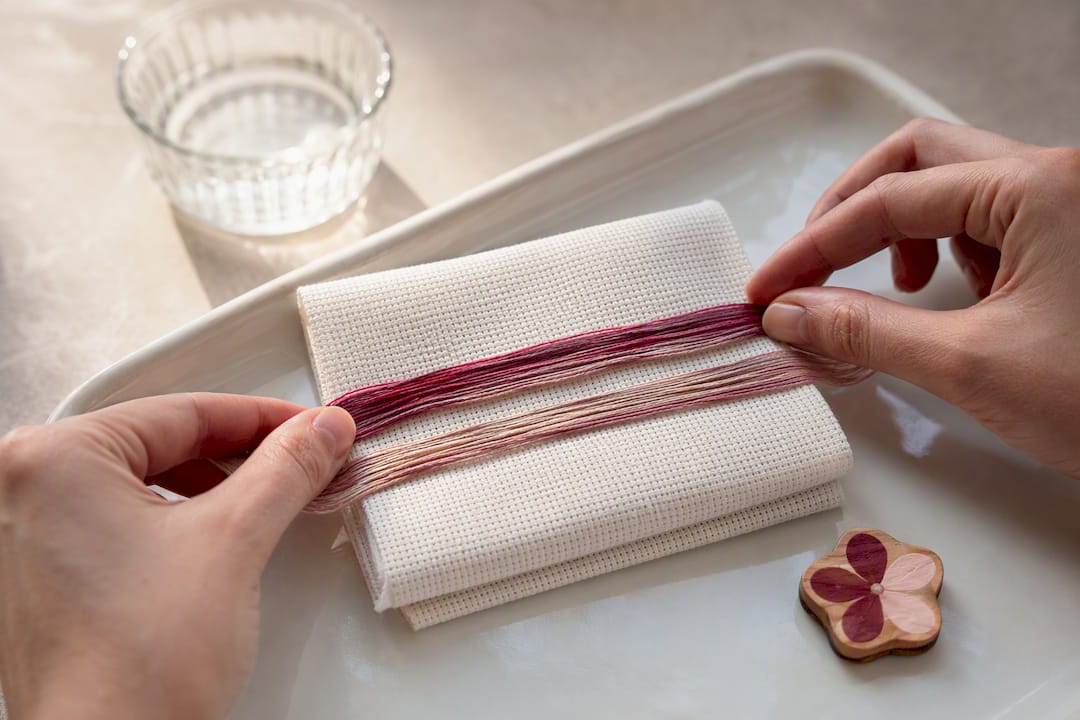
Start any color search with a digital tool, then confirm with your hands before you commit to a full project's worth of skeins.
Digital resources like the DMC color chart with hex codes rank close matches using perceptual distance rather than raw RGB values, which gets you closer to how a human eye actually judges color similarity. That's a genuinely useful first pass. It's still an approximation of dyed cotton on a screen, and dye lots shift enough that the number on the label doesn't guarantee an exact match to what you bought last time.
- Run your target color through a digital chart or finder for a shortlist of close DMC numbers.
- Confirm the finalists against a physical color card before ordering anything in bulk.
- Un-skein a length and stitch a small swatch to see the real sequence on fabric, not in your head.
- Photograph the skein and log the DMC number and dye lot the moment you open it.
A Planning Checklist That Saves You From Running Out Mid-Project
Nothing derails a variegated project faster than running short of a skein whose exact dye lot you can't identify anymore. Build the habit of logging details the day you buy the thread, not the day you need to reorder.
- Photograph the skein and label before you cut into it.
- Record the DMC number and dye lot if the label shows one.
- Note which end you started stitching from, so future joins line up correctly.
- Write down any strand mixes you used, like one solid plus two variegated.
A thread cataloguing system that tracks this alongside your stash and shopping list means you catch a low-stock variegated number before it stalls a large block halfway through, instead of discovering the gap three stitches from the edge.
A Quick Note on What Trips Up Most Beginners
Testing a scrap swatch before committing thread to your project is worth the ten minutes it costs. Variegated floss rewards patience and punishes guesswork, and its unpredictability is honestly part of the fun once you stop fighting it. The three mistakes I see most often: starting with a loop, skipping the test swatch entirely, and never writing down the dye lot before it runs out.
— Simone
If you're managing more than one variegated skein across a few active projects, keeping the details straight by memory stops working fast. Flossom logs your DMC and Coloris stash by number and dye lot, flags when a color is running low before it stalls a border or floral block, and builds a shopping list by comparing what a pattern calls for against what's already in your stash. Pair that with the project time calculator when you're scoping how long a large variegated fill will realistically take, and you'll spend less time second guessing a half finished skein and more time actually stitching.
Sources
- Stranded Thread & Pearl Cotton Embroidery Thread Shade Card
- English vs Danish cross-stitch with variegated thread
- Stitching with variegated threads: controlled shades and solids | Needlenthread
Recommended
We make Flossom — the calm app for cross-stitchers and embroiderers who want their stash, projects, fabric and shopping list in one tidy place.