
How to Organize Your Cross Stitch Thread Collection
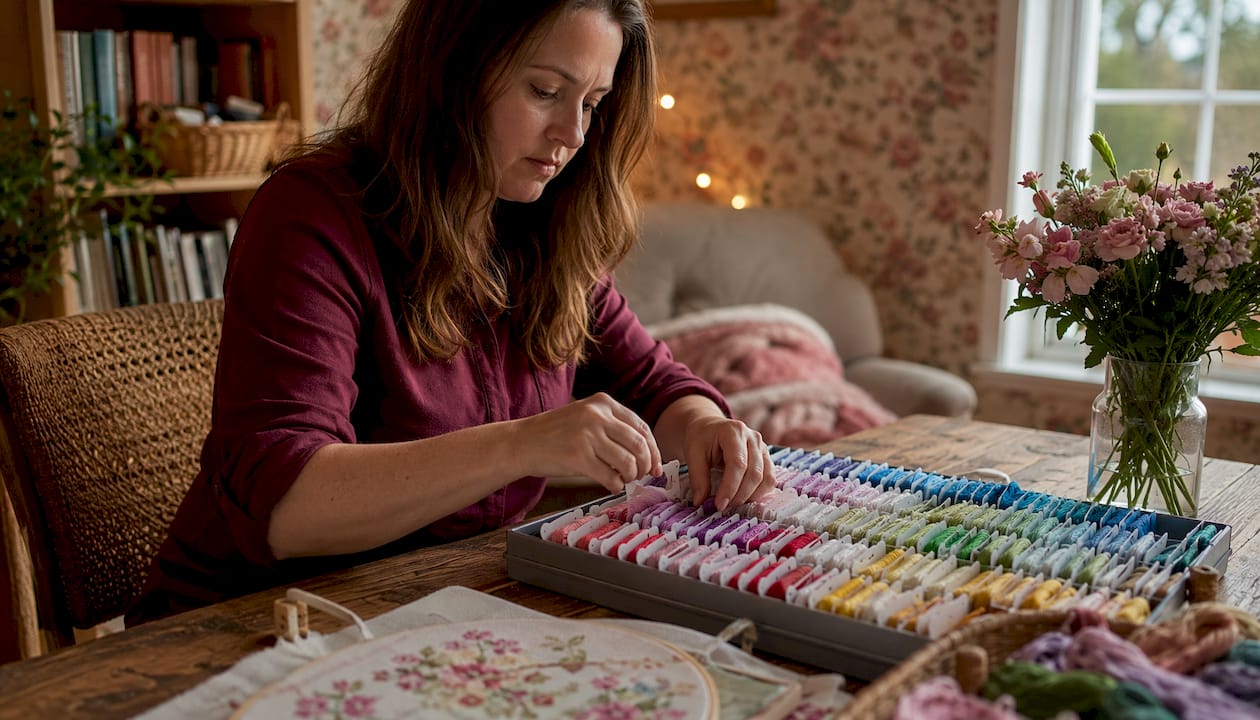
How to Organize Your Cross Stitch Thread Collection ! Woman organizing cross stitch threads at home The fastest way to organize a cross stitch thread collection is to wind threads onto labeled bobbins, store them in divided boxes sorted by DMC number, keep active project threads in separate bags, and track everything digitally to avoid buying duplicates.
How to Organize Your Cross Stitch Thread Collection
The fastest way to organize a cross stitch thread collection is to wind threads onto labeled bobbins, store them in divided boxes sorted by DMC number, keep active project threads in separate bags, and track everything digitally to avoid buying duplicates. That combination works whether you own 50 colors or 500.
Here is what the approach looks like in practice:
- Bobbins in divided boxes for your master collection, sorted numerically by DMC number for fast pattern lookup
- Hanging organizers or drawer systems once your collection outgrows a few boxes
- Project bags or organizer cards to hold only the threads for whatever you are currently stitching
- Floss drops when you want to skip winding entirely and keep skeins intact
- A digital inventory to log what you own, flag low stock, and generate shopping lists before you buy
The right system is the one you will actually maintain. Most experienced stitchers end up with a hybrid approach: bobbins for the master stash, portable tools for active projects.
1. How to use bobbins and organizer boxes for your thread stash
Plastic bobbins in divided boxes are the gold standard for most stitchers, and for good reason. Every color stays visible, threads never tangle, and you can pull a specific DMC number in seconds.
Plastic vs. cardboard bobbins
- Plastic bobbins are sturdier and hold their shape over years of use, but written numbers can rub off. Tape the skein label directly to the bobbin face rather than writing on it.
- Cardboard bobbins are cheaper and easier to write on, but they wear down over time, especially if you handle them frequently.
How to wind thread correctly
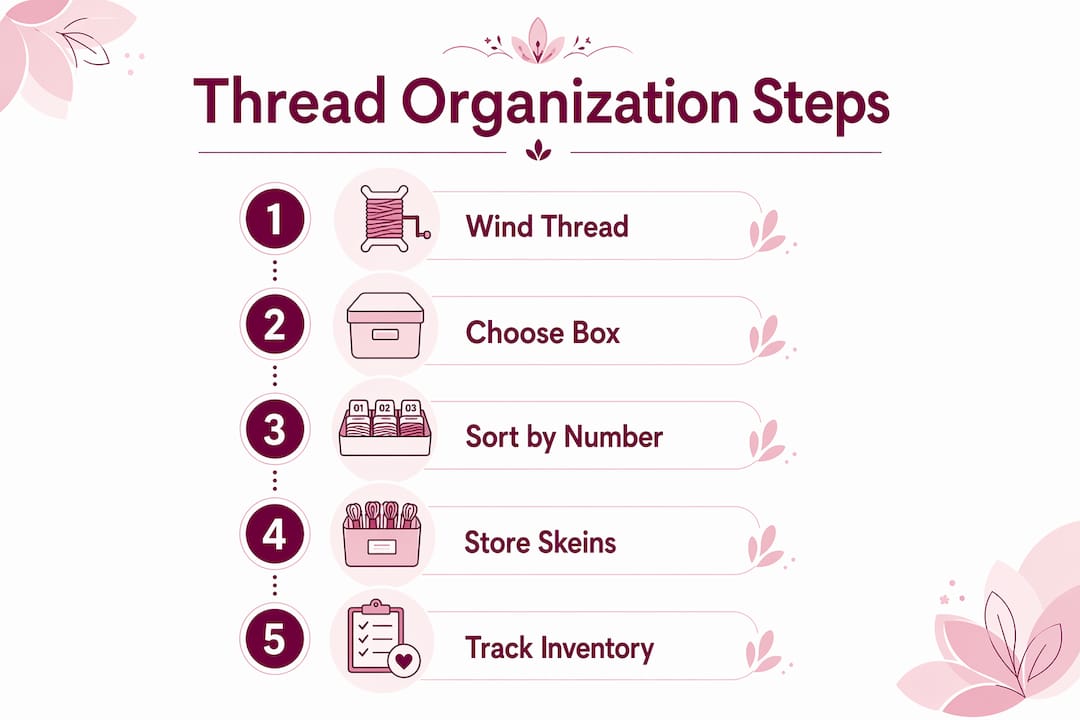
Wind each skein in a loose figure-eight pattern, then tuck both ends into the side notches. Tight winding stretches the floss and makes it harder to work with later. Label the bobbin with the DMC number before you lose the paper band.
Choosing the right box
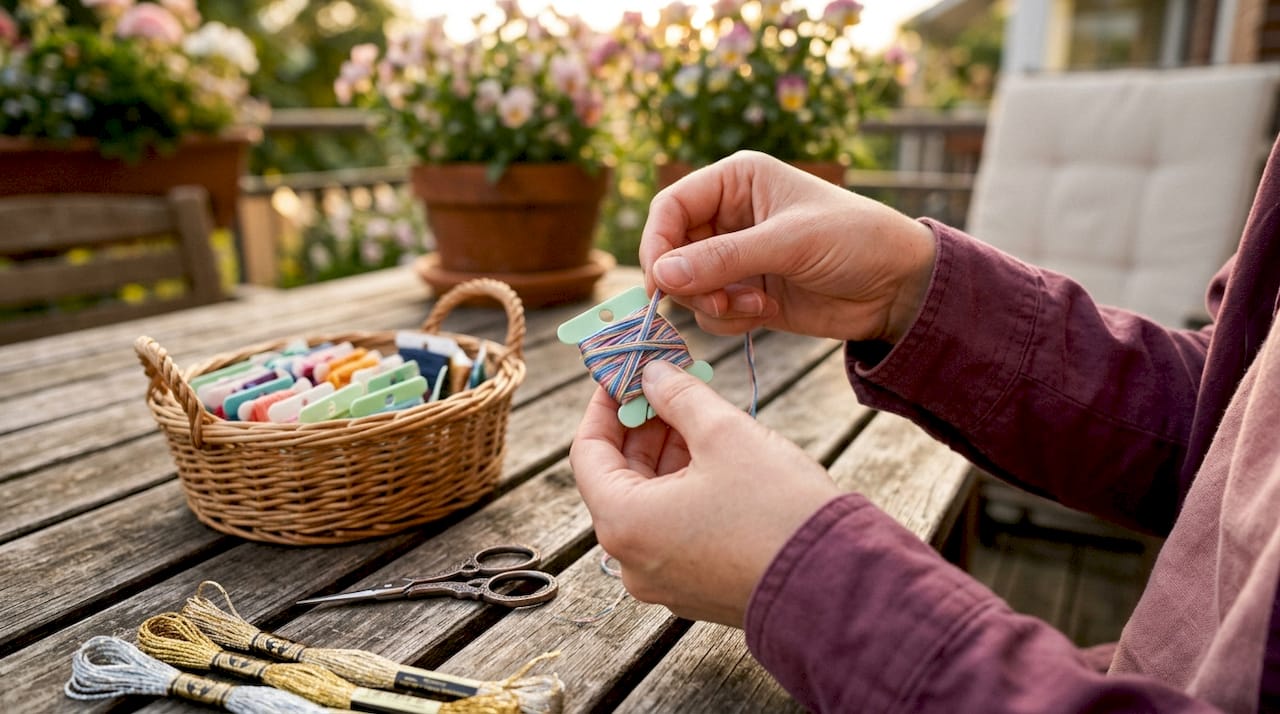
Look for boxes with locking clips and adjustable dividers. Plano-style tackle boxes from sporting goods stores work just as well as craft-specific options and often cost less. DMC-branded bobbin boxes hold roughly 50 bobbins each and stack neatly, which makes them practical once your collection grows past a single box.
Sorting by number vs. color family
Cross stitchers generally benefit from numerical order because patterns call out specific DMC numbers. You look up the number and go straight to it. Color-family sorting suits surface embroidery artists who choose threads by eye, but for pattern-based work it adds an extra scanning step you do not need.
Pro Tip: Use a literature organizer or shallow shelf to store multiple bobbin boxes upright side by side. You can pull any box without unstacking the whole pile.
2. What are floss drops and why do they work so well?
Floss drops are small, flat holders, usually acrylic or plastic, with a slot or hole at the top that lets you hang a full skein without winding it. They are a genuine alternative to bobbins for stitchers who want to skip the winding step entirely.
Here is how to get the most out of them:
- Slide the skein onto the drop. Loop the skein through the top slot so it hangs freely. The paper label band stays on, keeping the DMC number visible.
- Hang drops on a pegboard or ring. A pegboard with small hooks lets you arrange drops by color family or number. A large binder ring or carabiner works for smaller sets and travels well.
- Pull thread directly from the skein. No unwinding, no crimps. You cut what you need and the rest stays on the drop.
- Use drops for active project threads. Pull the colors your current pattern needs, clip them onto a dedicated ring, and keep that ring in your project bag. Everything for one project stays together.
- Store specialty threads on drops too. Variegated and hand-dyed skeins especially benefit from drop storage because winding them onto bobbins can distort the color sequence.
The main advantage over bobbins is that winding creates permanent crimps that can affect stitch smoothness. Floss drops sidestep that entirely. The trade-off is space: a pegboard of drops takes more room than a box of bobbins, so drops work best in a dedicated craft space rather than a travel kit.
3. How to store skeins, metallic threads, and specialty floss
Not every thread belongs on a bobbin. Loose skeins, metallics, and specialty fibers each have quirks that standard bobbin storage does not handle well.
Storing loose skeins
- Keep skeins in their original paper label bands. Those bands carry the brand name, color number, and dye lot, all of which you need when restocking.
- Store skeins in clear zip-lock bags grouped by color family, or use 4x6 photo storage boxes with compartments. Both options keep threads dust-free and visible without any winding.
- If you have extra skeins of colors you use often, photo box carriers sorted by number work well for bulk storage alongside your main bobbin collection.
Metallic and specialty threads
Metallic threads like Kreinik and DMC Metallics are best kept separate from standard floss. They snag easily and can shed metallic fibers onto neighboring threads. Small individual zip-lock bags or a dedicated compartment box keeps them contained. Spooled specialty threads, such as Sulky Petites, fit well in purpose-built spool boxes.
- Never wind metallic threads tightly. The metallic wrap can crack or fray under tension.
- Store silk and hand-dyed threads away from direct sunlight. UV exposure fades colors faster than almost anything else.
- Keep variegated threads in their original skein form whenever possible to preserve the color sequence.
Avoiding crimps and tangles
The choice between winding and not winding comes down to how much you value stitch smoothness versus storage compactness. For threads you use constantly, bobbins are practical. For specialty fibers you reach for occasionally, skein or drop storage keeps quality intact.
4. How to track your thread inventory and stop buying duplicates
A master inventory is the single biggest time-saver for anyone managing a large thread collection. Without one, you will buy DMC 3371 twice. Most stitchers do.

Pro Tip: Before any shopping trip, open your inventory list and search the colors your next pattern needs. Cross off what you already own. You will save money and avoid the creeping guilt of a stash that keeps growing without getting used.
The most practical approaches:
- Spreadsheet tracking: A simple spreadsheet with columns for DMC number, color name, quantity, and location (bobbin box, skein storage, project bag) covers everything. Google Sheets works well because you can check it from your phone at the craft store.
- Printed DMC checklist: Print a DMC color card checklist and highlight the colors you own. Tuck it into your stitching bag. Low-tech, but it works.
- Separate tabs for specialty threads: Keep DMC Metallics, Kreinik, Cosmo, and other brands on their own tabs so you never confuse them with your standard floss count.
- Update as you go: Mark a color when you finish a bobbin, when you add a new skein, and when you pull thread for a project. An inventory you update in real time is far more useful than one you reconcile monthly.
- Destash periodically: Colors you bought for one project and will never use again take up space and inflate your count. Selling or gifting excess thread through cross stitch communities keeps your collection honest.
Digital inventory paired with physical storage is the most practical setup for large collections. The physical system tells you where a thread is; the digital record tells you whether you have it at all.
5. How Flossom makes thread inventory and project management easier
Spreadsheets work, but they require manual upkeep and do not connect to your patterns. That is where a dedicated app like Flossom changes the workflow.
Flossom is built specifically for cross stitch and embroidery stitchers managing growing stashes and multiple works in progress. Key features:
- Stash catalog: Log your entire thread collection with DMC and Anchor numbers on the free tier. Flossom tracks quantities and flags colors that are running low.
- Auto-generated shopping lists: Upload a pattern PDF and Flossom compares what the pattern needs against what you already own, then generates a shopping list for only the missing colors.
- 55 thread brand conversions: If you work across DMC, Anchor, Cosmo, and other brands, Flossom converts between all of them so your inventory stays accurate regardless of which brand you buy.
- WIP tracking with photos: Attach progress photos to each project, note where you left off, and track multiple works in progress without losing your place.
- Cross-device sync: Everything syncs across iOS, Android, and desktop browsers. Check your stash from the craft store, update it from your couch.
- Fabric stash tracking: The Pro tier adds fabric inventory alongside thread, so your entire material stash lives in one place.
Pro Tip: Use Flossom's low-stock alerts before starting a new project. Set a minimum quantity for colors you use constantly, like DMC 310 (black) or 3865 (white), and you will never run out mid-project.
The free tier covers DMC and Anchor with unlimited stash entries and up to three projects. Pro unlocks all 55 brands, a camera color picker, barcode scanner, and unlimited projects.
6. Maintenance tips to preserve thread quality during storage
Good storage habits protect threads for years. Poor ones mean faded colors, tangled messes, and fibers that pill or break mid-stitch.
Light and moisture are the two main enemies. Store your thread collection away from windows and out of damp spaces like basements. UV exposure fades even high-quality DMC floss over time, and humidity causes fibers to swell, tangle, and in some cases mildew.
Keep boxes and bags closed when you are not actively stitching. Dust settles into open storage faster than you would expect, and it works its way into thread fibers in a way that is genuinely hard to remove. Clear-lidded boxes give you visibility without leaving threads exposed.
Handle metallic and silk threads with clean, dry hands. The oils from skin transfer to fibers and dull the sheen over time. For metallics especially, even brief contact with moisture can cause the metallic wrap to tarnish.
For fabric stored alongside your thread stash, roll pieces around acid-free cardboard tubes rather than folding them. Fold lines in Aida and evenweave can become permanent and interfere with stitch tension on finished pieces. A rolled piece stored in a project bag alongside its threads stays ready to pick up without any prep work.
Rotate through your stash. Threads that sit untouched for years, particularly specialty fibers, can become brittle. Using older stock first keeps your collection fresh and prevents waste.
Key Takeaways
The most effective way to organize a cross stitch thread collection combines labeled bobbin storage sorted by DMC number with a live digital inventory that prevents duplicate purchases.
| Point | Details |
|---|---|
| Bobbins in divided boxes | Wind loosely, label with DMC numbers, and sort numerically for fast pattern lookup. |
| Floss drops for intact skeins | Hang skeins without winding to avoid crimps and preserve thread smoothness. |
| Project bags for active work | Keep only the current project's threads in a dedicated bag to prevent cross-contamination. |
| Digital inventory prevents duplicates | A live stash log, whether a spreadsheet or an app like Flossom, stops you from buying colors you already own. |
| Protect from light and moisture | Store threads in closed boxes away from windows and damp spaces to preserve color and fiber quality. |
Recommended
We make Flossom — the calm app for cross-stitchers and embroiderers who want their stash, projects, fabric and shopping list in one tidy place.