
Cross Stitch Stash Cataloguing Explained for Hobbyists
Cross Stitch Stash Cataloguing Explained for Hobbyists ! Woman organizing cross stitch threads at home What is a cross stitch stash, and why does cataloguing it matter?

Cross Stitch Stash Cataloguing Explained for Hobbyists
What is a cross stitch stash, and why does cataloguing it matter?
Your cross stitch stash is everything you've accumulated to stitch with: threads, fabric, patterns, kits, magazines, and books. The stitching community even has slang for it. SABLE stands for Stash Acquired Beyond Life Expectancy, meaning you own more supplies than you could realistically use in a lifetime. SEX is Stash Enhancement Xperience, the community term for the act of buying more. Both are worn as badges of honor.
Cataloguing that stash means creating a record of what you own so you can find it, use it, and stop buying duplicates. A thread inventory helps you track discontinued colors, fill gaps in your collection, and make the most of sales without guessing. Cluttered, untracked supplies also cause real frustration: disorganized spaces drain motivation and contribute to WIP fatigue, the feeling of being overwhelmed by too many unfinished projects.
The core benefits of cataloguing your stash:
- Find any thread, fabric, or pattern in seconds
- Avoid buying colors you already own
- Track discontinued shades before they disappear from memory
- Know exactly which WIPs you have and where you left off
- Free up mental space for actual stitching
Popular methods for cataloguing cross stitch patterns and materials
Physical and digital approaches each have real strengths, and most experienced stitchers use both.
Thread storage and labeling
Bobbins are the gold standard. Wind each skein onto a flat plastic bobbin, write the DMC number on it immediately, and store bobbins in a divided box or a three-ring binder with clear plastic pages. Binder systems hold 20–30 bobbins per page and make your entire collection portable. Bobbin boxes sort by number or color family, and both work, though numerical order is faster when you're following a pattern.
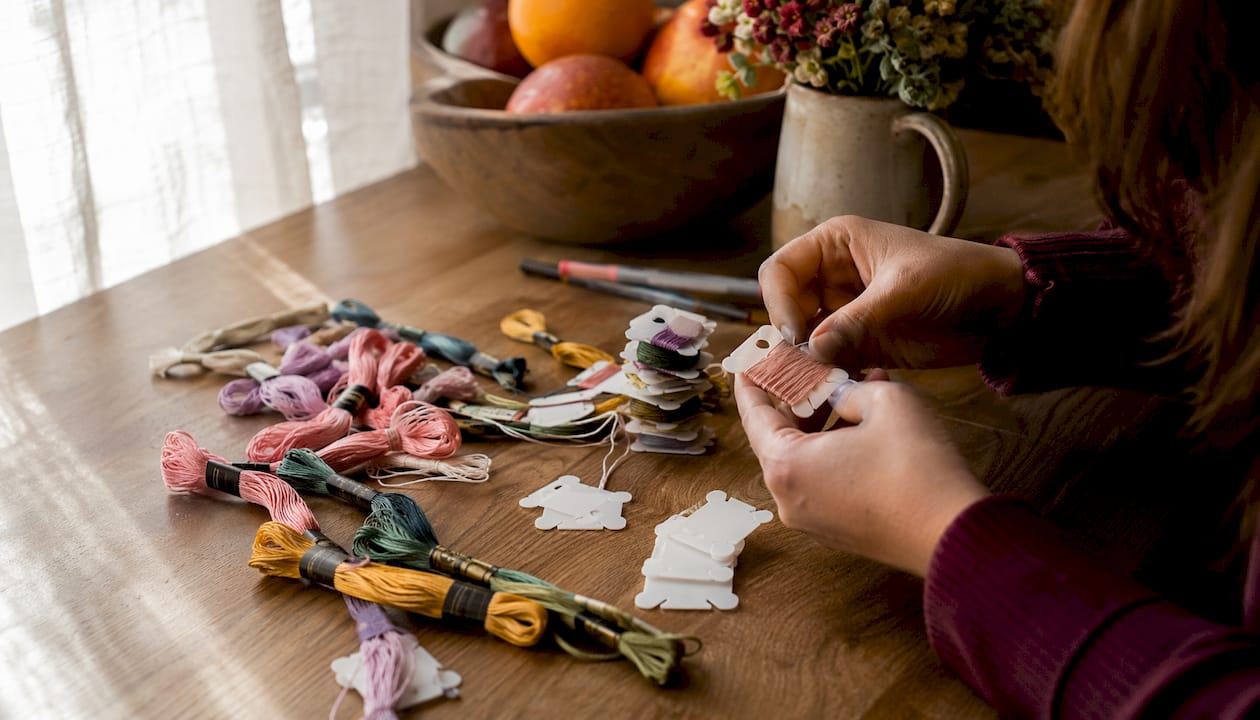
Never skip the label. Losing the original wrapper makes identifying a floss color nearly impossible, especially with DMC's 500-plus shades where similar tones look almost identical side by side. Write the number before you wind, not after.
For active projects, thread organizer cards keep working threads separate from your main stash. Loop the cut threads through labeled holes on a cardboard card, note the symbol and DMC number, and you can grab the right color without touching your master collection.
Pattern storage
Digital patterns belong in organized folders on your device or cloud storage, sorted by subject or designer. Print only what you're actively stitching. Keeping every PDF printed wastes paper and creates clutter fast. For physical patterns and books, clear plastic sleeves in a ring binder keep charts flat and clean. You can also organize binders by theme, one for florals, one for seasonal designs, and so on.

Back up your digital patterns in at least two places. Many designers cannot reissue purchased PDFs if you lose them. Google Drive, Dropbox, or iCloud all work well. A USB drive as a second copy adds another layer of protection.
Inventory tracking tools
A basic spreadsheet with columns for DMC number, color name, and quantity covers most needs. Google Sheets works on any device and syncs automatically. For stitchers who want more visual flexibility, tools like Airtable let you group WIPs by fabric count or shift between spreadsheet and card views with a click.
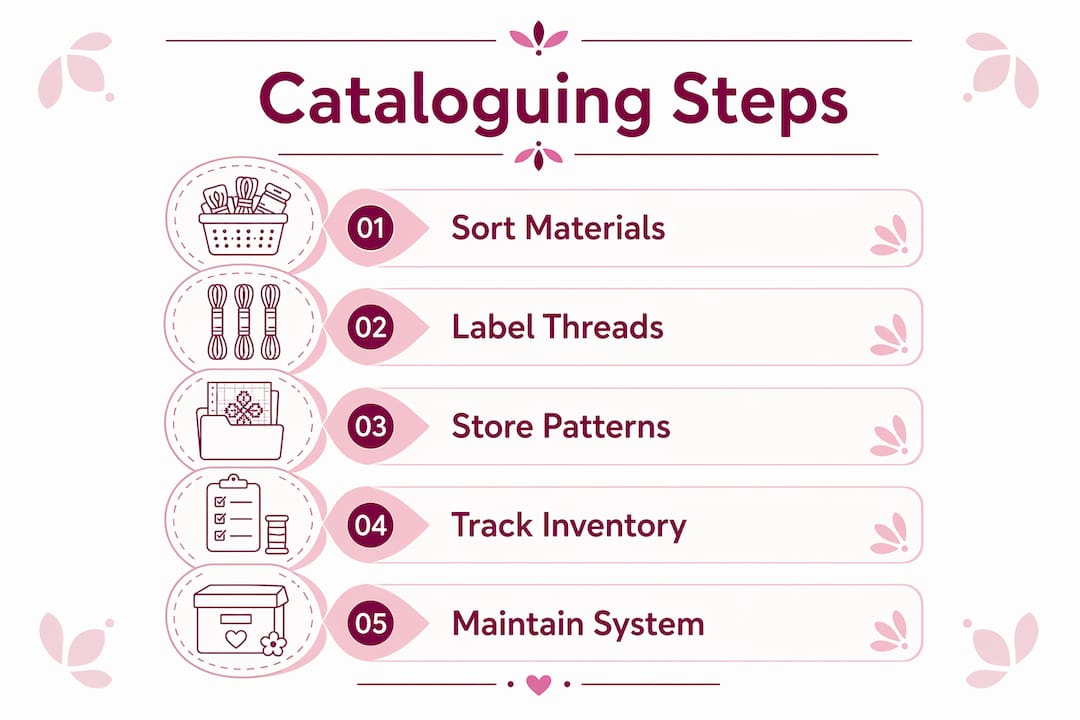
Pro Tip: Keep a master card system for long-term storage and use bobbins or rings for active projects. Mixing the two means your main collection stays pristine while your current WIP threads stay accessible without digging.
Tips for maintaining a well-organized stash over time
The best system is the one you actually keep up. A perfectly designed spreadsheet you never update is worse than a scribbled notebook you check every week. Practicality beats perfection every time.
A few principles that hold up long-term:
- Update your inventory the moment you buy new supplies, not in a batch later
- Cross out or delete colors when you use up the last skein
- Continuous small updates prevent the overwhelming catch-up sessions that make people abandon their systems entirely
- Destash periodically: sell or gift supplies you know you won't use
- Apply a loose "one in, one out" rule when your stash starts feeling unmanageable
Incorporate personal notes directly into your catalog. Record where you left off on a WIP, flag any miscounted sections, and note when a thread is running low. A stitching journal paired with your inventory turns a flat list into a living record of your projects.
For fabric, label each piece with the type (Aida, linen, evenweave), count, color, dimensions, and where you bought it. Sorting fabric by type and size makes it easy to grab the right piece for a new start without unfolding everything you own.
Pro Tip: Organizing your stash is not just a practical task. Stitchers consistently report that a tidy, catalogued space reduces the mental noise of WIP guilt and makes it easier to sit down and actually stitch. A 15-minute tidy session can reset your creative energy faster than a new pattern purchase.
How Flossom helps you manage your stash and projects
Digital tools take cataloguing from a chore to something that runs in the background. Flossom is built specifically for cross stitch and embroidery, covering the exact problems that generic spreadsheets handle awkwardly.
The features that matter most for stash management:
- Thread conversion across 55 brands: Flossom converts between 55 thread brands, so if a pattern calls for Anchor and you stitch with DMC, you get the equivalent automatically. You can explore the full list of supported thread brands to see what's covered.
- Auto-generated shopping lists: Upload a pattern PDF and Flossom compares what the design needs against what you already own, then generates a shopping list for only the missing colors. No more coming home with a duplicate 796.
- WIP photo tracking: Log progress photos for each project so you always know exactly where you left off, even across multiple simultaneous WIPs.
- Low-stock alerts: Set alerts so you know when a color is running low before you're mid-project and out of thread.
- Fabric stash tracking and barcode scanner: The Pro tier adds fabric inventory and a barcode scanner for fast logging, plus a camera color picker to identify mystery threads.
The free tier covers DMC and Anchor with unlimited stash entries and three active projects. Pro unlocks all 55 brands, unlimited projects, and the camera tools. Everything syncs across devices and exports to CSV, so your data is never locked in.
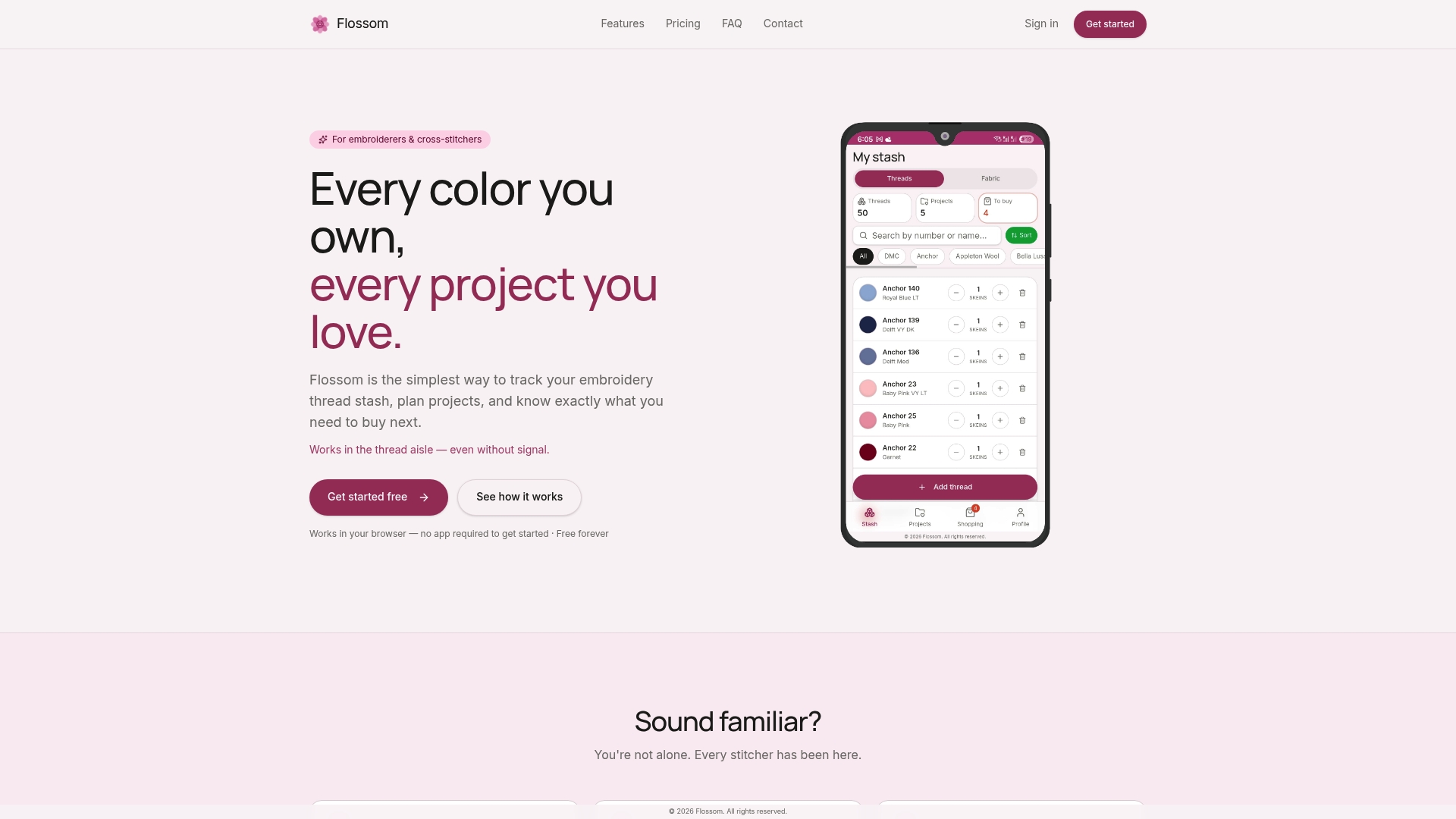
Combining physical and digital methods gives you the best of both. Keep your bobbins and binders for tactile browsing, and use Flossom to track quantities, generate shopping lists, and manage your WIPs from your phone. The physical system is your stash. The digital system is your memory. Together, they mean you spend less time hunting and more time stitching.
If you're ready to put your stash to work, Flossom's tools and calculators are a practical starting point, and the free pattern library gives you something to stitch right away.
For stitchers looking for gift ideas or ways to expand their crafting setup, this guide to gifts for creative hobbyists covers options that pair well with a freshly organized stash.
Key Takeaways
Cataloguing your cross stitch stash with a consistent, maintainable system prevents duplicate purchases, reduces WIP fatigue, and keeps your creative space working for you instead of against you.
| Point | Details |
|---|---|
| Label threads immediately | Write the DMC number on every bobbin before you lose the original wrapper. |
| Back up digital patterns | Store PDFs in at least two places, such as Google Drive and a USB drive. |
| Update inventory in real time | Add new purchases and remove used colors as you go to avoid overwhelming catch-up sessions. |
| Mix physical and digital systems | Use bobbins and binders for storage, and a digital tool like Flossom for tracking quantities and shopping lists. |
| Destash regularly | Sell or gift supplies you won't use, and apply a loose "one in, one out" rule to keep your stash manageable. |
Recommended
We make Flossom — the calm app for cross-stitchers and embroiderers who want their stash, projects, fabric and shopping list in one tidy place.