
What Is a Tapestry Needle? A Crafter's Complete Guide
What Is a Tapestry Needle? A Crafter's Complete Guide !
What Is a Tapestry Needle? A Crafter's Complete Guide
A tapestry needle is a blunt, large-eyed needle engineered to glide between yarn fibers and fabric mesh without splitting them. That single design feature makes it the correct tool for knitting finishes, crochet seaming, cross-stitch, and needlepoint. Using the wrong needle type tears yarn, distorts stitches, and ruins hours of work. Understanding what a tapestry needle is, how it differs from other needles, and how to size it correctly will improve every textile project you finish.
What is a tapestry needle, and what makes it different?
A tapestry needle is defined by two physical features: a blunt, rounded tip and a large, elongated eye. The blunt tip slides between fabric or yarn fibers rather than piercing them, preserving the structure of your work. The oversized eye accommodates thick yarn, multiple strands of embroidery floss, or specialty threads without fraying them.
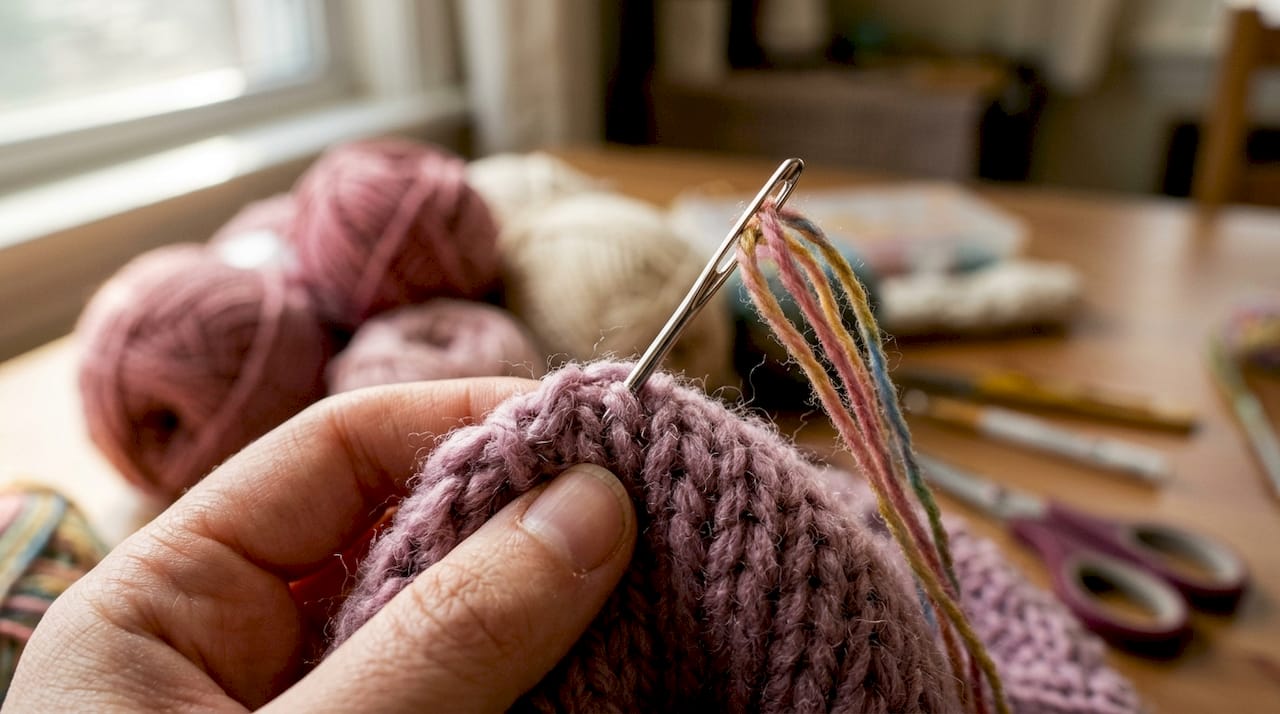
These needles are also called yarn needles or darning needles in retail settings. Labels like "yarn needle" and "darning needle" are often used interchangeably with "tapestry needle," but the defining feature is always the blunt tip. Always verify bluntness before buying, regardless of what the packaging says.
The needle body is typically made from nickel-plated steel, aluminum, or plastic. Steel needles hold their shape longer and flex less under tension. Plastic versions are lighter and gentler on delicate fibers, making them a reasonable choice for lace weight yarn.
How do tapestry needle sizes work?
Tapestry needle sizes run from 13 to 28, and the numbering is inverse: the higher the number, the finer the needle. Sizes range from 13 to 28, with size 13 being the thickest and size 28 the finest. Choosing the right size depends on both your yarn weight and your fabric count.
Matching needle size to yarn weight
The table below maps needle size to common yarn weights and fabric types.
| Yarn weight / fabric | Recommended needle size |
|---|---|
| Bulky and super bulky yarn | 13–16 |
| Worsted weight yarn | 16–18 |
| DK and sport weight yarn | 20–22 |
| Fingering and lace weight yarn | 24–26 |
| Aida 14-count or evenweave | 24–26 |
| Aida 18-count or fine evenweave | 26–28 |
Sizes 16–18 suit bulky and worsted yarns, while sizes 24–26 work for fingering and lace weights. Matching size to weight prevents the needle shaft from stretching your stitches or dragging through the fabric.
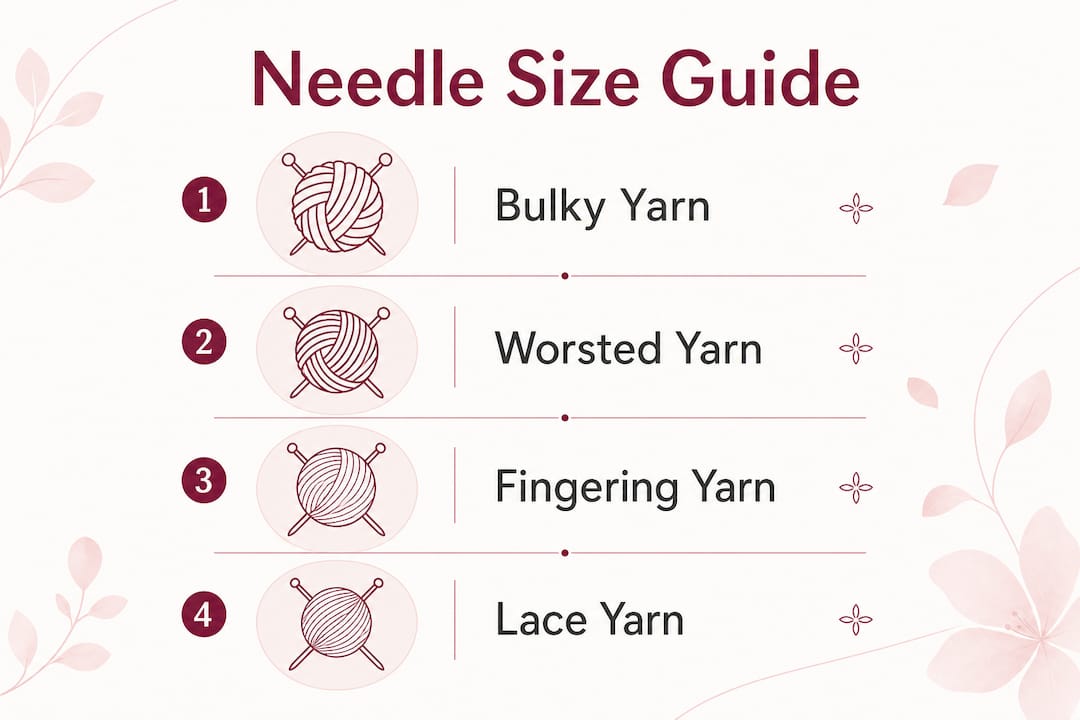
Shaft thickness matters as much as eye size. Choosing needle size based solely on eye size without considering shaft diameter can distort stitch tension and permanently damage delicate work. A needle that threads easily but has too thick a shaft will stretch loops in lace knitting or fine cross-stitch.
Pro Tip: Thread the needle and hold the eye end against your fabric. If the shaft leaves a visible hole after you pull it through, size down.
How do you use a tapestry needle in knitting, crochet, and embroidery?
Tapestry needles handle three main jobs across textile crafts: weaving in ends, seaming pieces, and working counted-thread embroidery. Each task has a best-practice technique that determines whether your finish holds up over time.
Weaving in ends
Weaving in ends is the most common tapestry needle use in knitting and crochet. The goal is mechanical security, not just hiding the tail. Following the yarn path and doubling back locks the end in place so it cannot loosen with washing or wear. Thread the tail onto your needle, weave along the natural path of the stitches for about an inch, then reverse direction and weave back. That reversal is what locks the end.
Seaming knitted and crocheted pieces
Mattress stitch and whip stitch are the two standard seaming methods for knit and crochet garments. Mattress stitch creates an invisible seam on the right side by picking up the bars between edge stitches. Whip stitch works faster and suits projects where the seam will be hidden, such as amigurumi. Both techniques require a tapestry needle large enough to carry the working yarn without fraying it.
Counted-thread embroidery
Cross-stitch and needlepoint both rely on a tapestry needle because the work happens through pre-formed holes in the fabric. The blunt tip glides through Aida or evenweave mesh holes without splitting the fabric fibers. Sharp needles pierce the fabric threads themselves, which distorts the grid and makes counted work inaccurate. For cross-stitch fabric types like 14-count Aida, a size 24 or 26 tapestry needle is the standard choice.
- Thread the needle with the correct number of floss strands for your fabric count.
- Bring the needle up through a fabric hole from the back.
- Count the correct number of squares and insert the needle down through the next hole.
- Keep consistent tension. Do not pull tight enough to pucker the fabric.
- Finish each color by weaving the tail under four or five stitches on the back.
Pro Tip: For cross-stitch, use a needle that fits snugly in the fabric hole without forcing. If you feel resistance, size up.
Tapestry needle vs. sewing needle: how to tell them apart
The most common mistake crafters make is reaching for a sharp sewing needle when a blunt tapestry needle is needed. The consequences range from split yarn to torn fabric holes. Knowing the differences prevents both.
A standard sewing needle has a sharp point designed to pierce woven fabric. A tapestry needle has a rounded, blunt tip designed to pass between fibers. Using a sewing needle on knit fabric or Aida splits the yarn or fabric threads, which weakens the structure and creates visible damage.
Chenille needles are the most frequently confused alternative. The key difference between tapestry and chenille needles is the tip: tapestry needles are blunt, chenille needles are sharp. Both have large eyes, which is why they look similar on a retail peg. Chenille needles are correct for ribbon embroidery and surface embroidery on tightly woven fabric, where the needle must pierce the ground cloth.
Crewel needles have a sharp tip and a long eye sized for wool thread. They suit wool embroidery on woven fabric, not counted-thread work or yarn finishing.
- Tapestry needle: blunt tip, large eye, for yarn and counted-thread work
- Chenille needle: sharp tip, large eye, for ribbon and surface embroidery
- Crewel needle: sharp tip, medium eye, for wool embroidery on woven fabric
- Sewing needle: sharp tip, small eye, for piecing and garment construction
The rule is simple: if you are working through pre-formed holes or between yarn fibers, use a blunt tapestry needle. If you are piercing fabric, use a sharp needle of the appropriate type.
Tips for choosing and using tapestry needles effectively
Getting the most from a tapestry needle comes down to a few specific habits that most beginners skip.
Match shaft thickness to your gauge. Eye size is the obvious factor, but shaft diameter determines whether the needle distorts your work. A needle that is too thick for the fabric gauge stretches the loops around each stitch, which is especially damaging in fine cross-stitch or lace knitting.
Use a bent-tip needle for tight spots. Bent-tip tapestry needles are engineered to lift warp threads and reach dense or hard-to-access areas. They are not just an ergonomic preference. For weaving ends into tight seams or finishing complex amigurumi, a bent-tip needle reduces fabric manipulation and speeds up the work.
Split plied yarn tails for a cleaner finish. Splitting a 4-ply yarn tail into two pairs and weaving each pair in an opposing direction creates a nearly invisible finish with less bulk. This technique works especially well in fingering weight and sock yarn projects where a doubled tail would create a noticeable lump.
Verify bluntness before you buy. Many retail needles labeled as tapestry needles actually have sharp tips. Run the tip lightly across your fingernail. A blunt needle will not catch; a sharp one will.
Pro Tip: Keep a size 22 and a size 26 tapestry needle in your project bag. Those two sizes cover worsted through fingering weight and most Aida counts without needing a full set.
Tracking which needle sizes work best for each project is easier when you log your materials. Flossom lets you track your thread stash and project notes in one place, so you always know what worked last time.
Key Takeaways
A tapestry needle's blunt tip and large eye are the two features that determine whether it protects or damages your work, making correct needle selection the single most important finishing decision in knitting, crochet, and counted-thread embroidery.
| Point | Details |
|---|---|
| Blunt tip is non-negotiable | A rounded tip slides between fibers; a sharp tip splits yarn and distorts fabric. |
| Size inversely matches thickness | Higher numbers (24–28) are finer; lower numbers (13–18) suit bulky yarn. |
| Shaft diameter matters | A shaft too thick for your gauge stretches stitches, even if the eye threads easily. |
| Weaving in ends needs reversal | Doubling back along the yarn path creates mechanical security, not just concealment. |
| Bent-tip needles solve tight spots | Use a bent-tip tapestry needle for dense seams, amigurumi, or hard-to-reach areas. |
Why I think crafters underestimate the tapestry needle
Most beginners treat needle selection as an afterthought. They grab whatever is in the kit, finish the project, and wonder why the seams pucker or the woven ends pop out after the first wash. I have seen this pattern repeatedly, and the fix is almost always the same: the wrong needle size or a sharp tip where a blunt one was needed.
The detail that changed how I approach finishing work is shaft thickness. Eye size is visible and obvious, so crafters focus on it. But a needle with the right eye and the wrong shaft diameter will stretch every stitch it passes through. In lace knitting or fine cross-stitch, that stretching is permanent. The fabric never recovers its original tension.
Experimenting with bent-tip needles was another turning point. They feel awkward at first, but for seaming dense colorwork or weaving ends into a tightly worked amigurumi, they are genuinely faster and less frustrating than a straight needle. The angle does the work your wrist would otherwise have to do.
My honest recommendation: buy a small set that covers sizes 18 through 26, verify every needle is truly blunt, and note in your project records which size worked for each yarn. That habit alone will improve your finishing quality more than any single technique.
— Simone
Plan your next project with Flossom
Choosing the right tapestry needle is one part of a well-planned needlework project. The other part is knowing exactly what materials you need before you start.
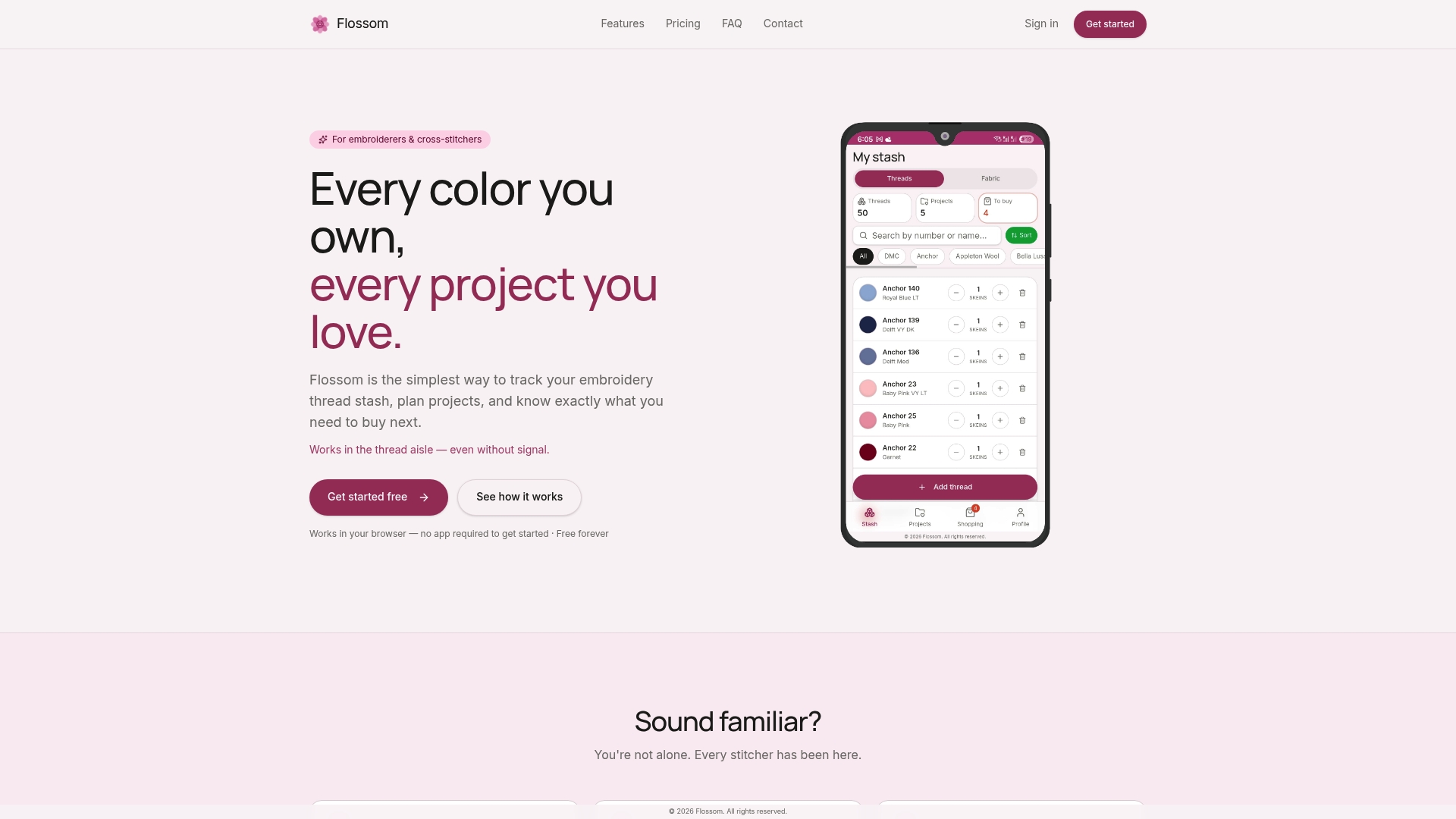
Flossom is a free cross-stitch and embroidery companion that catalogs your thread stash, tracks your works in progress, and auto-generates shopping lists based on what your pattern needs versus what you already own. Use the project time calculator to estimate how long your next piece will take, or browse the free pattern library for beginner-friendly designs that put your tapestry needle skills to immediate use. The free tier covers DMC and Anchor catalogs with unlimited stash entries and three active projects.
FAQ
What is a tapestry needle used for?
A tapestry needle is used for weaving in yarn ends, seaming knitted or crocheted pieces, and working counted-thread embroidery such as cross-stitch and needlepoint. Its blunt tip allows it to pass between fibers without splitting them.
What size tapestry needle do I need for cross-stitch?
For 14-count Aida, use a size 24 or 26 tapestry needle. For finer 18-count Aida or evenweave, a size 26 or 28 is the correct choice.
What is the difference between a tapestry needle and a sewing needle?
A tapestry needle has a blunt, rounded tip and a large eye; a sewing needle has a sharp tip and a small eye. Using a sewing needle on yarn or Aida fabric splits the fibers and damages the work.
Can I use a tapestry needle for embroidery?
Yes. A tapestry needle is the correct tool for counted-thread embroidery on Aida and evenweave fabrics. For surface embroidery on tightly woven cloth, a sharp crewel or chenille needle is the better choice.
How do I thread a tapestry needle with thick yarn?
Fold the yarn over the needle shaft, pinch the fold tightly, slip the needle out, and push the pinched fold through the eye. This fold-and-push method works better than trying to thread the yarn end directly through a large eye.
Recommended
We make Flossom — the calm app for cross-stitchers and embroiderers who want their stash, projects, fabric and shopping list in one tidy place.