
Convert Weeks Dye Works to DMC in 4 Checks for Stitchers
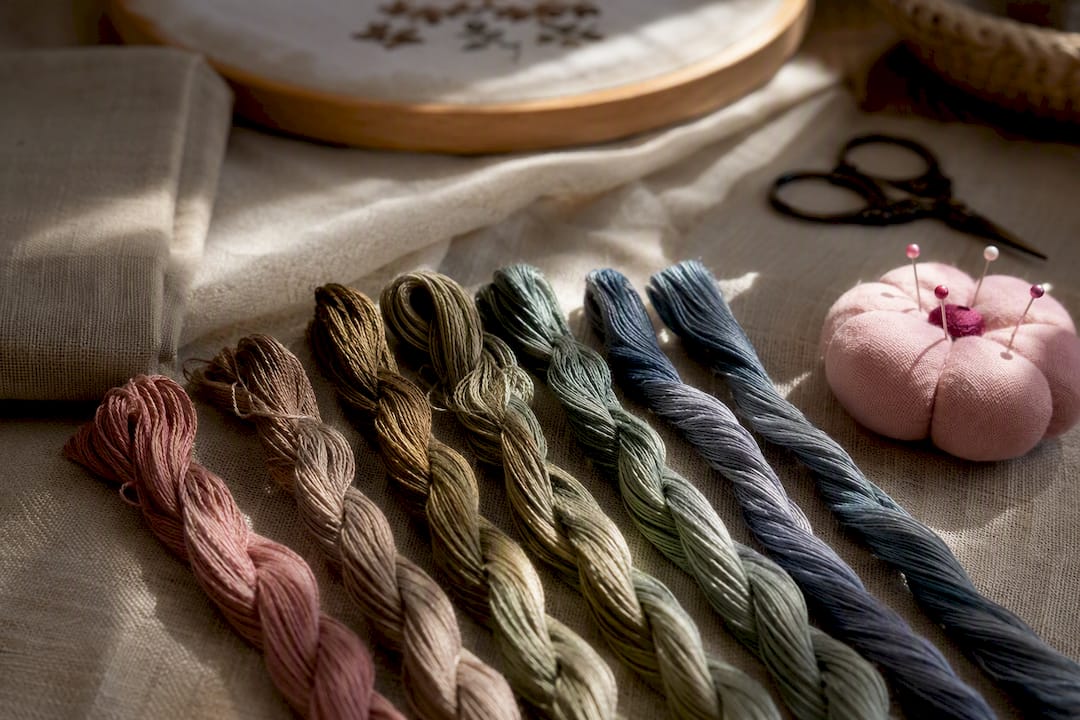
Convert Weeks Dye Works to DMC in 4 Checks for Stitchers ! Hand dyed and solid embroidery threads compared The fastest, most reliable way to convert Weeks Dye Works to DMC is a vetted conversion chart or converter tool, because DMC is solid-dyed and WDW is hand over-dyed, so no chart guarantees a perfect match.
Convert Weeks Dye Works to DMC in 4 Checks for Stitchers
The fastest, most reliable way to convert Weeks Dye Works to DMC is a vetted conversion chart or converter tool, because DMC is solid-dyed and WDW is hand over-dyed, so no chart guarantees a perfect match.
TL;DR:
- Conversion charts provide approximate matches because Weeks Dye Works is hand over-dyed, meaning DMC only offers a single, uniform color matching the average tone.
- Match quality is calculated using the CIEDE2000 formula, with 93-100% indicating a nearly perfect match and below 75% suggesting a visible difference that should be used with caution.
- Testing conversions under actual lighting conditions before committing to a full project is essential, especially for variegated or focal colors where mismatches are more noticeable.
- Blending two DMC shades can better replicate variegation effects in WDW, but it works less effectively for high-contrast overdyes with significant color shifts.
- Buying the original WDW skein is recommended for prominent, heavily variegated, or close-up features, and it's wise to purchase one extra skein to account for dye-lot variations.
Table of Contents
- How Do You Convert Weeks Dye Works to DMC?
- What Does the Match Quality Percentage Actually Mean?
- Verifying Matches and Blending for Variegation
- Applying the Conversion: Yardage, Placement, and Care
- Tools Worth Bookmarking for Thread Conversion
- When to Substitute and When to Buy the Original
- Try Flossom's Free Thread Converter for Your Next Project
- Sources
How Do You Convert Weeks Dye Works to DMC?
A full Weeks Dye Works to DMC conversion chart works like a translator between two different dye systems, one hand-painted and one machine-consistent. Every WDW color gets mapped to its nearest DMC equivalent, along with a note on how confident you should be in that match.
The table below covers commonly requested WDW shades and their closest DMC substitutes. Match-quality labels reflect the bands explained in the next section: Excellent (very close visually), Good (acceptable for most uses), and Approximate (visible difference, use with caution).
Rows marked "mix" mean the closest visual result comes from combining one strand each of two DMC colors rather than relying on a single shade. Rows marked "X" mean no DMC solid comes close enough to recommend, usually because the WDW original shifts through several tones in a single strand. Public conversion PDFs use this same shorthand, and it's worth learning to read it before you commit thread to fabric.
If you're converting a whole pattern's palette rather than one or two colors, doing it by hand gets tedious fast. A batch tool like Flossom's thread converter lets you paste in a full color list and get ranked DMC alternatives for every entry at once, which matters when a pattern calls for a dozen WDW shades and you're trying to figure out what to buy versus what you already own.
What Does the Match Quality Percentage Actually Mean?
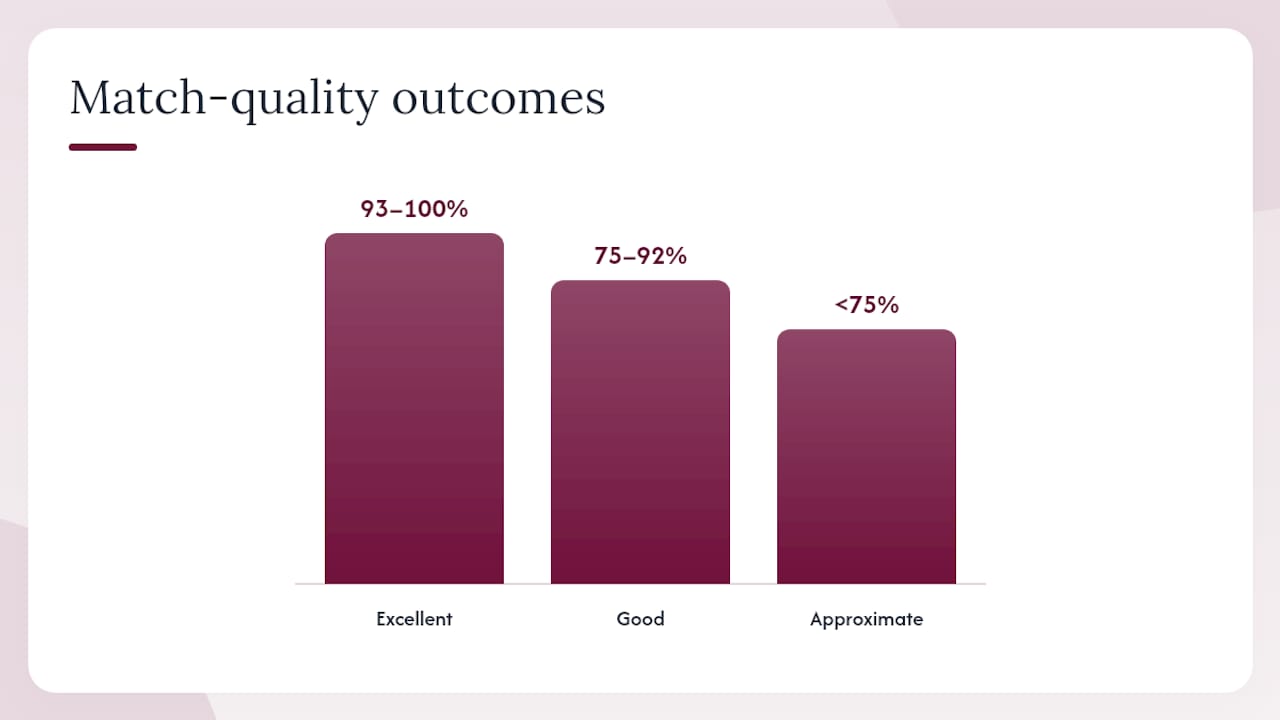
Match-quality percentages come from a perceptual color distance calculation called CIEDE2000, a formula colorimetrists use because it accounts for how the human eye actually perceives differences in hue, saturation, and brightness rather than just measuring raw RGB values. Two colors can be mathematically far apart in raw numbers but look nearly identical to your eye, or vice versa. CIEDE2000 tries to close that gap between math and perception.
Conversion tools like Stitchmate translate that distance into a percentage score, and the bands break down roughly like this:
- 93 to 100 percent: Virtually identical side by side, safe for any use including focal points.
- 75 to 92 percent: Good match for most projects, but check under strong light if the area is prominent.
- Below 75 percent: Visible difference likely; treat it as a placeholder unless you're desperate.
Even a 95 percent match on a WDW color describes only the base tone. Because WDW is hand over-dyed, a single skein often shifts through three or four related shades along its length. DMC can only replicate the average of that range as one flat color, so expect the substitute to read as a "clean" version of a more textured original.
Verifying Matches and Blending for Variegation
Photographs lie more often than stitchers expect. Camera white balance and screen calibration can shift a color's perceived warmth or saturation enough to make a good match look wrong, or a poor one look fine. Testing a stitched sample under the same lighting you'll display the finished piece in is the most dependable way to know for sure.
Here's a practical sequence for checking a substitution before you commit a whole project to it:
- Photograph both the WDW skein and your candidate DMC skein together in natural daylight, avoiding direct sun or yellow indoor bulbs.
- Stitch a small sample of both on scrap fabric side by side, at least a few stitches each.
- Compare the sample under the lighting where the finished piece will actually hang.
- If the match still looks close, order one skein of the DMC substitute before buying enough for the full project.
When a WDW color has no single close DMC equivalent, blending one ply each of two adjacent DMC shades in your needle can approximate the variegated effect better than any single solid. This works especially well for subtle shifts, like a WDW shade that moves between a rose and a dusty mauve. It works less well for high-contrast overdyes that swing between very different colors in one strand.
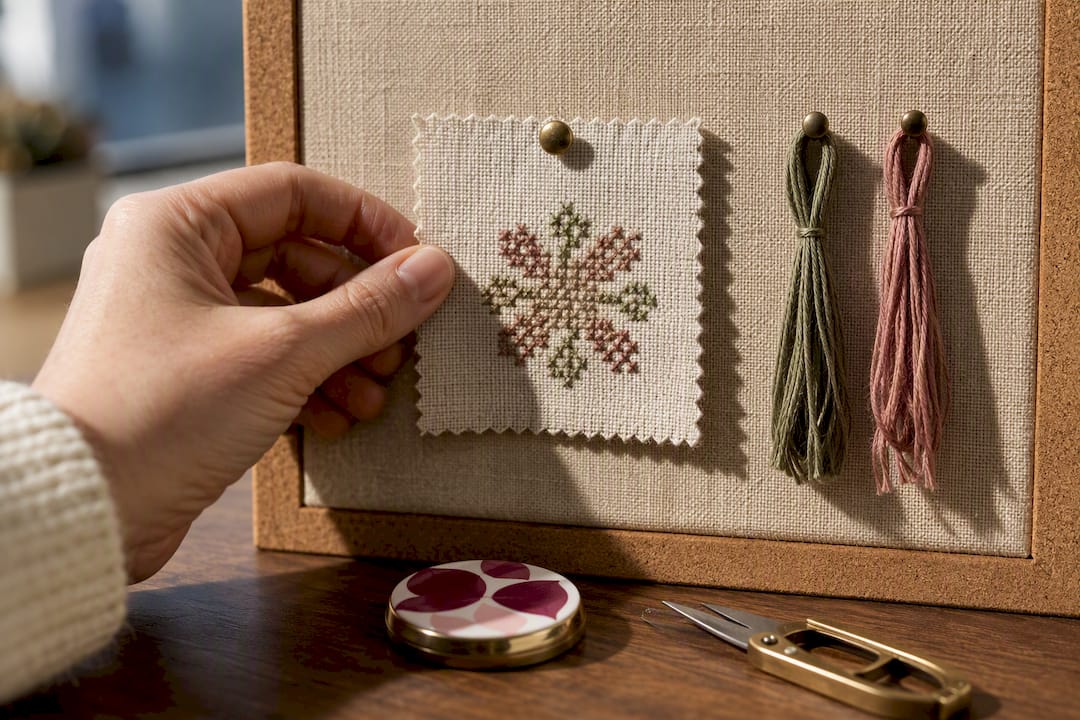
Pro Tip: Keep your test swatch pinned near your workspace as you stitch the real project. Colors that looked fine under a quick comparison sometimes reveal a mismatch once you see several square inches of them together.
Any of those should push you toward buying the original rather than trusting a substitute.
Applying the Conversion: Yardage, Placement, and Care
Before you swap in a DMC substitute, run through a short mental checklist: what's the match-quality score, where does this color sit in the design, and does variegation actually matter here? A focal flower petal at eye level does not.
A few practical notes worth keeping in your project binder:
- A single skein of Weeks Dye Works typically covers a similar stitch count to a DMC skein, but buy one extra when matching a highly variegated color, since dye-lot shifts between batches are more noticeable in overdyed threads.
- Weeks Dye Works threads are generally reported as colorfast for normal handling, but hand-wash finished pieces in cool water and avoid soaking to protect the depth of the overdye.
- When in doubt about yardage for a larger project, Flossom's project time calculator helps you estimate how much thread you'll actually need before you order.
Tools Worth Bookmarking for Thread Conversion
A one-time conversion chart works fine for a single project. Managing thread across dozens of WIPs is a different problem entirely, and that's where a dedicated converter earns its place in your bookmarks.
Flossom's thread converter handles conversions across 55 thread brands, not just WDW and DMC, and supports batch conversion so you can drop in a whole pattern's color list at once. Its camera color picker lets you photograph a loose skein with no label and get a match, and everything exports to CSV if you want a record for shopping or reference.
Beyond Flossom, a few public resources are worth knowing:
- Needle Library's WDW to DMC chart documents mix and no-match entries clearly.
- ThreadedNeedle's downloadable PDF is handy for offline reference at a stitching group.
- Flossom's own guide on how conversion charts work explains the logic behind the numbers if you want the fuller picture.
If a conversion points you toward a shade DMC no longer makes, Flossom's post on discontinued DMC colors walks through what to use instead.
When to Substitute and When to Buy the Original
Buy the Weeks Dye Works original when the color anchors a focal motif, when the skein is heavily variegated, or when the piece will hang somewhere people examine up close.
My rule of thumb after looking at how these charts perform across hundreds of color codes: test before you commit, and when the match feels borderline, spend the few extra dollars on one WDW skein rather than redoing a section later. A chart gets you close. Your own eyes, under real light, make the final call.
— Simone
Try Flossom's Free Thread Converter for Your Next Project
Cross-referencing a WDW color list by hand against DMC charts means flipping between PDFs, squinting at percentages, and hoping you didn't mistype a code. Flossom's thread converter does that work in seconds, matching across all 55 supported brands and letting you convert a whole pattern's palette in one pass instead of one color at a time.
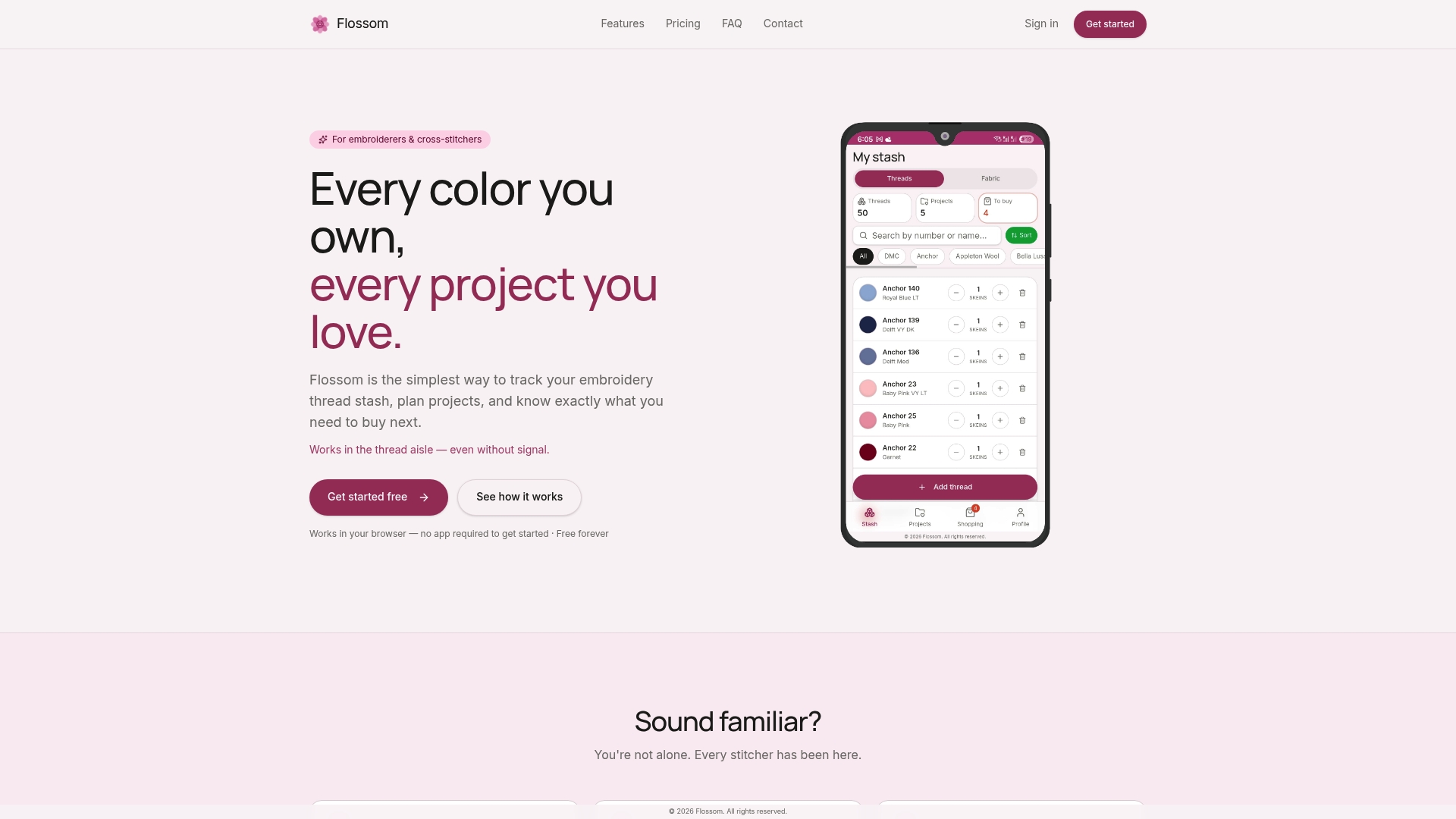
Because Flossom also tracks your existing stash, the converter checks what you already own before adding anything to a shopping list, so you stop buying a DMC skein you had sitting in a drawer the whole time. The camera color picker matches a loose or unlabeled skein on the spot, and everything exports to CSV or syncs across your devices automatically. The free tier already covers DMC and Anchor conversions with unlimited stash tracking, so open the tools page and run your next pattern's color list through it before you place an order.
Sources
- Weeks Dye Works to DMC thread conversion chart — Thread Color Converter
- Conversion Chart: WEEKS DYE WORKS OVERDYED THREAD to Closest Colour Match(es) in DMC Stranded Cottons — ThreadedNeedle PDF
Recommended
We make Flossom — the calm app for cross-stitchers and embroiderers who want their stash, projects, fabric and shopping list in one tidy place.