
Why Cross Stitch Colors Vary by Brand (and What to Do About It)
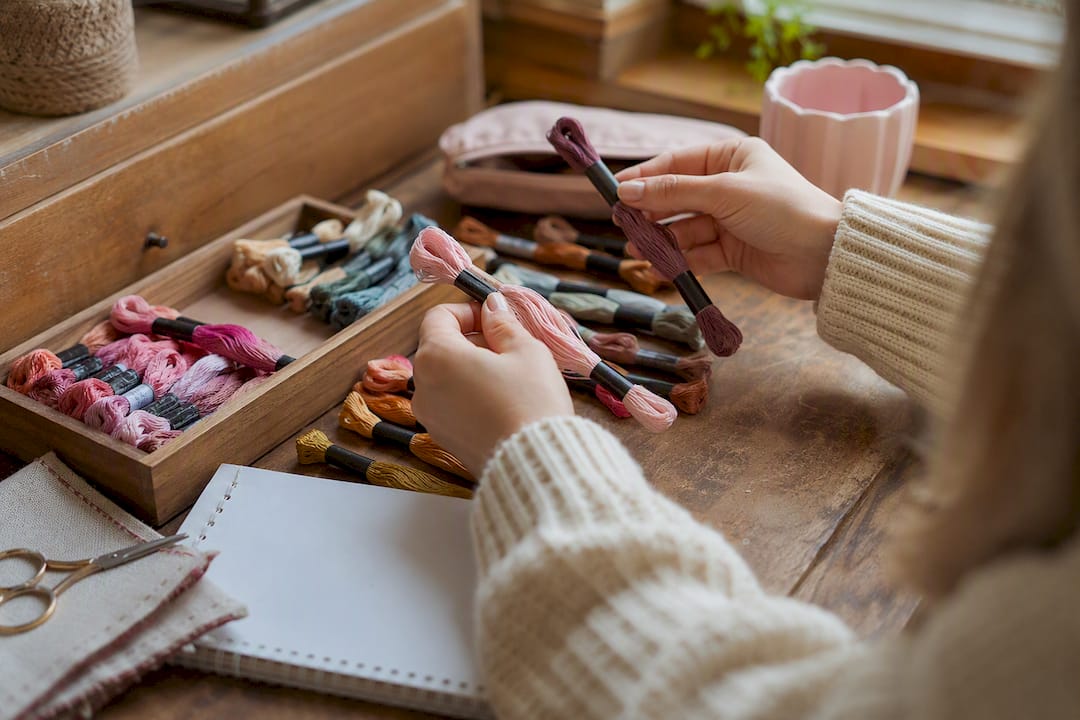
Why Cross Stitch Colors Vary by Brand (and What to Do About It) ! Hands sorting colorful cross stitch thread skeins Cross stitch thread colors vary by brand because manufacturers use different dye formulas and mordants, dye each batch (or "dye lot") separately, and treat fiber with different mercerization and twist processes, all of which produce measurable color shifts.
Why Cross Stitch Colors Vary by Brand (and What to Do About It)
Cross stitch thread colors vary by brand because manufacturers use different dye formulas and mordants, dye each batch (or "dye lot") separately, and treat fiber with different mercerization and twist processes, all of which produce measurable color shifts. On top of that, thread is a subtractive color medium, so it can never reproduce the backlit saturation your screen shows for the same shade, according to Thread-Bare's technical notes on chart-making. The fix starts small: compare skeins in natural daylight, stitch a quick test swatch, and buy extra floss from the same dye lot before you commit to a large area.
- Compare candidate skeins side by side in daylight, not under a lamp or a screen.
- Stitch a 10x10 test swatch before buying a full project's worth of any substitute color.
- Buy a little extra from the same dye lot up front, since dye lots vary batch to batch even within one brand.
Pro Tip: Photograph your test swatch next to the skein label and log the dye-lot number in a stash tracker like Flossom. Future you will thank present you when a project sits half-finished for two years and you need to match it again.
Key Takeaways
Cross stitch thread colors differ between brands because of distinct dye formulas, batch-to-batch dye-lot variation, and fiber treatment differences, and no thread can replicate a screen's backlit saturation.
| Point | Details |
|---|---|
| Dye chemistry drives baseline differences | Each brand's dye formula and mordant produce measurable color shifts, even for "matching" shade names. |
| Dye lots vary within one brand | Batch-to-batch differences in dye concentration and conditions mean same-numbered skeins can still differ. |
| Reds, neons, and darks are riskiest | Saturated colors show the most brand and lot variation; neutral midtones stay comparatively stable. |
| Test before you commit | Stitch a swatch in natural daylight before buying a full project's worth of any substitute color. |
| Conversion charts are a starting point | A meaningful share of conversions lack a true match, so validate with a physical swatch first. |
| Flossom tracks the details for you | Cataloging dye lots and swatches across 55 brands helps you avoid duplicate or mismatched purchases. |
Table of Contents
- Why Do Cross Stitch Colors Differ Between Brands?
- Which Colors Show the Biggest Differences Between Brands?
- How to Compare and Test Thread Colors Before You Stitch
- Can You Mix Cross Stitch Thread Brands in One Project?
- Are Color Conversion Charts Accurate for Substituting Threads?
- Everyday Habits That Prevent Color Surprises Mid-Project
- Why a Little Color Variation Isn't Always a Problem
- Let Flossom Track the Details So You Don't Have To
- Frequently Asked Questions
- Sources
Why Do Cross Stitch Colors Differ Between Brands?
The short version: no two thread companies mix dye the same way, and no thread can match what a monitor shows you.
Every manufacturer, whether it's DMC, Anchor, Cosmo, or Sullivans, uses its own proprietary dye recipe and mordant (the chemical that binds dye to fiber). Small differences in pigment concentration and binding chemistry shift the final hue even when two companies are aiming for what looks like "the same" red or navy. That's before you even get to batch variation.
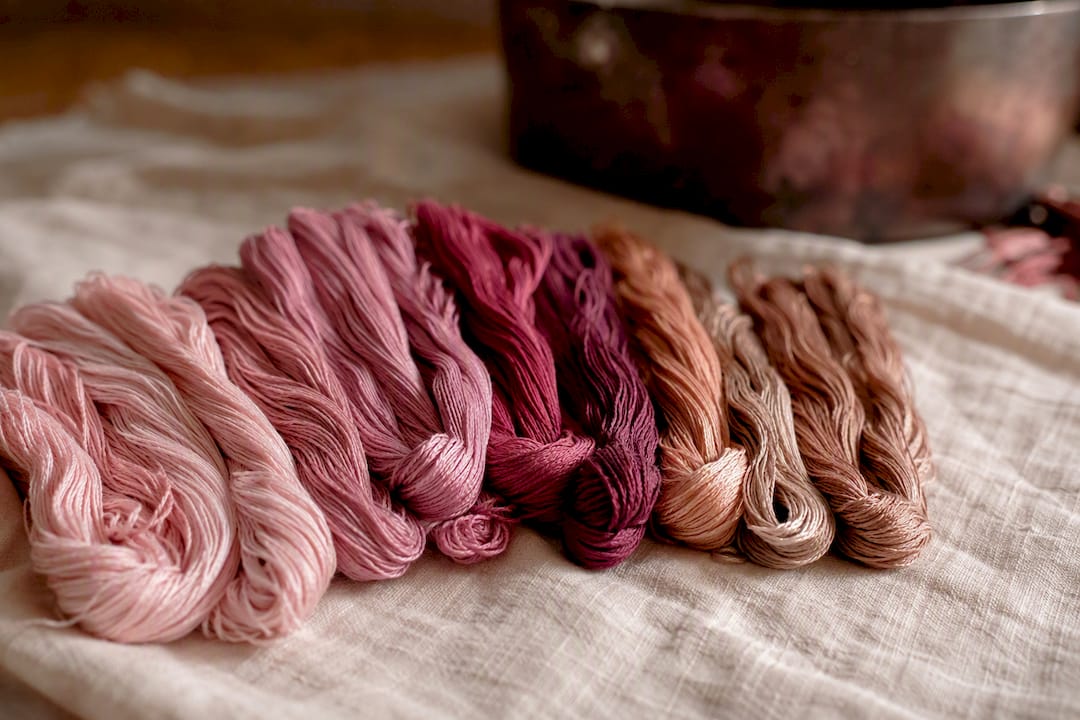
A dye lot is a single batch of floss dyed together in one run. Tiny fluctuations in dye concentration, water temperature, and humidity during that run mean two skeins with the identical color number can still look slightly different if they came from separate lots, a variation TwoLittleKits documents in detail. This is why quilters and needlepoint stitchers alike are warned to buy enough of one dye lot for an entire project whenever possible.
Fiber treatment adds another layer. Mercerization (a process that strengthens cotton and gives it sheen) isn't applied identically across brands, and neither is the twist or strand thickness. A tighter twist or different finish changes how light bounces off the thread, which changes how saturated or matte a color appears even when the dye itself is close.
Then there's the screen problem. Your monitor generates color additively, mixing red, green, and blue light. Floss reflects light subtractively, absorbing some wavelengths and bouncing back the rest. Thread-Bare's research notes that threads simply cannot reproduce the backlit saturation of a digital screen, which is why a pattern chart's neon green almost never looks quite as electric once it's stitched.
- Neutral midtones (tans, grays, soft blues) tend to be the most stable across brands.
- Saturated blues, neons, and deep reds show the most chemistry-driven variation.
- DMC alone makes roughly 489 six-strand colors, and its numbering system was assigned over decades rather than sequentially, so a similar number doesn't mean a similar shade.
Pro Tip: If a project leans heavily on neutral midtones, brand swapping is low-risk. If it's built around saturated darks or neon accents, treat every substitution as unverified until you've stitched it.
Which Colors Show the Biggest Differences Between Brands?
Not every color is equally risky. Reds, saturated blues, deep darks, and neons show the most brand-to-brand and lot-to-lot drift, largely because those pigments require heavier dye concentrations that are harder to replicate exactly run after run. Side-by-side stitching comparisons across brands like DMC, Anchor, and Sullivans, documented by Thread-Bare, consistently show visible divergence in these families even when the color names match on paper.
Certain project layouts make the differences impossible to hide:
- Large solid fill blocks in one color, where any shift reads as an obvious patch.
- Adjacent dye-lot seams, where two "matching" skeins meet mid-stitch.
- Monochrome or tonal designs, which rely entirely on subtle value gradation.
- Backstitching that crosses a dye-lot join, since outline stitches sit right on top of the mismatch.
Small confetti stitching, heavily textured designs, and variegated or hand-dyed threads are more forgiving. Scattered single stitches in a busy area hide minor shifts that would scream at you in a solid block.
How to Compare and Test Thread Colors Before You Stitch
A five-minute test now saves you from ripping out an afternoon of stitching later.
- View skeins in natural daylight, ideally near a north-facing window, away from warm incandescent bulbs or cool LED overheads that both distort perceived color.
- Lay them against a neutral white or gray background, never a patterned or colored surface, so nothing shifts your eye's color perception.
- Stitch a small 10x10 test swatch on a scrap of your actual project fabric, since fabric color and weave affect how a thread reads once stitched.
- Photograph the swatch under consistent lighting and keep the image with your project notes for future reference.
Keep a short kit on hand for this: an official color card or physical thread sample, a loupe or small magnifier, a piece of neutral white card, and a scrap of your project's actual fabric.
Pro Tip: Simone, who edits Flossom's stitching guides, recommends logging the dye-lot number and a photo of every test swatch directly in your stash app the moment you finish it. Six months later, when you're deciding whether that half-used skein still matches, you won't be relying on memory.
Can You Mix Cross Stitch Thread Brands in One Project?
Mixing brands works fine in plenty of situations and backfires badly in others. Small accents, isolated confetti stitches, and colors that never sit next to each other are low-risk, since even a visible shift won't register against the rest of the design. Large solid fill areas and adjacent blocks of the "same" color are where mismatches become the first thing anyone notices, a distinction Lost in Cross Stitch emphasizes when weighing brand swaps.
Color isn't the only variable at stake. Sheen, thread weight, and twist differ across brands too, so even a near-perfect color match can look subtly different once it's stitched, because light hits the surface differently. A high-sheen thread next to a matte one reads as mismatched even under identical lighting.
- Safe to mix: scattered accents, single confetti stitches, backgrounds far from the focal color.
- Risky to mix: large solid blocks, adjacent same-color areas, heirloom or commissioned pieces.
Pro Tip: If you must mix skeins within one large area, alternate them every row or two rather than finishing one skein before starting the next, and always test-wash a stitched swatch first to check for bleeding or fading.
Are Color Conversion Charts Accurate for Substituting Threads?
Conversion charts are a starting point, not a guarantee. Most tools convert colors by measuring the numeric distance between RGB values, but that math doesn't match how the human eye actually perceives color. Better tools instead use CIELAB, a perceptual color space that StitchLark's matching guide recommends specifically because it models human vision more closely than raw RGB distance.
Even with a good tool, expect gaps. Roughly 80% of conversions land close enough for casual use, but an estimated 15 to 20% have no true equivalent and can look noticeably off once stitched, especially in critical or focal colors.
- Prefer same-family substitutions over cross-family guesses (swap a red for a red, not a red for a coral).
- When no exact match exists, pick the nearest sibling shade rather than splitting the difference between two unrelated colors.
- Avoid single-shade swaps in large solid areas. Small mismatches are far more forgiving in scattered stitches.
Pro Tip: Treat any conversion chart, including Flossom's own conversion tool, as a shortlist to test, not a final answer. Stitch a swatch before you commit skeins to a project.
Everyday Habits That Prevent Color Surprises Mid-Project
A few small habits do more to prevent mismatch headaches than any single tool.
- Buy a little extra floss from the same dye lot before starting, especially for large fill areas.
- Keep labeled thread samples taped or clipped to your project notes.
- Record the dye-lot number and purchase source for every skein you use.
- Pre-wash a stitched swatch to check for bleeding or fading before committing to the full piece.
For projects with hard-to-source colors, order everything up front rather than buying in stages. Availability between brands shifts constantly, and a dye lot you bought in January may simply not exist by summer.
Pro Tip: A five-minute pre-wash test on a scrap swatch catches bleeding dyes before they ruin a finished piece, not after.
Why a Little Color Variation Isn't Always a Problem
Handwork has never been perfectly uniform, and honestly, that's part of its appeal. Slight shifts between skeins used to be the norm long before industrial dyeing tightened tolerances, and overdyed or hand-dyed threads still use that variation on purpose for texture and depth.
Where I'd draw the line: heirlooms and commissioned pieces deserve strict color fidelity, since the client or future owner will notice a mismatch you might not. Everything else, especially textured or free-form pieces, can absorb a little drift without losing anything.
Let Flossom Track the Details So You Don't Have To
Flossom is built for exactly this problem: catalog your thread stash across 55 brands, including DMC, Anchor, Cosmo, and Sullivans, so you always know which dye lot you already own before you buy another skein that might not match.
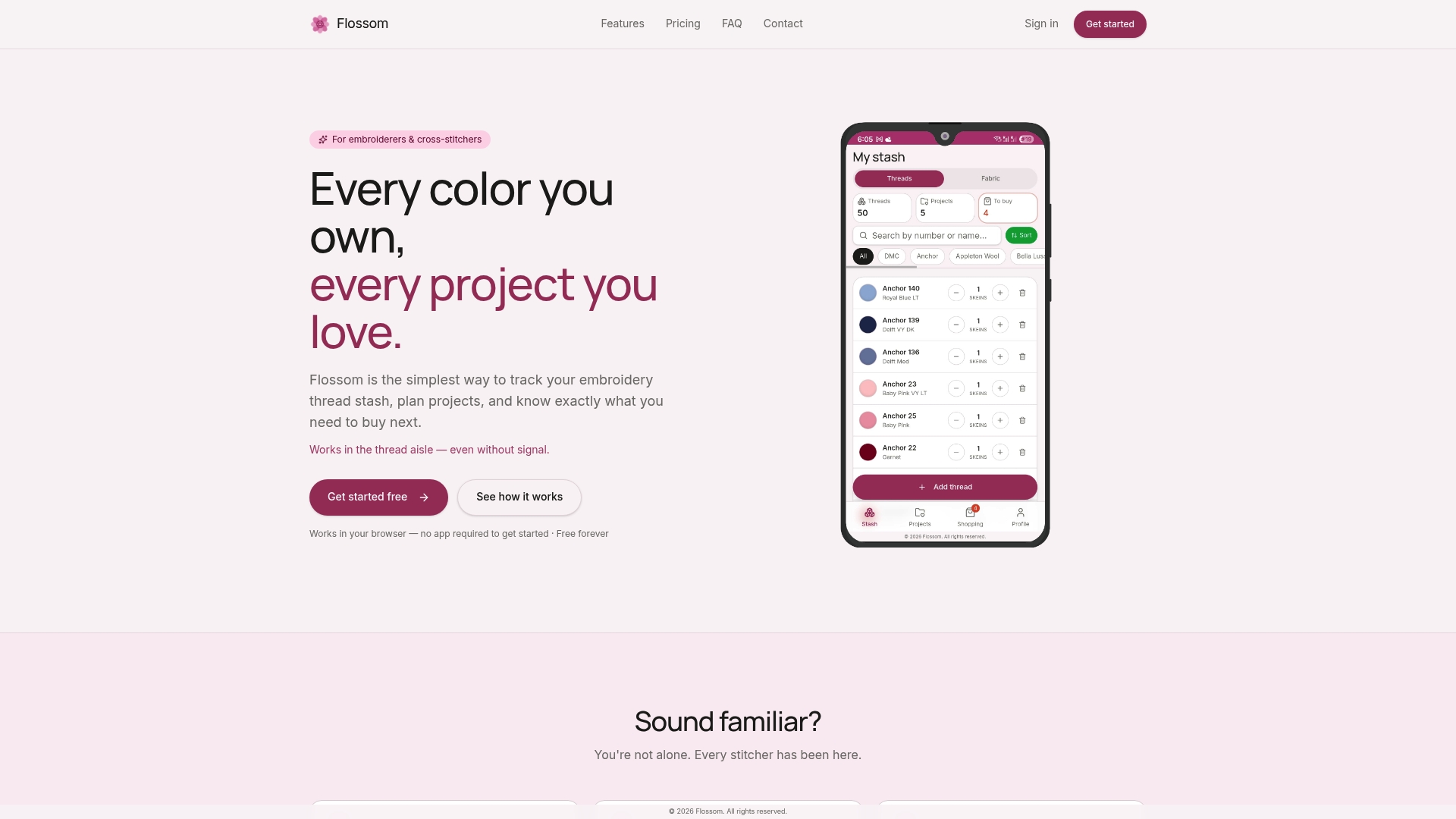
Upload a pattern PDF and Flossom auto-generates a shopping list by comparing what the pattern calls for against what's already in your stash, so you're not guessing whether that half-used skein from last year is close enough. The camera color picker (Pro) lets you snap a photo of a physical thread and get a match, and every dye-lot number and swatch photo you log stays attached to that color permanently, synced across every device you stitch from. If you're planning a new project and want to estimate how much floss you'll actually need before you order, run the numbers through Flossom's project time calculator first, then build your shopping list from there.
Frequently Asked Questions
Why do cross stitch colors differ between brands even when the shade name sounds the same? Each manufacturer uses its own dye formula and mordant, and those chemical differences produce measurable color shifts even when two brands both call a shade "cardinal red" or "navy blue."
How can I tell if two skeins are from the same dye lot? Check the small numbers or codes printed on the skein's paper wrapper. Skeins from the same dye lot carry matching lot codes; if the codes differ, treat them as potentially different shades even if the color number is identical.
Is it ever safe to substitute one brand's floss for another mid-project? Yes, for small accents or scattered stitches, but stitch a test swatch first, especially for saturated reds, blues, or darks, which show the most variation between brands.
Do conversion charts guarantee an exact color match? No. Conversion charts are approximations; most conversions look close enough, but a meaningful share have no true equivalent and can look visibly different once stitched.
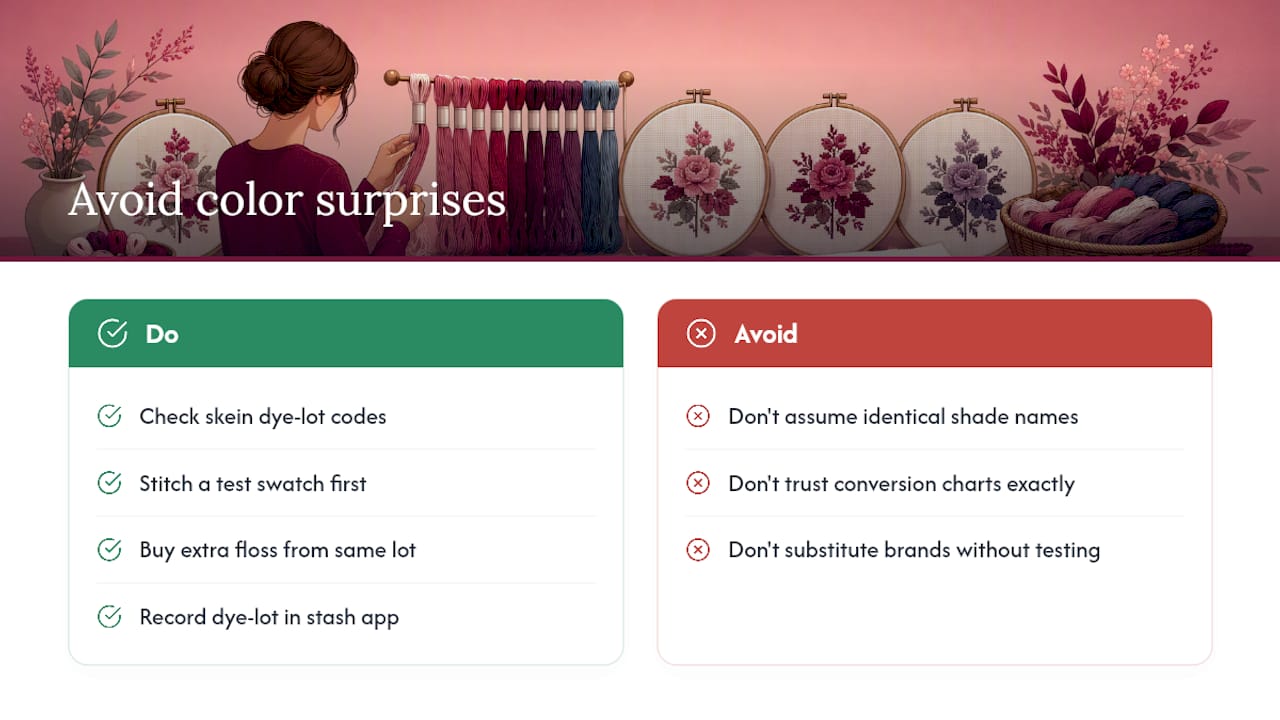
What's the single best habit for avoiding color surprises? Buy a little extra floss from the same dye lot before starting a large project, and log the dye-lot number somewhere you'll actually check later, like a stash-tracking app.
Sources
- Creating cross-stitch charts with consistent colors | Thread-Bare blog
- Thread dye lots: why they matter | TwoLittleKits
- DMC vs Anchor Thread — 489 vs 446 Colors, Regional Availability & Conversion | Stitchmate
- The ultimate guide to DMC floss color matching | StitchLark
- Swap And Mix Floss Colors - Lost In Cross Stitch
Recommended
We make Flossom — the calm app for cross-stitchers and embroiderers who want their stash, projects, fabric and shopping list in one tidy place.