
How to Sort Embroidery Floss by Texture
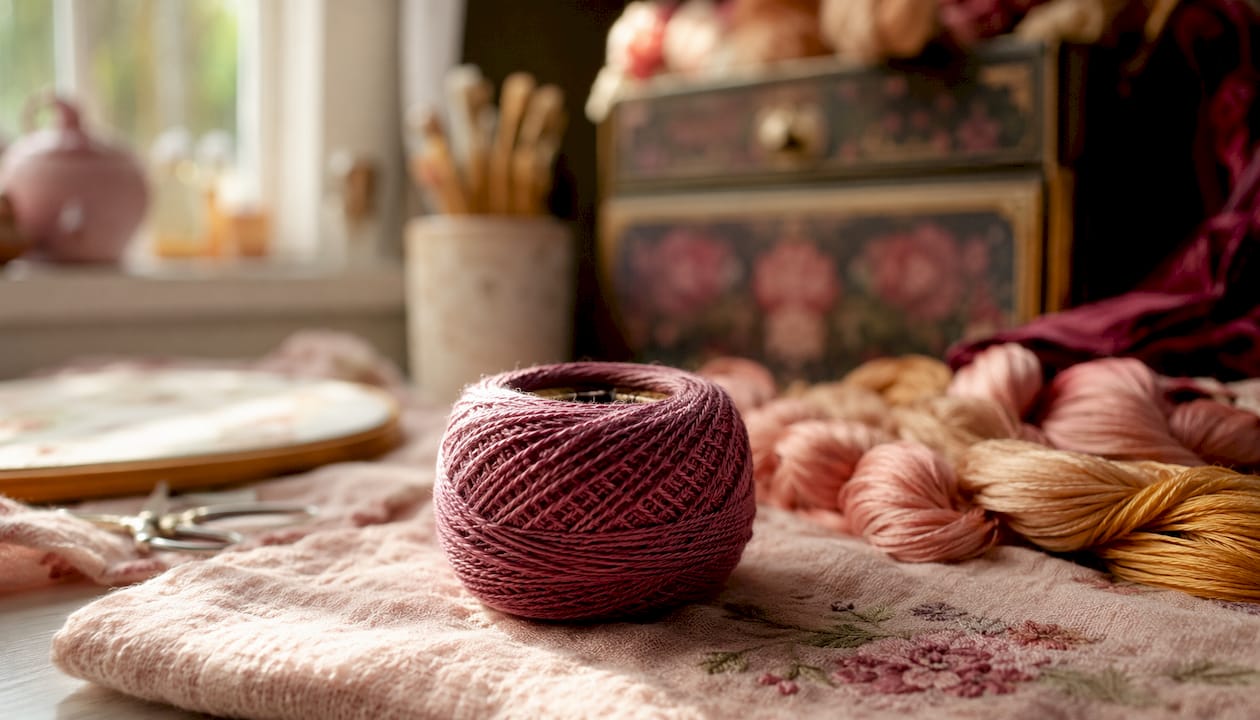
How to Sort Embroidery Floss by Texture ! Crafter sorting embroidery floss at home table Sorting embroidery floss by texture is the most direct way to match the right thread to the right project before you ever pick up a needle.

How to Sort Embroidery Floss by Texture
Sorting embroidery floss by texture is the most direct way to match the right thread to the right project before you ever pick up a needle. Texture determines how a thread handles, how it looks on fabric, and how it behaves under tension. Stranded cotton, perle cotton, wool, rayon, and metallic threads each have distinct physical properties that affect stitch appearance and fabric compatibility. Organizing your thread stash by texture, alongside color and number, gives you faster access and fewer stitching mistakes.
How to sort embroidery floss by texture: understanding thread types first
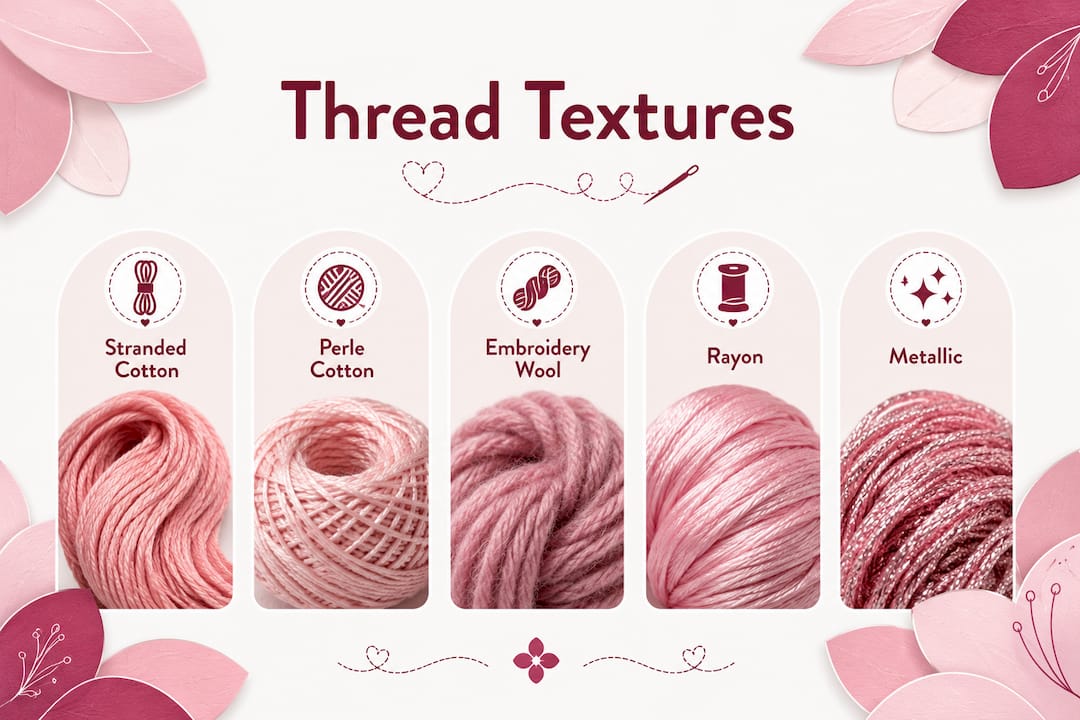
Texture sorting starts with knowing what you actually have. Embroidery thread textures fall into five main categories, each with a distinct feel and visual character.
Stranded cotton is the most common type. It is soft, matte, and made of six loosely twisted strands you can separate. That divisibility is its defining feature. You can use one strand for fine detail or all six for bold coverage.
Perle cotton has a tight, cord-like twist that cannot be separated into individual strands. It sits on top of fabric rather than sinking in, which creates a raised, rounded line. The texture is firm and smooth, very different from stranded cotton despite both being cotton fiber.
Embroidery wool is thicker and fuzzier, with a lofted, rustic quality. It suits coarse fabrics like canvas or linen and adds a soft, matte dimension that cotton cannot replicate. Wool requires different storage because its loftiness compresses easily.
Rayon is high-shine and slippery. It catches light in a way that cotton does not, making it useful for satin-style fills and decorative accents. The slipperiness also makes it harder to handle, especially for beginners.
Metallic thread adds sparkle but also friction. It resists smooth passage through fabric and tends to fray or tangle faster than other types. Metallic is best used as an accent rather than a primary fill thread.
Thread weight adds another layer to the texture picture. Industry standards define 30 wt as heavy and bold, 40 wt as standard and versatile, and 60 wt as fine and detailed. Heavier threads feel thicker and stiffer in your hand. Finer threads feel almost silky by comparison, even within the same fiber type.
Pro Tip: Run a short length of each thread type between your fingers before you sort. Your hands will register the difference between perle cotton's firmness and stranded cotton's softness faster than your eyes will.
Physical finishes also affect perceived texture. Wax or resin coatings add bulk and stiffness to a thread without changing its actual weight. A coated 40 wt thread can feel as thick as an uncoated 30 wt. Factor finish into your sorting decisions, not just fiber type and weight.
What tools do you need before you start sorting?
Good organization requires the right containers before you sort a single skein. Bobbins are the standard choice for stranded cotton. They keep thread wound neatly, prevent tangling, and accept a label on the flat face. Plastic floss boxes with individual compartments hold bobbins upright and let you see every color at a glance.
For bulkier threads like wool or perle cotton, photo storage boxes or larger divided containers work better than standard bobbin boxes. Wool especially needs room to breathe. Compressing it into tight compartments flattens the loft and makes it harder to assess texture at a glance.
Climate-controlled storage prevents thread degradation. Moisture causes cotton to mildew. Sunlight fades dye. Dust settles into wool fibers and dulls metallic threads. A closed container in a stable room temperature is the baseline requirement for preserving texture and color integrity over time.
Labels are non-negotiable. Each bobbin or bundle should carry the thread type, weight, fiber content, and brand number. Sorting by texture only works long-term if every piece is clearly identified when you return to the box weeks later.
| Thread type | Recommended storage | Label fields |
|---|---|---|
| Stranded cotton | Bobbin in floss box | Type, weight, brand, color number |
| Perle cotton | Divided photo box | Type, weight, size (3, 5, 8, 12) |
| Embroidery wool | Large divided container | Type, weight, fiber content |
| Rayon | Bobbin in sealed box | Type, finish, brand, color number |
| Metallic | Small zip bag or bobbin | Type, brand, color number |
Pro Tip: Store metallic threads in small zip bags inside your main box. They shed fine fibers that can cling to cotton and wool, affecting texture assessment when you pull threads for comparison.
Step-by-step method to organize embroidery floss by texture
A clear process prevents the most common mistake: sorting halfway and then abandoning the system when it gets complicated.
Empty your entire stash onto a flat surface. Seeing everything at once forces you to confront what you actually own. Group obvious duplicates immediately.
Identify each thread's type by touch and label. Pick up each skein and feel it. Confirm the fiber type from the label. If the label is missing, test the thread against a known sample. Stranded cotton has a soft, slightly fuzzy pull. Perle cotton resists separation. Wool stretches slightly under tension.
Sort into five primary texture piles. Place stranded cotton, perle cotton, wool, rayon, and metallic threads into separate groups. Do not worry about color or number at this stage. Texture is the only criterion.
Within each texture group, sort by weight. Use the thread weight standards as your guide: 30 wt, 40 wt, and 60 wt for machine embroidery threads, or by perle size (3, 5, 8, 12) for hand embroidery perle cotton. Heavier threads go in one section, finer threads in another.
Wind threads onto labeled bobbins. Write the texture category, weight, and brand number on each bobbin before winding. This step takes time but pays off every time you reach for a thread mid-project.
Place bobbins into dedicated texture sections within your storage box. Use dividers or separate boxes for each texture category. Stranded cotton in one box, perle cotton in another, specialty fibers in a third.
Cross-reference with color and number within each texture section. Numerical order works best for pattern following. Color order helps with visual blending decisions. Texture sorting is the top level of your system; color and number sorting operate within each texture group.
Test unfamiliar threads against your fabric before filing them. Hold the thread against your project fabric in natural light. Specialty fibers like rayon and metallic behave differently on different fabric counts and weaves. A thread that looks right may still feel wrong once stitched.
The full process takes two to four hours for a large stash. Do it once properly and maintenance becomes a five-minute task after each project.
Common challenges when sorting floss by texture
Sorting by texture surfaces problems that color-only systems hide. Knowing the common ones in advance saves time.
- Metallic threads tangle during sorting. Work with short lengths and keep them loosely coiled until you wind them onto bobbins. Thread conditioner applied before winding reduces friction and fraying significantly.
- Rayon slips off bobbins. Secure the tail end with a small notch in the bobbin edge or a tiny piece of painter's tape. Never use regular tape; the adhesive transfers to the thread and affects texture.
- Mixed fiber content threads are hard to categorize. When a thread blends cotton and metallic, sort it by its dominant texture. A mostly cotton thread with metallic flecks belongs in the cotton section with a note on the label about the metallic content.
- Wool compresses in storage and loses loft. Store wool threads loosely. Avoid stacking heavy items on top of wool containers. Loft is part of wool's texture identity and worth protecting.
- Climate changes affect thread condition. Moisture and sunlight degrade thread faster than most crafters expect. A sealed plastic box in a cool, dry room is the minimum standard. Silica gel packets inside the box add extra protection in humid climates.
- Brand differences create sorting confusion. DMC stranded cotton and Anchor stranded cotton feel nearly identical, but threads from different brands in the same category can vary in twist tightness and finish. Note the brand on every label. Flossom supports thread brand conversion across 55 brands, which helps when you need to match a thread from one brand to an equivalent in another.
Key Takeaways
Sorting embroidery floss by texture, then by weight and color within each group, is the most practical system for crafters who work across multiple thread types and projects.
| Point | Details |
|---|---|
| Texture categories come first | Sort into stranded cotton, perle cotton, wool, rayon, and metallic before sorting by color or number. |
| Weight refines each category | Use thread weight standards (30 wt, 40 wt, 60 wt) to create sub-groups within each texture type. |
| Labels prevent future confusion | Mark every bobbin with type, weight, fiber content, and brand number before filing. |
| Storage conditions preserve texture | Keep threads in closed containers away from moisture, sunlight, and dust to maintain quality. |
| Test specialty fibers before filing | Check rayon and metallic threads against your project fabric in natural light before committing them to storage. |
Why texture sorting changed how I plan projects
Most crafters organize by color first because it is the most visually obvious difference. I did the same for years. The problem is that color tells you nothing about how a thread will behave on fabric. I once grabbed what I thought was a matching blue, only to realize mid-project that I had picked up a rayon instead of stranded cotton. The sheen was completely wrong for the piece.
Switching to a texture-first system fixed that immediately. When I reach into the stranded cotton section, I know every thread in that box will behave the same way. The color decision comes second, and it is a much easier decision to make when the tactile variables are already eliminated.
The part most articles skip is re-organization. A texture system only works if you return threads to the correct section after every project. I keep a small "return pile" basket on my desk. At the end of each session, I spend three minutes putting threads back in the right texture section. That habit is what makes the system last.
One honest caveat: specialty fibers like metallic and rayon need more frequent checks than cotton. They degrade faster, especially if your workspace gets warm or humid. I pull my metallic section out every few months and check for fraying or brittleness. Catching degradation early saves the frustration of a thread snapping mid-stitch on a nearly finished piece.
— Simone
Flossom makes thread organization easier
Sorting your floss by texture is a great start. Keeping that system current across multiple projects is where most crafters struggle.
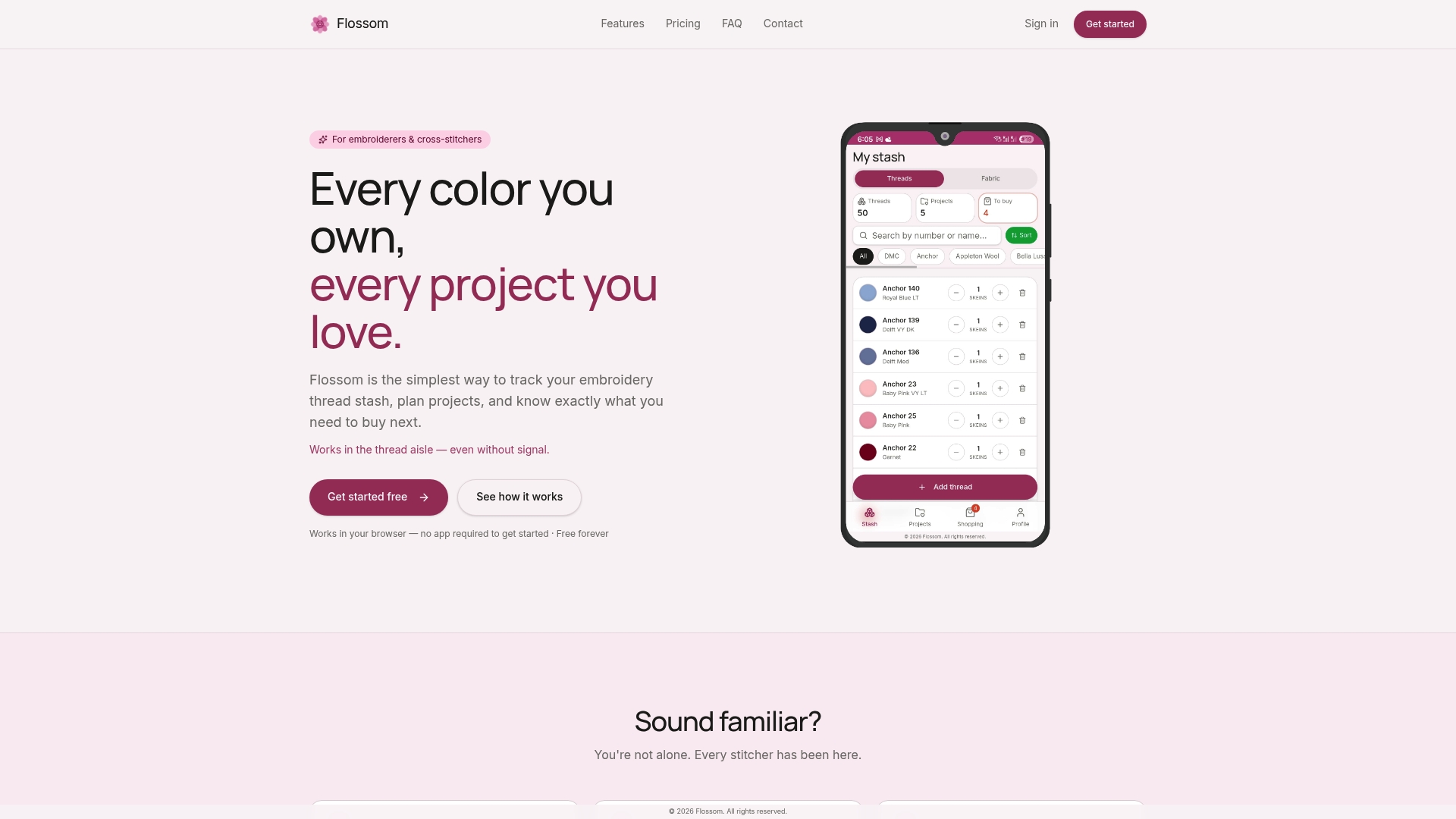
Flossom is built for exactly that. You can catalog your thread stash by type, weight, brand, and color, then let Flossom compare what you own against what your pattern needs. It auto-generates shopping lists, tracks low stock, and converts between 55 thread brands so you always know what you have and what to buy. The free tier covers DMC and Anchor with unlimited stash entries and three projects. Pro unlocks all 55 brands, a camera color picker, barcode scanner, and unlimited projects. Use the project time calculator to factor thread type into your planning from the start.
FAQ
What is the best way to sort embroidery floss by texture?
Sort threads into five primary texture groups first: stranded cotton, perle cotton, wool, rayon, and metallic. Then sort by weight within each group, and by color or number last.
Can I sort by texture and color at the same time?
Texture sorting works best as the top-level system, with color sorting applied within each texture group. Mixing both at the same level creates confusion when threads look similar but behave differently.
How does thread weight relate to texture?
Thread weight directly affects how a thread feels and stitches. Heavier 30 wt threads feel thicker and need wider stitch spacing of 0.8 to 1.0 mm, while finer 60 wt threads allow tighter fills down to 0.6 mm.
How should I store metallic and rayon threads separately?
Store metallic threads in small zip bags to prevent fiber shedding onto other threads. Keep rayon in sealed containers away from humidity, and use thread conditioner to reduce tangling before winding onto bobbins.
Does texture sorting work for large stashes?
Texture sorting scales well for large stashes because it creates clear physical sections that are easy to navigate. Pair it with a thread inventory system to track quantities and avoid duplicate purchases.
Recommended
We make Flossom — the calm app for cross-stitchers and embroiderers who want their stash, projects, fabric and shopping list in one tidy place.