
Your Embroidery Shopping List Explained: Build It Right
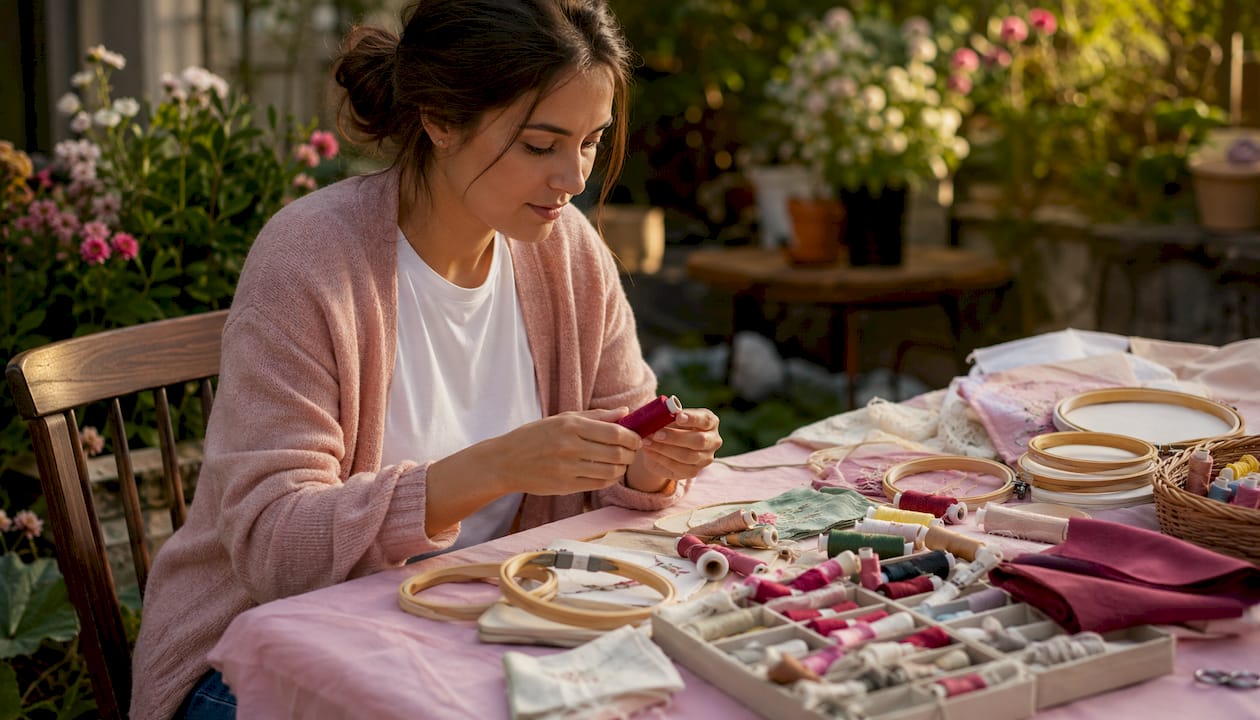
Your Embroidery Shopping List Explained: Build It Right ! Woman organizing embroidery supplies at home table An embroidery shopping list is a project-specific checklist of every thread color, needle type, fabric, and accessory you need before you sit down to stitch.
Your Embroidery Shopping List Explained: Build It Right
An embroidery shopping list is a project-specific checklist of every thread color, needle type, fabric, and accessory you need before you sit down to stitch. Done right, it saves time and money by preventing that frustrating mid-project run back to the craft store because you grabbed the wrong DMC shade or forgot stabilizer entirely.
Table of Contents
- What an embroidery shopping list actually does for you
- Core items every beginner's supply list should include
- How to manage your list so you stop buying duplicates
- How to customize your list by technique and project type
- How Flossom turns a static list into a live inventory system
- How to prioritize what you buy first when budget and deadlines collide
- Flossom keeps your stash honest and your shopping list short
- Key Takeaways
What an embroidery shopping list actually does for you
A good supply list is not just a reminder. It's a gap analysis: what does this project need, and what do you already own? That distinction matters because most stitchers already have something in their stash. The goal is to buy only what's missing, not rebuild from scratch every time.
Here's why stitchers who use a structured list consistently come out ahead:
- Prevents mid-project shortages by capturing every thread number, needle size, and stabilizer type before you shop
- Eliminates duplicate purchases since color names vary wildly across brands and memory alone is unreliable
- Keeps costs down by limiting purchases to actual project gaps rather than impulse buys
- Speeds up project starts because everything arrives together in one trip or order
- Supports multi-project planning by letting you cross-reference what one WIP needs against another
Core items every beginner's supply list should include
Experts consistently recommend starting with seven basics before adding anything else. Every item on this list earns its place on day one.
- Embroidery fabric: Quilting cotton is the friendliest starting point. It's stable, widely available, and takes stitches cleanly. Linen is a strong runner-up for texture and durability.
- Embroidery needles: A size 75/11 needle handles most woven fabrics and pairs well with standard 40wt thread. Sizes 3–9 crewel needles cover the majority of hand embroidery work.
- Stranded cotton floss: DMC and Anchor are the two most widely stocked brands in U.S. craft stores. Six-strand floss lets you adjust thickness by separating strands.
- Embroidery hoop: Keeps fabric taut so stitches stay even. An embroidery hoop of suitable size and material keeps fabric taut for most beginner projects.
- Small sharp scissors: A 3–4 inch pair with pointed blades handles thread trimming cleanly. Folding scissors travel well if you stitch on the go.
- Proper lighting or magnifier: Daylight-spectrum lamps reduce eye strain significantly during long sessions and help you match thread colors accurately under consistent light.
- Tape measure: Needed for centering designs, measuring fabric, and checking stitch counts.
Specialty tools like needle minders, hoop stands, and transfer pens can wait. Build your kit gradually as actual project needs arise rather than buying everything at once.
How to manage your list so you stop buying duplicates
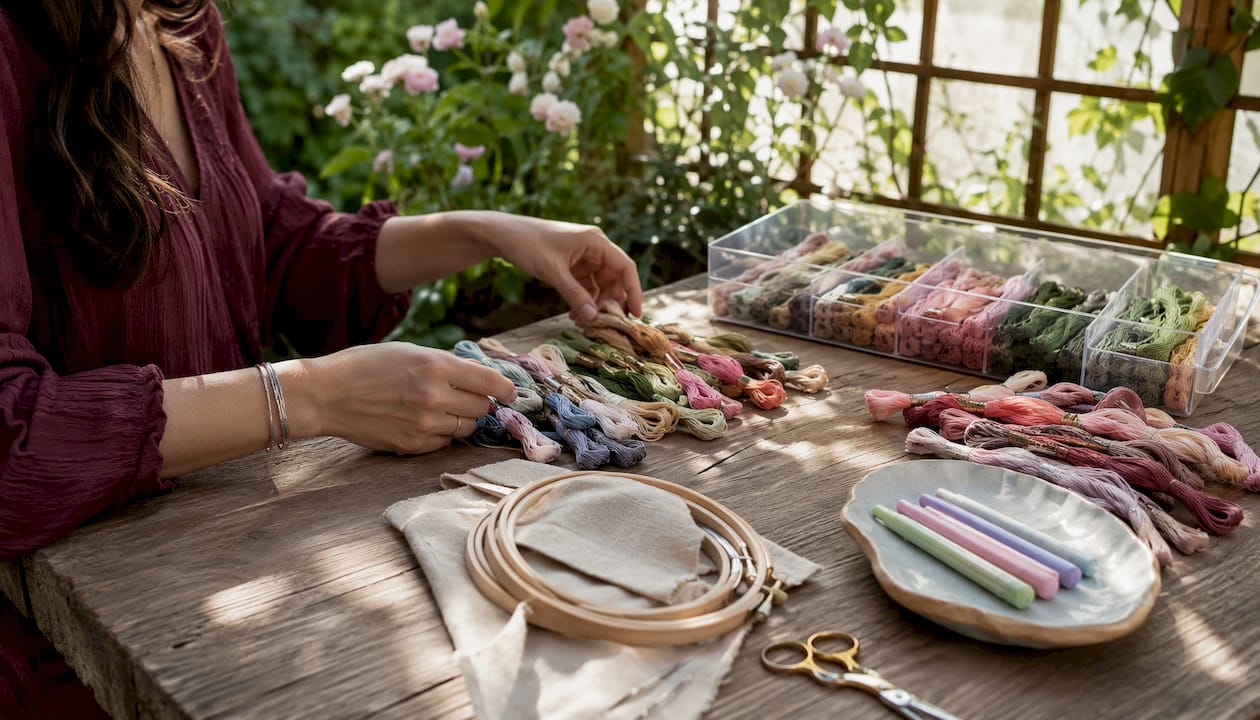
The most common stash problem is not a shortage. It's buying the same floss color three times because you forgot you already owned it. A dynamic shopping list fixes this by reflecting what you have, not just what a pattern calls for.
Top management habits that actually work:
- Run a quick inventory audit before every project. Pull out your threads, check color numbers against your pattern, and note gaps only.
- Track by number, not name. "Dusty Rose" means something different to every brand. DMC 3354 is always DMC 3354.
- Create a gap list. Write down only the items your stash is missing for the current project, not the full pattern requirements.
- Group threads by brand and number in your storage so audits take minutes, not an hour of digging.
- Set a restock threshold. If a color drops below one full skein, flag it before you start a project that needs it.
Pro Tip: A digital tracking app that auto-generates a gap list by comparing your pattern against your logged stash eliminates the manual audit entirely. You get a precise shopping list without touching a single skein.
How to customize your list by technique and project type
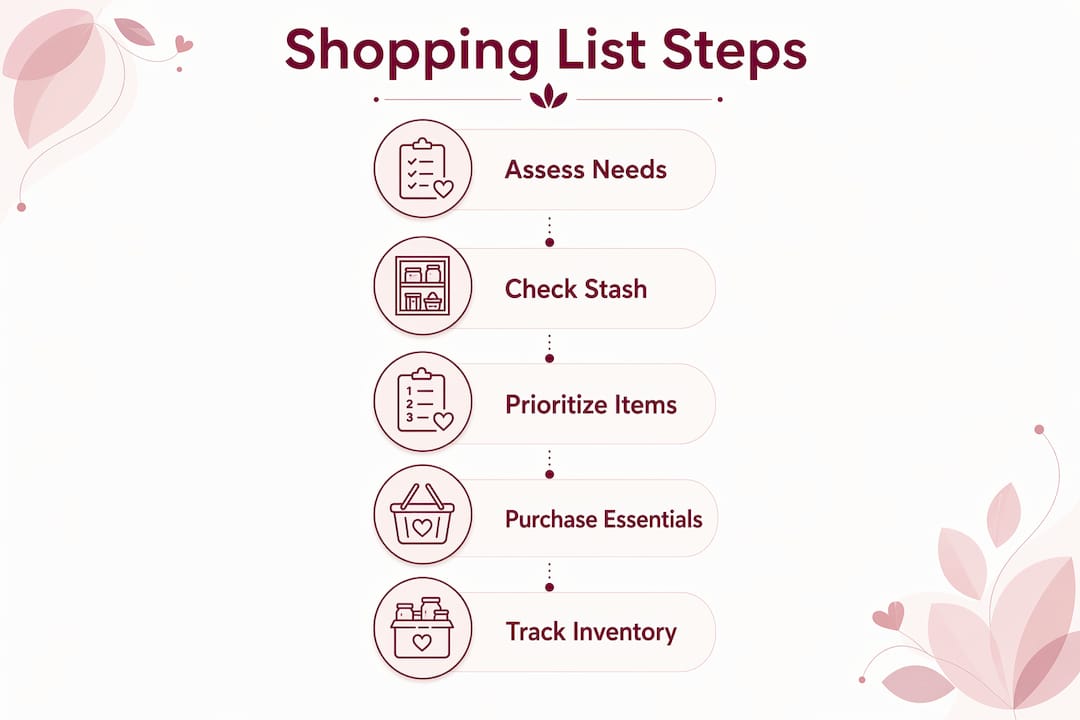
A hand embroidery list and a machine embroidery list share almost nothing beyond scissors and a hoop. Buying supplies without accounting for your technique leads to incompatible purchases that sit unused.
Key customization points by niche:
- Hand embroidery (surface techniques): Stranded cotton floss, crewel needles, and woven cotton or linen fabric. Transfer tools like water-soluble markers or heat-erasable pens belong on every list.
- Cross-stitch: Aida cloth or evenweave fabric, tapestry needles with blunt tips, and floss organized by color number. Grid size drives needle and fabric count choices.
- Machine embroidery: Stabilizer selection becomes critical here. Tear-away stabilizer suits stable woven fabrics like quilting cotton; cut-away is the right call for knits and stretchy materials where tear-away would distort the design.
- Specialty techniques (ribbon embroidery, goldwork): Chenille needles, silk or metallic threads, and specialty stabilizers all need to appear on the list before you shop, not after your first failed attempt.
Categorizing your shopping list by project type rather than keeping one generic master list prevents the frustration of buying a tear-away stabilizer for a jersey knit project.
How Flossom turns a static list into a live inventory system
| Feature | Manual method | Flossom |
|---|---|---|
| Gap list generation | Compare pattern to stash by hand | Auto-generated from pattern vs. logged stash |
| Thread brand coverage | Single brand or manual conversion charts | Converts across 55 thread brands |
| Low-stock alerts | Memory or periodic manual checks | Automatic notifications |
| Multi-project tracking | Separate paper lists per WIP | Unified dashboard with photo progress |
| Shopping list export | Handwritten or spreadsheet | CSV export, syncs across devices |
Flossom's core function is comparing what a pattern requires against what you already own, then generating a precise shopping list of only the gaps. Upload a pattern PDF, log your stash once, and the app does the arithmetic. The thread inventory guide by Simone, Flossom's expert author, walks through exactly how to build and maintain that stash catalog so the gap list stays accurate over time.
The 55-brand conversion tool is particularly useful when a pattern calls for a brand you don't stock. Instead of guessing at a color match, Flossom maps the exact equivalent across brands, which cuts color-matching errors at the point of purchase.
How to prioritize what you buy first when budget and deadlines collide
Not every item on your list needs to arrive before you can start. Prioritizing by project deadline and available budget keeps you stitching without overspending.
Start with the materials that block your project entirely if they're missing: the correct fabric, the specific thread colors in your first section, and the right stabilizer for that fabric type. These are non-negotiable for day one. Everything else, including specialty threads, additional hoop sizes, and comfort tools, can follow once the project is underway.
When budget is tight, rank items by how many current projects they serve. A neutral thread color used across three WIPs justifies the purchase ahead of a specialty metallic needed for one accent stitch. Flossom's multi-project view makes this cross-referencing straightforward: you can see which supplies overlap across your active projects and buy the highest-overlap items first.
For deadline-driven projects, work backward from the finish date. If a gift needs to be done in three weeks, identify which sections require the most stitching time and make sure those materials arrive first. Anything decorative or finishing-only can wait until week two.
Flossom keeps your stash honest and your shopping list short
Stitchers who juggle multiple WIPs know the real problem: it's not finding supplies, it's knowing what you already have. Flossom was built specifically for that gap.
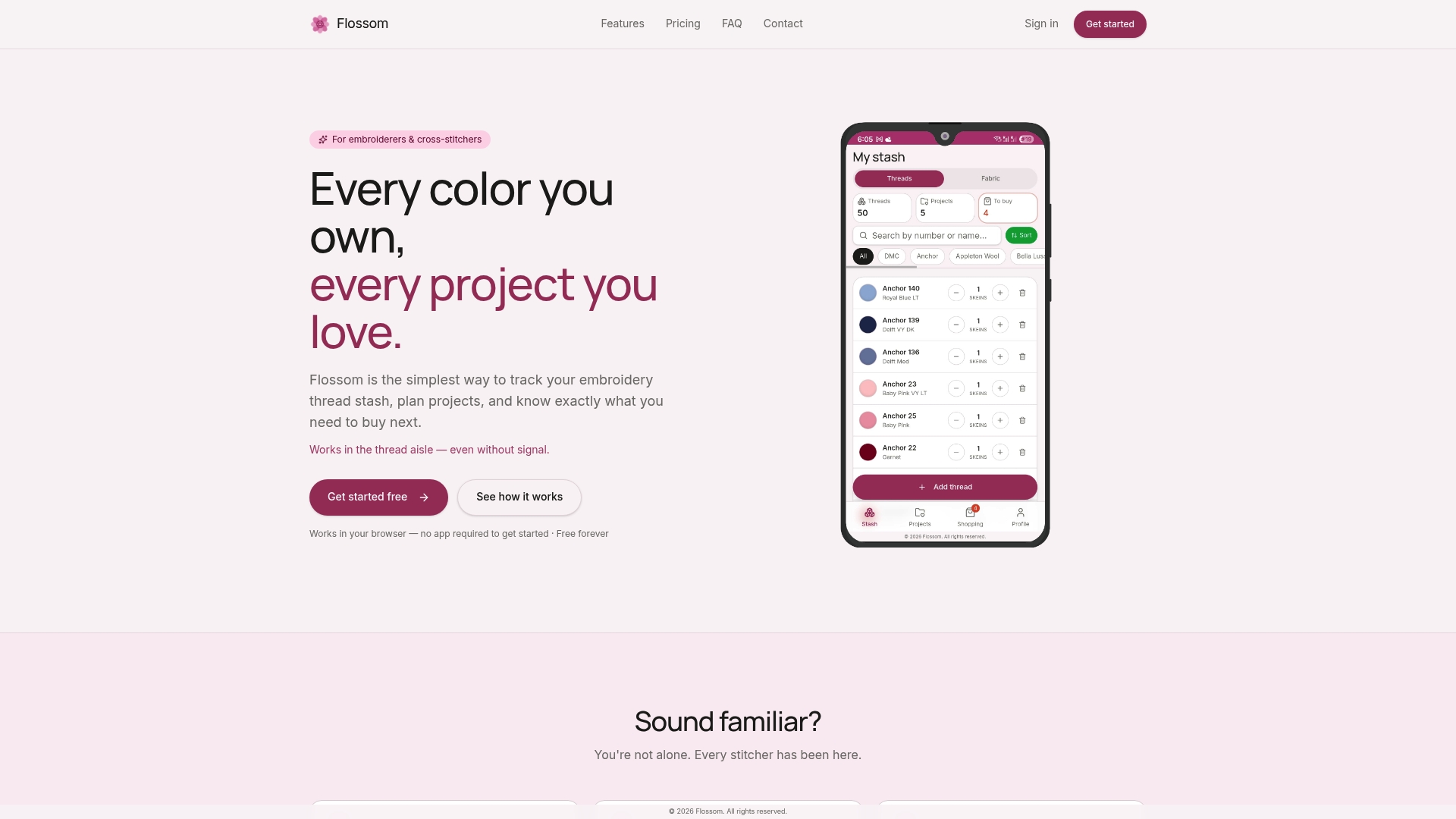
The free tier covers DMC and Anchor catalogs with unlimited stash logging and three active projects. That's enough to replace paper lists and manual audits for most hobbyists. Flossom Pro adds all 55 thread brands, a camera color picker, barcode scanner, fabric stash tracking, and unlimited projects. Everything syncs across iOS, Android, and desktop browsers with no ads.
If you're ready to stop buying duplicate skeins and start every project with a precise, stash-aware shopping list, try the thread conversion tool or explore the full tools and calculators at Flossom.
Key Takeaways
A precise embroidery shopping list compares your pattern's requirements against your existing stash and buys only the gaps, saving time and preventing duplicate purchases.
| Point | Details |
|---|---|
| Start with seven basics | Fabric, needles, floss, hoop, scissors, lighting, and a tape measure cover every beginner project. |
| Track by color number | Color names differ across brands; numbers like DMC 3354 are consistent and prevent duplicate buys. |
| Customize by technique | Hand embroidery, cross-stitch, and machine embroidery each require different stabilizers, needles, and fabrics. |
| Prioritize by deadline and overlap | Buy materials that block your current project first; prioritize threads used across multiple WIPs. |
| Flossom automates the gap list | Flossom compares your logged stash to your pattern and generates a precise shopping list across 55 thread brands. |
Recommended
We make Flossom — the calm app for cross-stitchers and embroiderers who want their stash, projects, fabric and shopping list in one tidy place.