Kits $15–$25: Counted vs Stamped Cross Stitch for Beginners
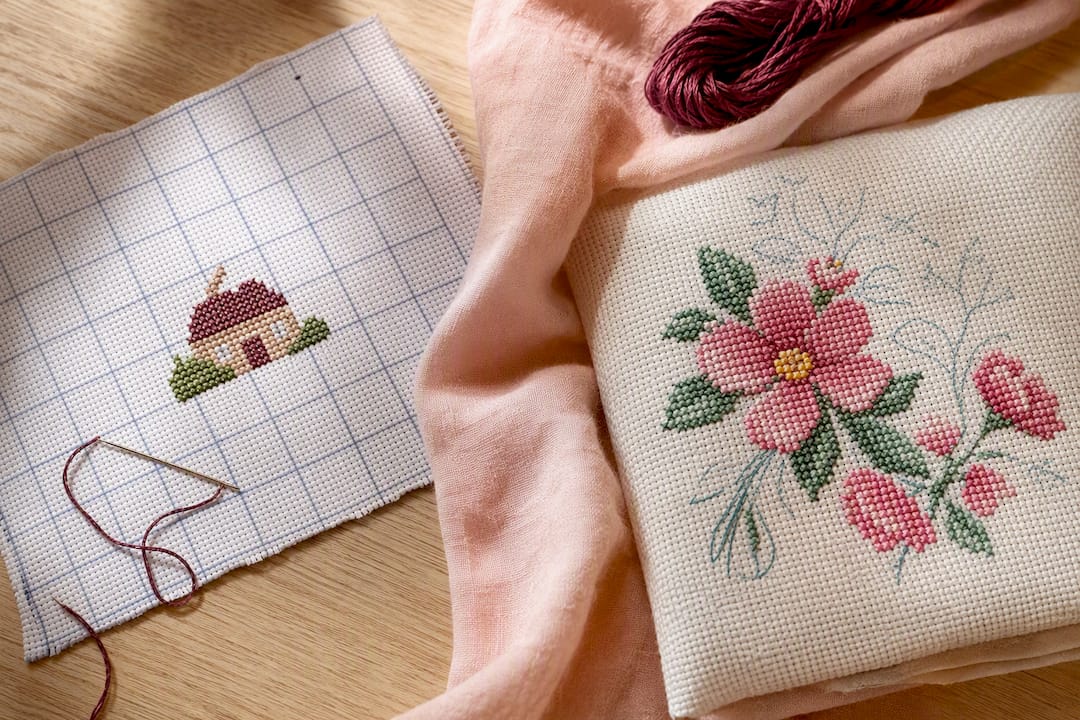
Kits $15–$25: Counted vs Stamped Cross Stitch for Beginners ! Counted and stamped cross stitch projects Stamped kits get you stitching in minutes because the design is already printed on the fabric; counted projects take longer to set up but reward you with sharper detail and far more pattern choices.
Kits $15–$25: Counted vs Stamped Cross Stitch for Beginners
Stamped kits get you stitching in minutes because the design is already printed on the fabric; counted projects take longer to set up but reward you with sharper detail and far more pattern choices. Neither method is "better" outright. Stamped suits quick, low-focus sessions and true beginners; counted suits stitchers who want fine shading, designer charts, and projects they'll frame for years. Plenty of experienced stitchers keep one of each going at the same time.
Table of Contents
- Counted vs Stamped Cross Stitch at a Glance
- Counted Cross Stitch: What It Is, Materials, and Workflow
- Stamped Cross Stitch: What It Is, Materials, and Workflow
- Pros and Cons: Practical Trade-Offs That Matter
- How to Choose for Your Next Project
- Starter Kit Checklist, Costs, and Setup Tips
- Practical Stitching Tips and Common Mistakes
- Why I Think You Should Stop Picking Just One
- Plan Both Methods Without Buying Floss Twice
- Sources
- FAQ
Counted vs Stamped Cross Stitch at a Glance
Counted cross stitch means you're working from a blank piece of fabric and a separate paper or digital chart, counting squares as you go. Stamped cross stitch means the pattern is already printed directly onto the fabric, so you stitch over the ink instead of counting anything. That single difference drives almost every other distinction between them, from setup time to final appearance.
- Learning curve: Stamped has almost no learning curve; counted requires you to read a chart, find the fabric's center, and understand symbols before your first stitch.
- Time-to-first-stitch: Stamped kits let you start within minutes, while counted setup usually takes 20 to 30 minutes.
- Visual finish: Counted projects tend to frame and resell better since there's no printed grid peeking through gaps; stamped designs can show faint ink lines if stitches don't fully cover them.
- Design variety: Counted dominates the designer and independent pattern market because charts allow fractional stitches and detailed shading; stamped selections lean toward simpler motifs.
- Materials and setup: Counted needs blank Aida or evenweave plus a chart; stamped needs only the pre-printed fabric and floss that comes with the kit.
- Cost range: Entry-level kits for both methods run roughly $15 to $25 for basic starter supplies, though premium counted kits with licensed designs can cost noticeably more.
Counted Cross Stitch: What It Is, Materials, and Workflow
Counted cross stitch starts with blank, gridded fabric, usually 14-count Aida, and a chart that shows you exactly where each colored X goes. There's no printed guide on the fabric itself. You count squares from a fixed reference point, typically the center of the design, and place stitches based on that count. This is the traditional method most cross stitch patterns from independent designers use today, and it's why so many modern charts include fine shading and half stitches that a printed design simply can't replicate.
Here's the typical workflow for a first counted project:
- Gather your materials. You'll want 14-count Aida, DMC floss in the colors your chart calls for, a size 24 tapestry needle, and a small hoop or frame.
- Find the fabric's center. Fold the fabric in half, then in half again, and mark the center point with a pin or a light crease.
- Locate the chart's center. Most charts mark this with arrows along the edges; match it to your fabric's center point.
- Start stitching outward. Work from the middle toward the edges so your design stays balanced on the fabric.
- Track your progress. Cross off or highlight completed sections on a printed chart, or use a digital app to mark rows as you finish them.
That setup phase, finding center and aligning the chart, usually takes 20 to 30 minutes before you place a single stitch. It's the biggest reason counted intimidates new stitchers. But it's also what makes counted the method serious hobbyists gravitate toward long term. Once you're comfortable with a chart, you can stitch fractional stitches, blend colors for shading, and tackle designs with hundreds of colors, none of which stamped fabric can offer since it's limited to whatever the printer laid down.
Stamped Cross Stitch: What It Is, Materials, and Workflow
Stamped cross stitch skips the counting entirely. The design is printed straight onto the fabric using water-soluble ink, and you stitch directly over each printed cell. There's no chart to cross reference, no center to locate by folding, and no guesswork about where a color starts or stops. This is the version most people picture when they think of a cross stitch kit from a craft store, and it's built specifically to get you from box to first stitch fast.
A typical stamped kit includes:
- Pre-printed fabric with the full design already visible
- A small set of floss colors matched to a simple legend
- A needle sized for the fabric's weave
- Basic instructions for stitching and washing
Because the pattern is already there, most stitchers place their first stitch within a couple of minutes of opening the kit, no chart reading required. That immediacy is exactly why stamped kits are considered easier for absolute beginners: there's nothing standing between you and the fabric except thread and a needle.
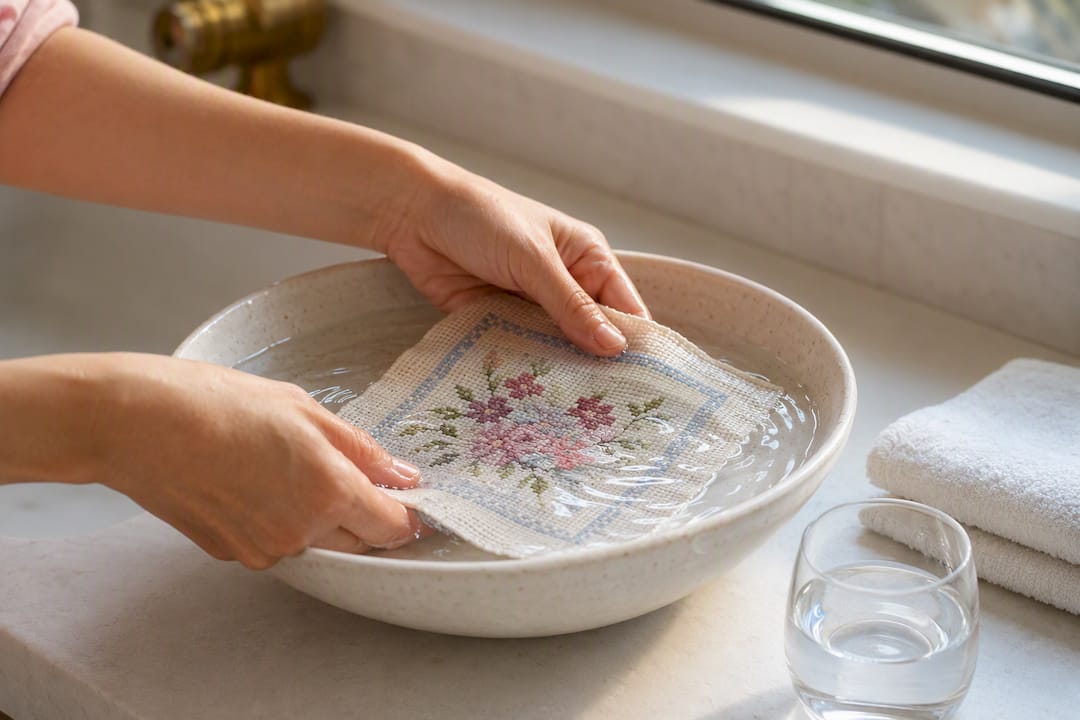
The catch is the ink itself. Once you finish stitching, you need to wash the printed lines out or they'll peek through around your stitches. The standard method is a cold soak around 86°F (30°C) for about three hours with a mild detergent, followed by gentle rinsing and flat drying. Cheaper inks on lower-quality fabric can occasionally leave faint outlines even after soaking, so it's worth choosing kits that explicitly label themselves washable before you buy. Stamped kits work especially well for absolute beginners, stitchers with low vision who find grid counting hard on the eyes, and anyone stitching a quick gift on a deadline.
Pros and Cons: Practical Trade-Offs That Matter
Every trade-off between these two methods comes down to what you're optimizing for: speed or precision, simplicity or variety. Neither wins across the board.
- Framing and resale quality: Counted pieces generally frame and sell better since there's no risk of ink showing through gaps in coverage.
- Design variety: Counted wins decisively here. Independent designers overwhelmingly publish counted charts because they support fractional stitches and detailed shading that stamped fabric can't reproduce.
- Speed and mental load: Stamped wins for low-effort stitching. You can zone out in front of a show and still stitch accurately since the pattern is right there on the fabric.
- Mistake visibility: Counted mistakes show up immediately if your count is off, which sounds bad but actually helps you catch errors before they compound across a large section. Stamped mistakes are harder to spot until the ink washes out.
- Cost at entry level: Roughly comparable, typically $15 to $40 for small beginner kits either way. Premium counted kits with licensed art or large stitch counts run higher due to design fees and higher thread counts.
How to Choose for Your Next Project
Picking a starting point gets easier once you ask yourself four honest questions instead of trying to guess which method sounds more appealing on paper.
- How much time do you actually have per session? Short, interrupted sessions favor stamped, since you can pick it up and put it down without losing your place on a chart.
- How's your eyesight and lighting? If counting tiny grid squares under dim light sounds miserable, stamped removes that entirely.
- Do you want fine detail or fast gratification? If you're drawn to shading and intricate designer work, counted is where that lives.
- How much patience do you have for counting? If the idea of miscounting and redoing a section makes you want to quit before you start, stamped sidesteps the whole problem.
Watch for a few red flags before buying either type. For counted kits, avoid anything below 14-count as a first project. It's harder to see and count accurately. For stamped kits, skip anything without a clear floss legend or explicit washout instructions. Vague care instructions are a sign the manufacturer didn't test the ink properly.
For a first counted project, look for 14-count Aida, under 3,000 stitches total, and no more than 10 colors. For a first stamped project, pick a small motif with a stated washable ink claim and a legend that's easy to read at a glance.
Pro Tip: If you're torn between the two, buy a small kit of each. Stitch a few evenings of stamped to build confidence with the needle, then switch to a tiny counted piece to learn charting while the stakes are low.
Starter Kit Checklist, Costs, and Setup Tips
Budget roughly $15 to $25 for a basic starter setup if you're buying components separately rather than a boxed kit. That covers fabric, floss, a needle, and a small hoop, enough for a first project without overspending before you know which method you prefer.
Here's what to have on hand:
- 14-count Aida fabric, at least a few inches larger than your design on each side
- DMC floss in the colors your pattern or kit calls for
- A size 24 tapestry needle for 14-count fabric (size 26 if you move up to 16-count)
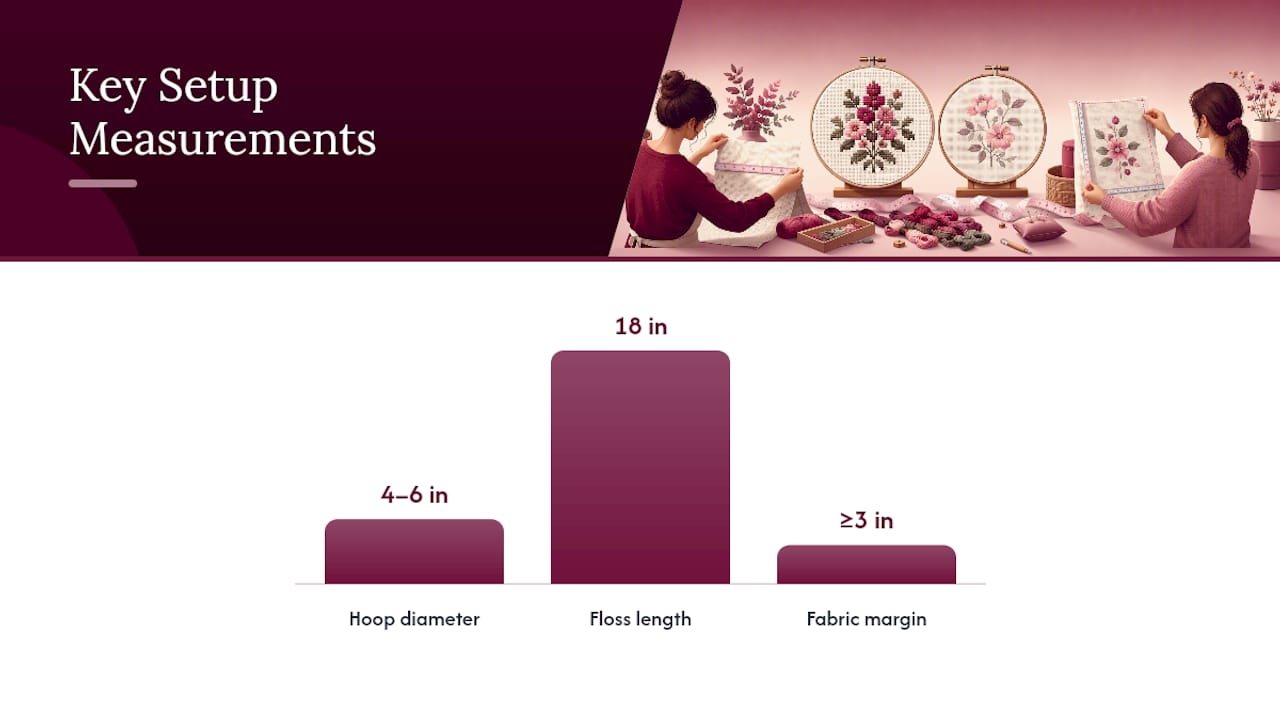
- A 4 to 6 inch embroidery hoop
- Small embroidery scissors
To set up, cut your fabric with at least 3 inches of margin around the design area so you have room to hoop it without stretching the stitched section. Find the center by folding the fabric in half both ways, as described earlier for counted projects. Cut floss into lengths around 18 inches; longer strands tend to tangle and fray before you finish using them. Use two strands of floss on 14-count Aida for full, even coverage without puffiness. For a deeper look at fabric options beyond Aida, Flossom's guide to cross stitch fabric types breaks down when evenweave or linen makes sense instead. If you're still assembling your toolkit, the essential tools checklist covers what's worth buying now versus later.
Practical Stitching Tips and Common Mistakes
A handful of small habits separate tidy finished work from a tangled mess on the back of your fabric.
- Skip the knot. Use the loop method: fold one strand in half, thread both loose ends through the needle, and pass the needle through leaving the loop on the back to catch your first stitch. No bulky knot, no lumps under your fabric.
- Stitch in one direction. Complete all the bottom legs of a row first, then go back and cross them with the top legs. Consistency here is what makes finished pieces look uniform instead of choppy.
- Try railroading. Split your two strands with the needle tip as you pull through, so they lay flat side by side instead of twisting. It's a small habit that noticeably improves coverage.
- Fixing mistakes carefully. In counted work, loosen the stitches around a mistake slightly before pulling thread out, rather than yanking several inches at once, which can distort the fabric and force you to re-tension it in the hoop.
Pro Tip: Railroading feels awkward for the first few rows. Stick with it through one full skein and it becomes automatic, and your finished pieces will show it.
Why I Think You Should Stop Picking Just One
Stitchers who've been at this a while rarely settle on only one method, and that's worth saying plainly instead of pretending you need to commit. Many keep a counted project going for focused daylight sessions and a stamped one for evenings in front of a podcast or show, because the two methods ask different things of your attention. Counted rewards concentration. Stamped rewards a tired brain that still wants to make something with its hands.
If you're new to this, don't overthink your first purchase. Grab a small counted kit to learn charting while the stakes are low, or grab a stamped kit if you just want a finished project without a learning curve first. Either choice teaches you something the other can't.
— Simone
Plan Both Methods Without Buying Floss Twice
Switching between a counted chart and a stamped kit gets messy fast when you're tracking supplies in your head or across scattered notes, especially once you're juggling more than one project at a time. An app can keep a running catalog of colors you own across multiple brands, helping you avoid rebuying floss you already have. Some tools let you upload a pattern and compare the design's needs against your existing stash, then generate a shopping list for missing items.
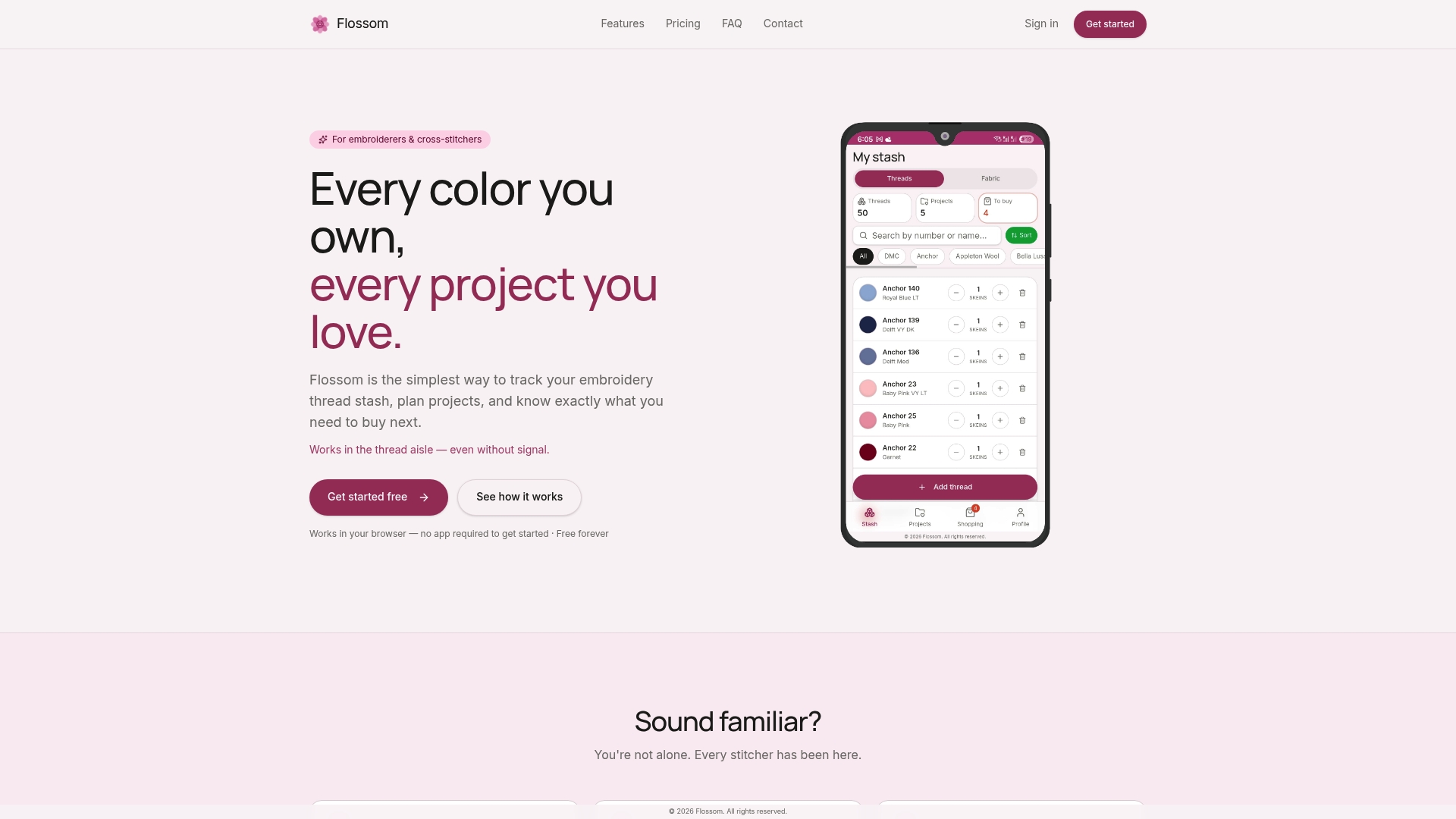
That same tracking works whether you're stitching a counted chart with 40 colors or a simple stamped motif with six. Features may include photo logging to track work-in-progress and options for managing stash entries with limited brand catalogs available on free tiers. If you're trying to figure out how long a project will realistically take before you commit to it, the project time calculator gives you a working estimate based on stitch count and fabric size. Pull up the tools page and start cataloging your stash before your next purchase.
Sources
- What is stamped cross stitch & why it's easier — The Stamped Stitch Club
- Counted vs Stamped Cross Stitch: Which Is Right for You? — Tapestry Market
- How to cross stitch for beginners — MakeBead
- Loop method for anchoring thread — Peacock & Fig
- 10 essential things to know before starting cross stitch — EGA USA
FAQ
Is counted or stamped cross stitch easier for beginners?
Stamped is easier for absolute beginners since the design is already printed on the fabric and you can start stitching within minutes, while counted requires 20 to 30 minutes of setup and chart reading first.
What does stamped cross stitch actually look like?
Stamped fabric shows the full design printed in color directly on the cloth, with each cell marked so you stitch right over the printed grid instead of counting blank squares.
Does stamped cross stitch ink wash out completely?
Yes, most stamped ink is water-soluble and washes out with a cold soak around 86°F for about three hours, though cheaper inks on lower-quality fabric can occasionally leave faint traces if not soaked properly.
Is counted cross stitch still popular?
Yes. Counted remains the dominant format among independent designers because charts support fractional stitches and detailed shading that printed stamped fabric can't reproduce, and many stitchers use tools like Flossom to manage the floss and fabric that counted projects demand.
Recommended
We make Flossom — the calm app for cross-stitchers and embroiderers who want their stash, projects, fabric and shopping list in one tidy place.