
Avoid Cutting Mistakes: Calculate Cross Stitch Fabric, 2–3 in Margin
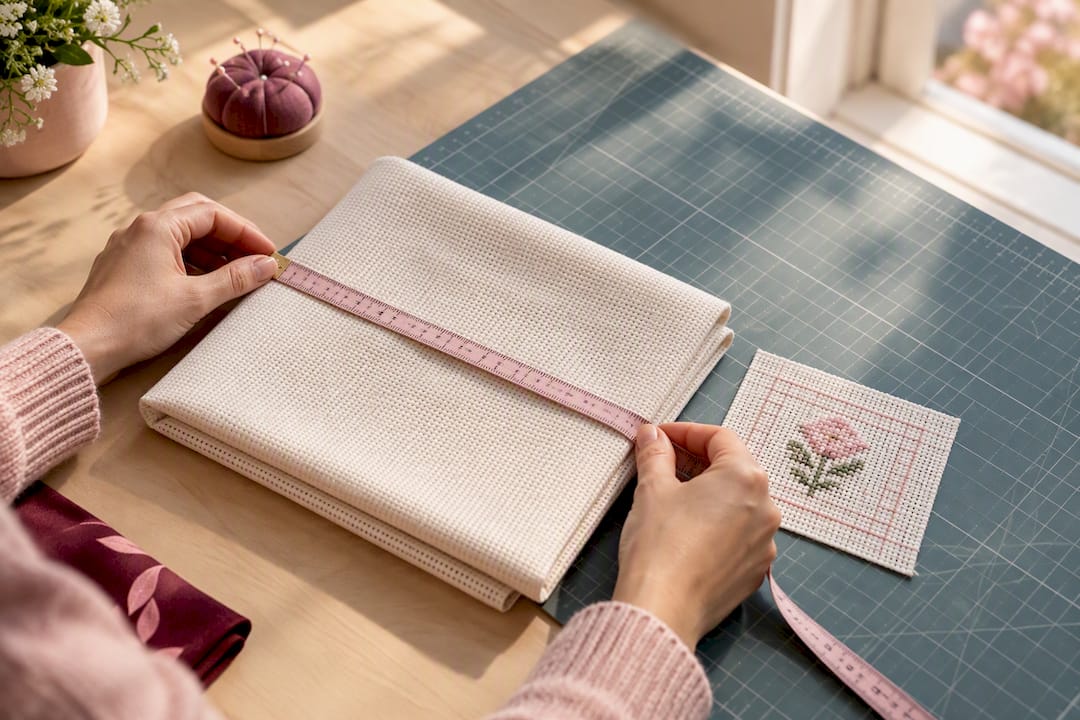
Avoid Cutting Mistakes: Calculate Cross Stitch Fabric, 2–3 in Margin ! Hands measuring cross stitch fabric Finished size equals stitch count divided by fabric count, calculated separately for width and height, and fabric to buy equals that finished size plus margin on every side.
Avoid Cutting Mistakes: Calculate Cross Stitch Fabric, 2–3 in Margin
Finished size equals stitch count divided by fabric count, calculated separately for width and height, and fabric to buy equals that finished size plus margin on every side. For most projects, add 2 to 3 inches per side before rounding up to a size fabric shops actually sell. Stitching over two threads on evenweave or linen? Cut the fabric count in half before you plug in the numbers.
Table of Contents
- How Do You Calculate Fabric for Cross Stitch?
- Worked Examples: From Stitch Count to Fabric Size
- Does Fabric Count Change the Finished Size?
- How Much Extra Fabric Should You Buy?
- What Should a Good Fabric Calculator Include?
- What Mistakes Lead to Buying Too Little Fabric?
- Why Stitchers Get Fabric Math Wrong More Than You'd Expect
- Skip the Recalculating With Flossom's Built-In Fabric Tools
- Sources
- FAQ
How Do You Calculate Fabric for Cross Stitch?
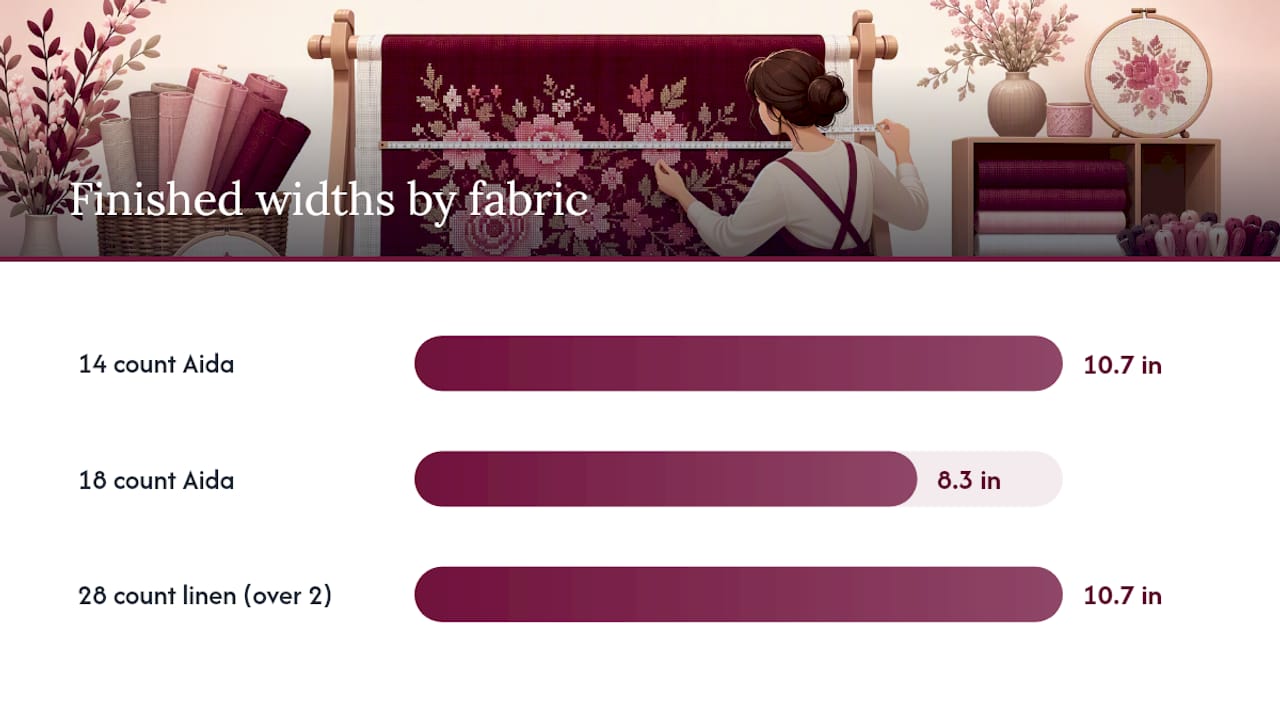
The math behind every fabric calculator boils down to one formula, repeated twice. Finished width (inches) = horizontal stitch count ÷ fabric count. Finished height (inches) = vertical stitch count ÷ fabric count. Fabric count is stitches per inch, so a 150 stitch wide design on 14 count Aida comes out to 150 ÷ 14, or about 10.7 inches wide.
For centimeters, divide by fabric count and multiply by 2.54, or just convert the final inch measurement.
Evenweave and linen complicate things slightly because most stitchers work over two threads rather than one. When you stitch over 2, the fabric behaves like half its stated count. A 28 count linen worked over 2 gives you the same finished size as 14 count Aida, so you enter 14 as the effective count, not 28, according to The Stitchery Corner's fabric calculator.
A reliable calculator, whether it is an app or a spreadsheet, needs four inputs to give you a usable answer:
- Stitch count, width and height, taken straight from the pattern
- Fabric count, adjusted to the effective count if you are working over 2
- Margin per side, based on how you plan to finish the piece
- A units toggle for inches versus centimeters, since patterns and fabric labels aren't always consistent
Get those four right and the rest is arithmetic, according to ArtPatt's cross stitch size calculator.
Worked Examples: From Stitch Count to Fabric Size
Numbers make this click faster than any explanation, so here are three examples using a design that measures 150 stitches wide by 200 stitches tall.
- 150w × 200h on 14 count Aida. Width: 150 ÷ 14 = 10.7 inches. Height: 200 ÷ 14 = 14.3 inches. Add a few inches of margin per side and you need roughly 16.7 by 20.3 inches of fabric, which rounds up to a typical fabric cut size.
- Same design on 18 count Aida. Width: 150 ÷ 18 = 8.3 inches. Height: 200 ÷ 18 = 11.1 inches. With similar margin allowances, that's about 14.3 by 17.1 inches, easily covered by a modest fabric cut.
- Same design on 28 count linen, stitched over 2. Effective count is 14, so the math matches example one exactly: 10.7 by 14.3 inches finished, 16.7 by 20.3 inches to buy.
Notice how jumping from 14 to 18 count shrinks the finished piece by roughly a third in each direction with zero change to the pattern itself. That's the same design, just packed tighter.
Always round up to the nearest standard cut your fabric shop stocks, and treat that rounded number as a floor, not a target. A little extra buffer covers a miscounted row or a fraying edge you didn't plan for.
Does Fabric Count Change the Finished Size?
Fabric count changes everything about how a design looks and feels to stitch, even though the pattern itself never changes. Higher counts pack more stitches into every inch, which shrinks the finished piece and sharpens the detail, but also means smaller, tighter stitches that some people find harder on the eyes.
Here's how the common counts compare:
- 11 count Aida: Large, easy-to-see holes, often stitched with 3 strands of floss, popular for kids' projects and quick gifts.
- 14 count Aida: The standard for most patterns and the count most beginners start on, typically stitched with 2 strands, according to ArtPatt.
- 16 count Aida: A middle ground between visibility and finished-piece size, usually 1 to 2 strands depending on coverage preference.
- 18 count Aida: Fine detail work, smaller finished pieces, favored for portraits and dense designs, generally stitched with 1 strand.
Evenweave and linen add a wrinkle because they're almost always worked over 2 threads rather than over 1. That means 28 count over 2 behaves like 14 count Aida, and 32 count over 2 behaves like 16 count. If a pattern calls for a specific fabric feel, like the softer drape of linen, you can swap counts and keep the same finished size as long as you match the effective count. Our guide to cross stitch fabric types breaks down how Aida, evenweave, and linen differ beyond just the math.
The trade-off is time. A design that takes 40 hours on 14 count can stretch past 60 on 18 count, simply because the stitches are smaller and your eyes need more breaks.
How Much Extra Fabric Should You Buy?
Margins depend entirely on how you're planning to finish the piece, and guessing low is the single most common reason stitchers end up back at the fabric store mid-project.
- 2 inches per side works for small pieces you'll hoop or finish as an ornament, ID tag, or small framed piece.
- 3 inches per side is the standard recommendation for anything going into a standard frame, since mat boards and stretcher bars eat into your margin fast, according to FiberTools' cross stitch calculator.
- 4 inches or more per side covers scroll frames or any heavy finishing method, like a pillow with piping or a bound edge, where you need real fabric to grip.
The formula stays the same no matter which margin you pick: fabric to buy equals finished size plus margin times two, since margin applies to both sides of every dimension. Round the result up to whatever cut size is actually sold, rather than trying to order an exact fraction of a yard.
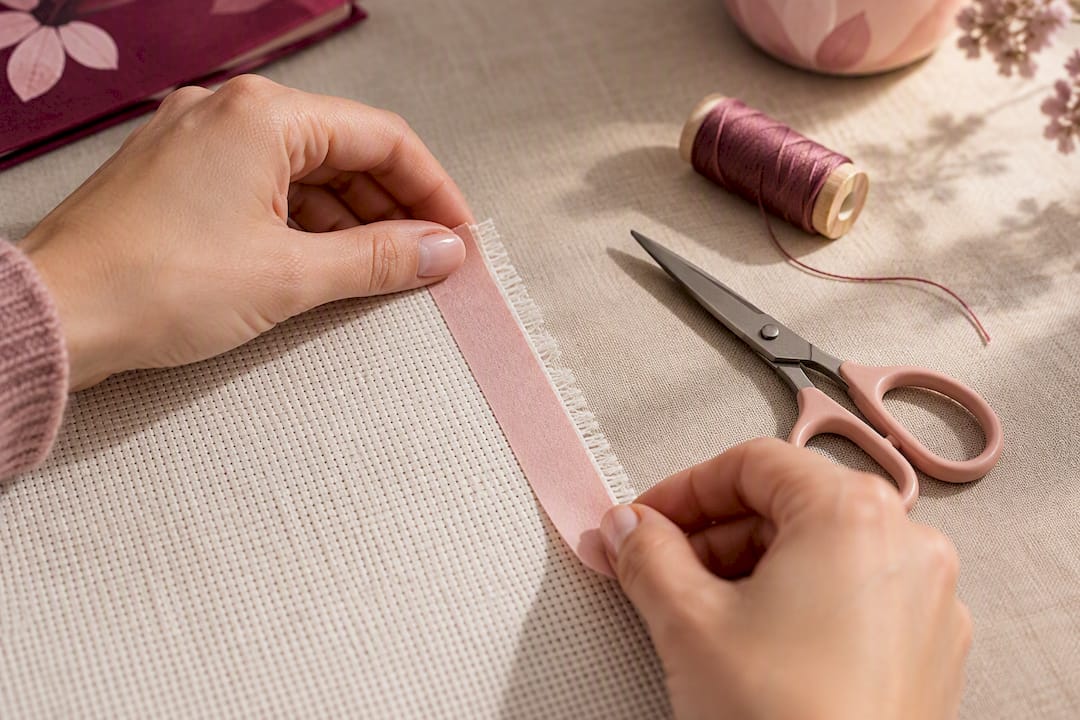
Pro Tip: Finish the raw edges of your cut fabric with a zigzag stitch, fray check, or masking tape before you start stitching. An unfinished edge on Aida or linen can lose a quarter inch to fraying over a long project, right when you need that margin most.
Our guide to project size categories walks through how finished size and finishing method interact if you're still deciding on a frame versus a hoop versus a scroll setup.
What Should a Good Fabric Calculator Include?
A calculator earns its keep when it asks for the right inputs and gives you outputs you can act on immediately, not just a raw number.
- Fields for stitch count, fabric count, an over 1/over 2 toggle, and a margin value
- Output in both inches and centimeters, since fabric is sold and labeled inconsistently
- The ability to compare the same design across multiple fabric counts side by side
- Thread consumption estimates per color, which some tools calculate by multiplying stitch counts against average floss usage, according to Needlework-tips-and-techniques
Whatever tool you use, verify it in under a minute: take the width, divide stitch count by fabric count yourself, and check that the calculator's number matches. If it's off, you've likely entered the wrong effective count for an over-2 fabric.
Flossom's fabric size calculator runs this same math but ties the output straight into your project list, so the size you calculate today stays attached to that pattern instead of living on a sticky note.
What Mistakes Lead to Buying Too Little Fabric?
Most fabric shortages trace back to one of a handful of avoidable errors, not bad luck.
- Miscounting stitches directly from a chart; count in 10 by 10 blocks and cross-check against the pattern's stated dimensions instead of eyeballing it.
- Skipping a test stitch on a scrap when the actual fabric count is uncertain, especially with older or unlabeled linen.
- Forgetting backstitch outlines and any beads or embellishments, which can shift your effective coverage area slightly beyond the main stitched grid.
- Cutting fabric to the bare minimum size instead of the rounded, margin-included figure.
Pro Tip: Keep every leftover fabric scrap larger than a few inches. If you ever need to patch a mistake or extend a border, matching fabric from the original bolt beats trying to find the same dye lot two years later.
Why Stitchers Get Fabric Math Wrong More Than You'd Expect
Fabric miscalculation isn't usually a math problem. It's a translation problem. Patterns give you stitch counts, fabric labels give you a count per inch, and somewhere between those two numbers, over-2 conversions and margin math get skipped or fudged. I've seen stitchers do the width calculation correctly and then forget to double the margin, because "add 3 inches" sounds like a total instead of a per-side instruction.
The bigger issue is that most people calculate fabric once, at the start, and never again. Patterns get modified, borders get added, and nobody revisits the math. That's really where a tool like Flossom's fabric calculator earns its place. It's not smarter than the formula. It just remembers the numbers so you don't have to redo them every time a project changes.
— Simone
Skip the Recalculating With Flossom's Built-In Fabric Tools
Flossom keeps your fabric math attached to the project itself, so you're not re-deriving stitch counts and margins every time a pattern shifts or you swap fabric counts mid-project. The fabric size calculator runs the same width and height formula covered above, but logs the result against your stash so you know instantly whether you already own a large enough cut.
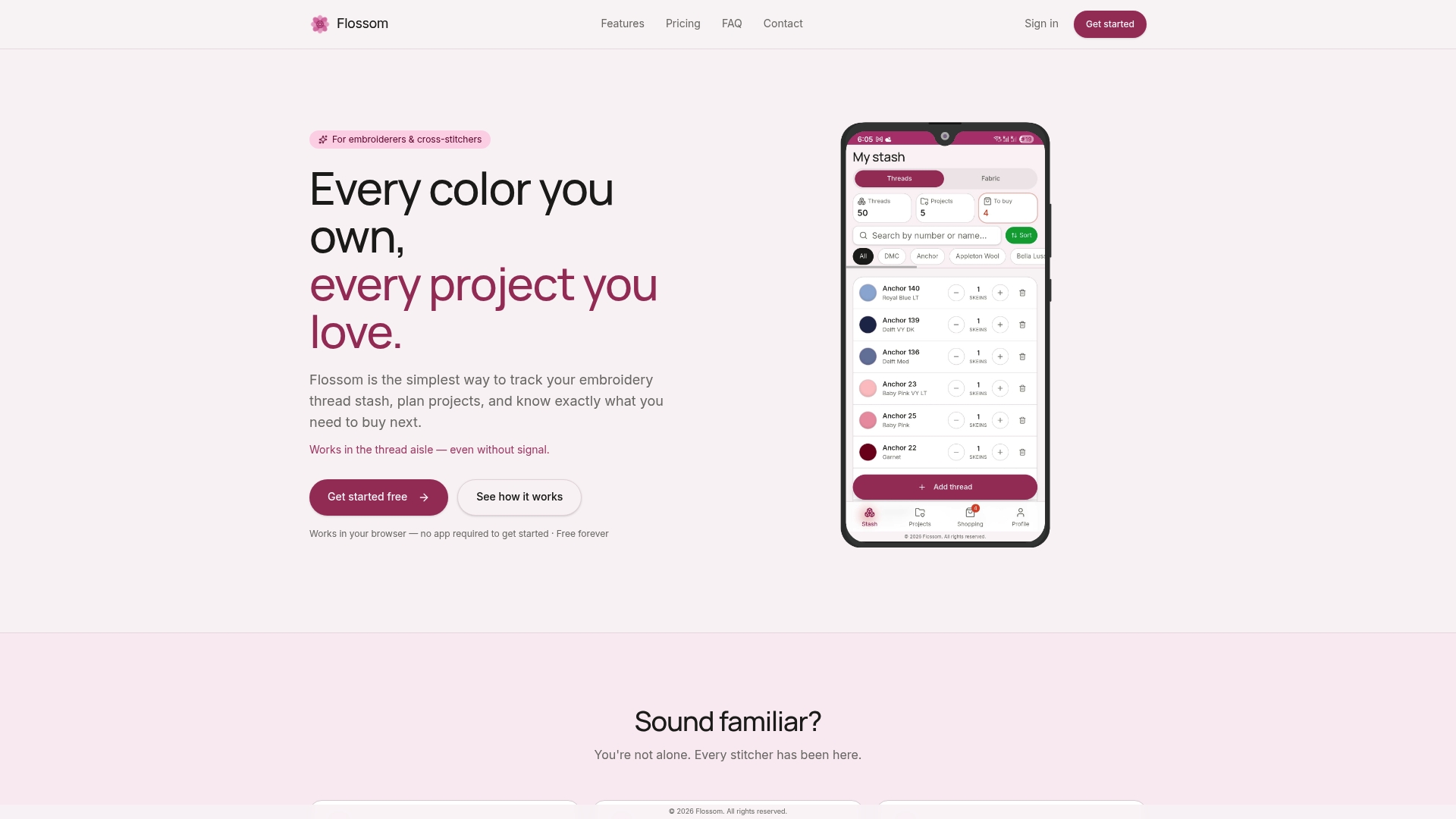
Pair that with Flossom's thread conversion tool for estimating floss across 55 brands, and the app auto-generates a shopping list comparing what a pattern needs against what's already in your stash, so you stop buying colors you own twice. The free tier covers unlimited stash tracking and three projects with DMC and Anchor catalogues. Flossom Pro unlocks all 55 brands, barcode scanning, and unlimited projects for $14.99 per year. Head to the tools page to try the fabric calculator on your next pattern.
Sources
- Cross-Stitch Size & Fabric Calculator — Stitch Count to Inches & cm | ArtPatt
- Cross Stitch Size & Thread Calculator, Free | FiberTools
- Cross Stitch Fabric Calculator (Aida & Evenweave) | The Stitchery Corner
- Free Cross Stitch Calculator: Inches & cm, Any Fabric Count
FAQ
What Is the Best Cross Stitch Calculator App?
The best option depends on whether you want a standalone tool or something connected to your stash and project list. Flossom's calculator ties fabric size directly to your existing inventory, so it flags whether you already own enough fabric before you buy more.
What Are the Recommended Fabric Counts for Cross Stitch?
14 count Aida is the most common recommendation for beginners because the holes are easy to see and it pairs with standard 2-strand floss. Other common counts include 11, 16, and 18, each trading visibility for finer detail and a smaller finished size.
How Many Stitches Are in 18 Count Aida?
18 count Aida has 18 stitches per inch in both directions, meaning a design 150 stitches wide finishes at about 8.3 inches. That's roughly a third smaller than the same design stitched on 14 count Aida.
How Much Margin Should I Add When Cutting Fabric?
Most calculators recommend 2 inches per side for small pieces, 3 inches per side for standard framing, and 4 inches or more per side for scroll frames or heavy finishing work. Add that margin to each side of your finished measurement, then round up to the nearest available fabric cut.
Recommended
We make Flossom — the calm app for cross-stitchers and embroiderers who want their stash, projects, fabric and shopping list in one tidy place.