
4 Compact Floss Storage Setups for Small Spaces With an App Workflow
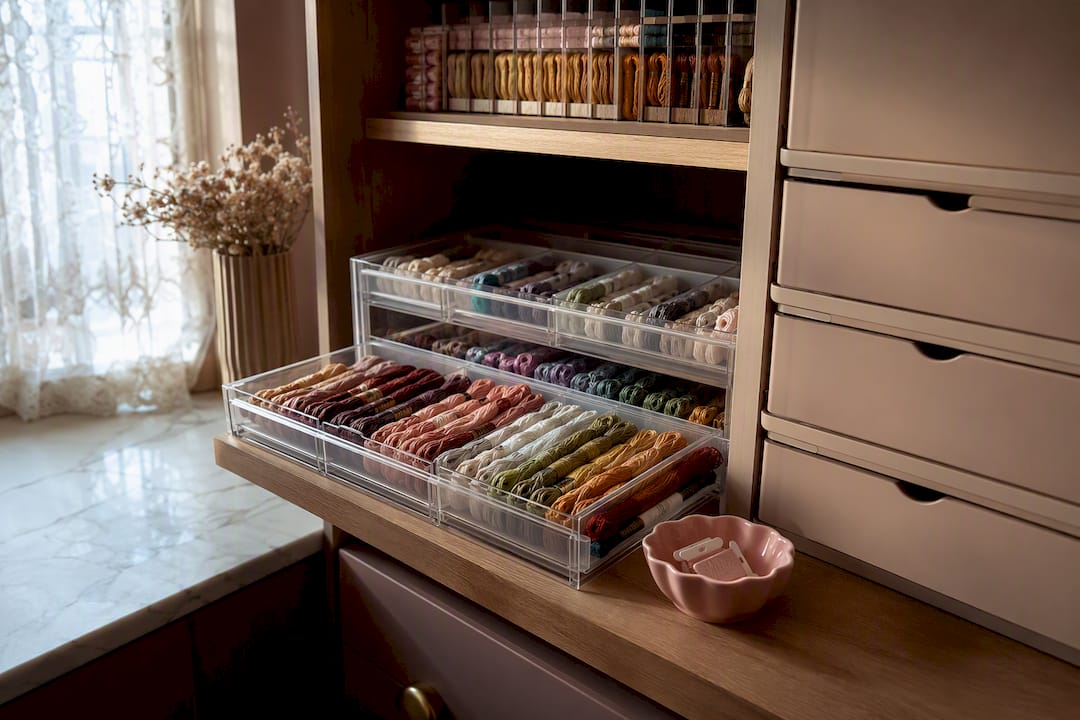
4 Compact Floss Storage Setups for Small Spaces With an App Workflow ! Compact floss storage arranged in a craft nook The most compact way to store embroidery floss in a small space is a clear multi-compartment box or a wall-mounted small-parts drawer cabinet, paired with one dedicated "in-progress" pouch for your current project.
4 Compact Floss Storage Setups for Small Spaces With an App Workflow
The most compact way to store embroidery floss in a small space is a clear multi-compartment box or a wall-mounted small-parts drawer cabinet, paired with one dedicated "in-progress" pouch for your current project. Reach for bobbins when your drawers are shallow or your palette is large; stick with skeins if you stitch fast enough to burn through color before winding matters. The section below breaks down which physical system fits which space.
Table of Contents
- Floss Storage Small Spaces: Boxes, Bins, and Modular Drawers
- Sorting, Labeling, and Building an In-Progress Kit
- Small Tools That Make a Tiny Stash Run Faster
- Using Vertical and Hidden Space in a Tiny Craft Area
- Pairing a Digital Catalog With Your Physical Boxes
- Keeping a Small Floss System Clean and Actually Organized
- What I've Learned About Small-Space Floss Systems
- Track What's in Every Box Without Opening It
- Where to Check Dimensions Before You Buy
- Sources
- FAQ
Floss Storage Small Spaces: Boxes, Bins, and Modular Drawers
Four physical formats cover almost every small-space situation, and picking the wrong one is usually why a stash feels chaotic even after you've "organized" it.
Clear single-box floss finder cases work best for a starter stash or a travel kit. A typical transparent floss finder box measures about 10.75 by 7.375 by 1.75 inches, shatterproof plastic with a no-spill latch, and slides into a tote or a single shelf cubby without a second thought. These hold anywhere from 30 to 100 skeins depending on compartment size, and their flat profile makes them the easiest option for a desk drawer or a rolling craft cart.
Two-tier stackable systems solve the capacity problem without eating more floor space. Instead of buying one wide box, you stack two shorter ones with locking layers and a carry handle, which several floss storage roundups point to as the practical middle ground between a huge single container and something you can actually carry to a stitch night. Check that the latches on both tiers lock independently. A single failed latch on the bottom tier means everything above it shifts too.
Small-parts modular drawer cabinets are the heavy hitters for anyone storing 100+ colors. Units in the 30 to 40 drawer range, like the VEVOR 40-drawer organizer, typically run 14 to 19 inches wide, 14 to 16 inches tall, and only about 6 inches deep, which means they hug a wall instead of jutting into your walkway. A comparable option, the INTERTOOL 39-drawer cabinet, lists 30 small drawers plus 9 larger ones at 18.7 by 14.9 by 6.2 inches, with transparent removable drawers and built-in wall-mount slots. That mix of drawer sizes matters more than it sounds: uniform grids look tidy but leave nowhere to stash a floss winder or a stray needle case.
Repurposed containers, tackle boxes, tiered cosmetic organizers, mint tins for travel kits, cost nothing extra if you already own them. The trade-off is fit. Tackle box dividers are usually sized for lures, not skeins, so you'll fight wasted space or overcrowded compartments. They're a fine stopgap while you shop for a purpose-built system, not a permanent answer.
A few things worth checking before you buy any of these:
- Removable dividers so you can resize compartments as your stash grows or shrinks
- A latch or drawer stopper that actually resists a bump, not just gravity
- At least one larger compartment for scissors, winders, or needle books
- Transparent material so you're not opening five boxes to find one color
Sorting, Labeling, and Building an In-Progress Kit
A small stash doesn't need a complicated system. It needs one system you'll actually keep using.
- Pick a sort method that matches how you shop, not how you stitch. Color family sorting (all the blues together) is fastest for browsing but breaks down once you own 200+ colors. Sorting by DMC number keeps things precise and matches what's printed on most patterns, which is why it's the default for anyone tracking a stash seriously. Project-based sorting, pulling only what a current pattern needs into its own bag, wins for people juggling several works in progress at once.
- Label with whatever you'll actually replace. Preprinted color-number stickers are durable and fast if you're organizing DMC or Anchor by number. Washi tape works for quick, changeable labels on project bags. Printed tabs look the cleanest but take the most upfront time, so save them for a permanent color library, not a project pouch you'll empty next month.
- Build one small in-progress kit and stop there. A single zip pouch or mini box holding the current pattern's threads, a needle, small scissors, and a folded chart printout keeps you from digging through your full stash mid-project. This is the single biggest space-saver in this article, because it means your main storage stays closed most of the week.
- Decide on bobbins case by case. Wind a bobbin when a color will sit unused for weeks, when your drawers are shallow, or when the skein is already tangled. Leave a skein as-is when you're actively stitching with it or when it's a color you'll finish within the current project. Winding everything "just in case" is how people burn an entire weekend on maintenance instead of stitching.
Small Tools That Make a Tiny Stash Run Faster
The right accessories save more space than a bigger box ever will.
- Bobbin boxes vs. no-bobbin storage: bobbins stack flatter and prevent tangling, but winding takes time upfront. Skip bobbins entirely if you're short on minutes and rely on twist-ties or floss huggers instead.
- Floss winders and small bobbinators: worth buying only if your box's included winder is flimsy or your stash exceeds a couple hundred colors. Below that, a $5 hand winder does the same job.
- Preprinted color cards: these speed up color-matching more than any app shortcut when you're standing in a craft aisle without your phone.
- Elastic bands, tiny zip pouches, and drawer dividers: cheap add-ons that stop loose skeins from migrating between compartments every time you open a drawer.
Pro Tip: Keep one drawer or compartment empty on purpose. It becomes your "sorting zone" for new purchases before they get a permanent home, which stops the pile-up on your desk that happens when every slot is already full.
Using Vertical and Hidden Space in a Tiny Craft Area
Floor space is the scarcest resource in a small craft room, so the real gains come from walls, doors, and the dead air under shelves.
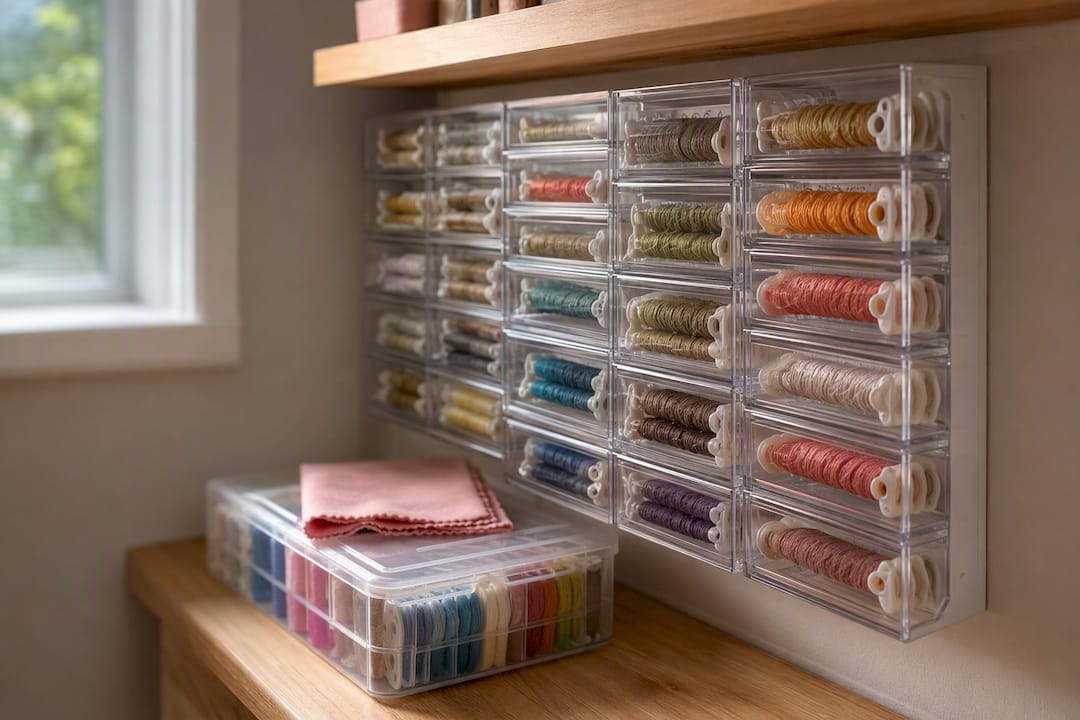
Mount modular drawer cabinets at seated elbow height. That way drawers open without you leaning or bending, and the flat top of the unit doubles as a narrow ledge for scissors or a cutting mat, a setup INTERTOOL's product guidance backs for craft sorting specifically. If you're stacking two or more units instead of mounting them, anchor them together and to the wall. A one-handed drawer pull on an unsecured stack is exactly how a whole tower tips.
Beyond the drawer cabinet itself, a few underused spots:
- Over-door shoe pockets, hung on a closet or craft-room door, hold individual floss boxes or project pouches by category.
- Narrow vertical shelving units (the kind meant for spice racks) slide into gaps between furniture that would otherwise sit empty.
- Under-shelf space, the few inches beneath an existing bookshelf, fits flat floss finder boxes better than almost anywhere else in the room.
Before you finalize any wall-mounted setup, run through this: latch strength (test it upside down before loading it), drawer stoppers (confirm drawers can't fully eject if pulled hard), and anchor points rated for the cabinet's loaded weight, not its empty weight. A VEVOR-style anti-drop drawer stop is a small feature that prevents a genuinely annoying mess.
Pairing a Digital Catalog With Your Physical Boxes
Physical storage solves where your floss lives. It doesn't solve what's actually in there, which is the harder problem once you own more than a hundred colors.
The fix is mapping each box or drawer to a named location in a digital catalog and photographing the contents once. Note it as "Shelf A, Box 1, top left," and from then on you can search a color number and know exactly which compartment to open instead of unloading three boxes to find one skein. This is the core idea behind how Flossom approaches stash tracking, and it works whether you own 12 colors or 1,200.
A few ways this pays off in a genuinely small space:
- Low-stock alerts flag a color before you run out, so you're not making an emergency craft-store trip for one skein.
- Auto-generated shopping lists compare what a pattern needs against what's already sitting in your boxes, which cuts down on duplicate buys, the single biggest waste of small-stash space.
- Barcode scanning and brand conversion across 55 thread brands let you log a mixed stash (DMC, Anchor, a few boutique brands) without manually converting numbers by hand.
The free tier covers DMC and Anchor with unlimited stash and three projects, which is plenty if your space and your color range are both modest. Pro adds all 55 brands, barcode scanning, and unlimited projects for stitchers whose stash has outgrown a single small box.
Keeping a Small Floss System Clean and Actually Organized
A compact system degrades fast if you don't maintain it, and in a small space, clutter shows up almost immediately.
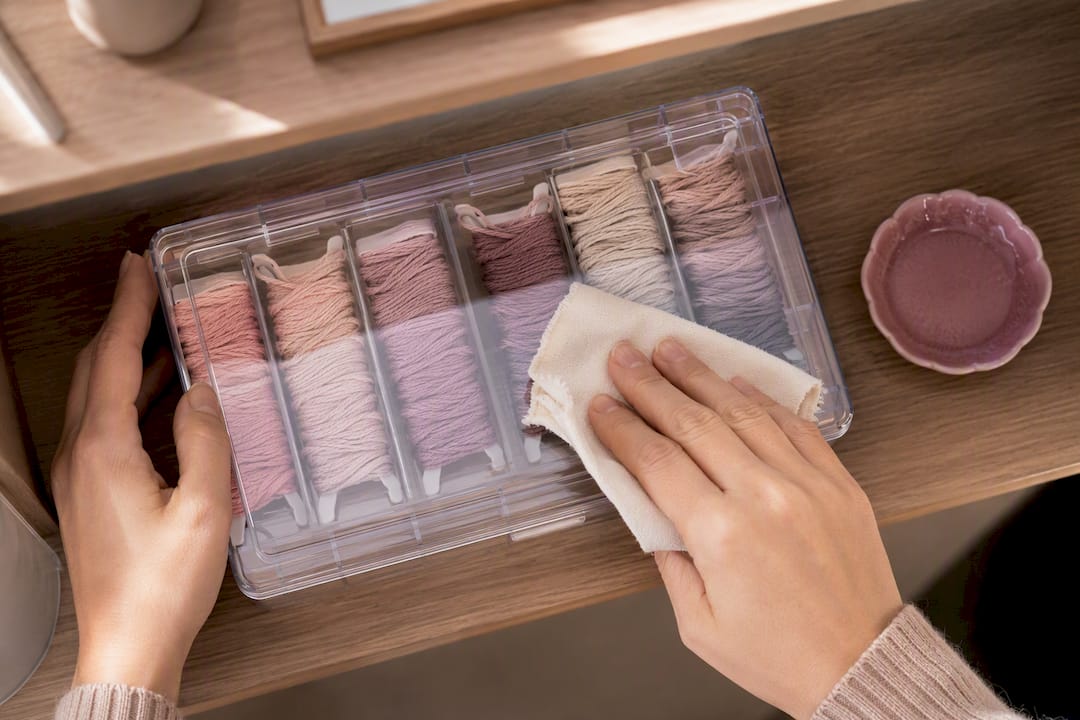
Wipe down clear boxes every few months with a dry cloth or a barely-damp one. Static dust clings to plastic compartments and, over time, can dull the whites in your stash. Keep boxes closed when not in use, since dust and light exposure both contribute to floss looking dingier faster, especially near a window.
Reset your sorting drift monthly. Even the tidiest system slides out of order as you grab colors mid-project and don't put them back exactly right. A five-minute pass, matching stray skeins to their compartments, keeps a small box from turning into a junk drawer.
Check latches and drawer stoppers seasonally, particularly if your storage lives somewhere with temperature swings, like a garage-adjacent craft nook. Plastic can warp slightly and a latch that worked fine in spring might loosen by summer.
Finally, do a stash audit twice a year. Pull everything out, confirm your digital catalog still matches what's physically there, and donate or toss any floss that's tangled beyond saving or so old the color's faded. Small spaces punish clutter more than big ones. There's simply nowhere for the overflow to hide.
What I've Learned About Small-Space Floss Systems
Every compact solution trades something for something else. Boxes that maximize visibility usually hold less. Drawer cabinets that hold more take up wall space you might want for something else. There's no perfect system, only the right compromise for your room and your habits.
Start with one change: one box, one drawer, one labeling method. Use it for a month before deciding it's not working. Pair whatever physical system you land on with light digital tracking, even something as simple as a spreadsheet, because the container solves storage, not searchability.
— Simone
Track What's in Every Box Without Opening It
Flossom is the alternative to guessing what's buried in your third floss box, built for stitchers who'd rather glance at a phone than dig through drawers. Map each compact box or drawer to a named location in the app, snap one photo per compartment, and you'll know exactly where a color lives before you've even reached for the lid.
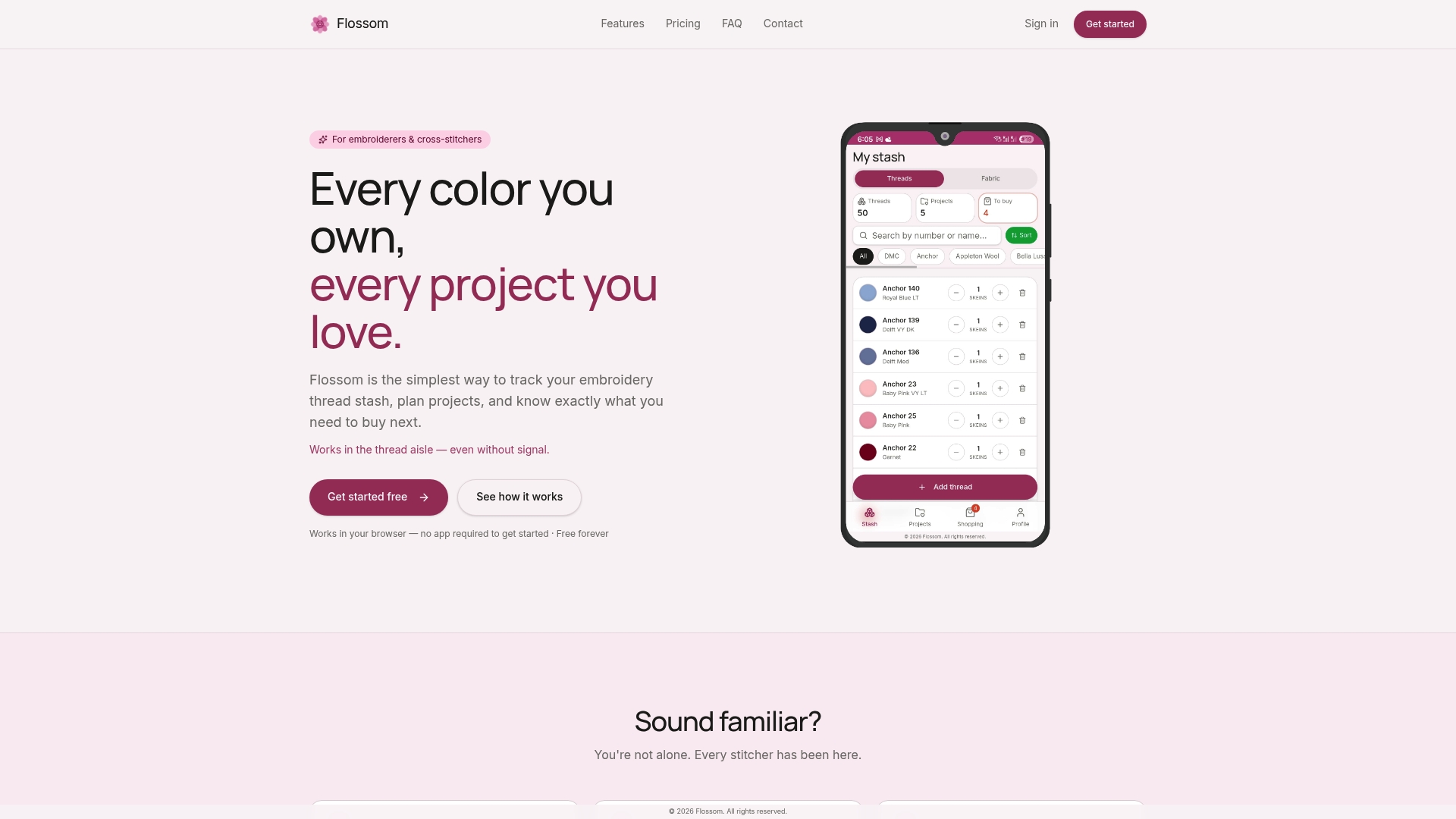
Say you've got a 40-drawer cabinet mounted by your desk. Log each drawer as its own Flossom location, turn on low-stock alerts for the colors you use most, and the app flags a reorder before you're stuck mid-stitch waiting on shipping. Pair that with the barcode scanner to log mixed-brand skeins in seconds instead of typing out DMC-to-Anchor conversions by hand.
The free tier covers DMC and Anchor with unlimited stash slots and three projects, plenty for a starter setup. Flossom Pro unlocks all 55 brands, barcode scanning, and unlimited projects for $14.99 per year, less than the cost of one impulse-bought duplicate skein. Check the pricing page and start mapping your first box today.
Where to Check Dimensions Before You Buy
Confirm outer dimensions, drawer depth, and latch type directly on the product page before ordering. The VEVOR 40-drawer organizer, INTERTOOL's 39-drawer cabinet, and the Janlynn floss organizer all list specs worth comparing against your actual shelf or wall space.
Sources
- VEVOR 40-Drawer storage organizer product page
- Janlynn Floss Organizer product page (Joann)
- Best Floss Storage Boxes for Embroidery and Craft Supplies – Slappe Painting
FAQ
How Many Skeins Fit in a Small Floss Box?
A typical transparent floss finder box around 10.75 by 7.375 by 1.75 inches holds roughly 30 to 100 skeins depending on how the compartments are divided. Removable dividers let you trade fewer, larger slots for more, smaller ones as your stash changes.
Should I Use Bobbins or Keep Skeins Loose?
Wind bobbins for colors you'll store long-term, especially in shallow drawers, since flat bobbins stack better and resist tangling. Keep a skein loose if you're actively stitching with it or plan to finish it within the current project.
What's the Best Way to Store Floss in a Studio Apartment or Shared Room?
A wall-mounted modular drawer cabinet, like a 30 to 40 drawer unit, reclaims floor space entirely by living on a wall instead of a table. Pair it with one small in-progress pouch so you're not opening the full cabinet for daily stitching.
Can a Digital App Replace Physical Floss Storage?
No, a digital catalog like Flossom tracks what you own and where it's stored, but you still need a physical box or drawer to hold the actual thread. The two work together: the app tells you which compartment to open, the box holds the floss.
How Often Should I Reorganize My Floss Storage?
A quick sorting pass once a month keeps drift in check, and a full stash audit twice a year catches tangled or faded floss worth tossing. Small spaces show clutter fast, so shorter, more frequent check-ins work better than one big annual overhaul.
Recommended
We make Flossom — the calm app for cross-stitchers and embroiderers who want their stash, projects, fabric and shopping list in one tidy place.