
Embroidery Thread Organization Methods That Work
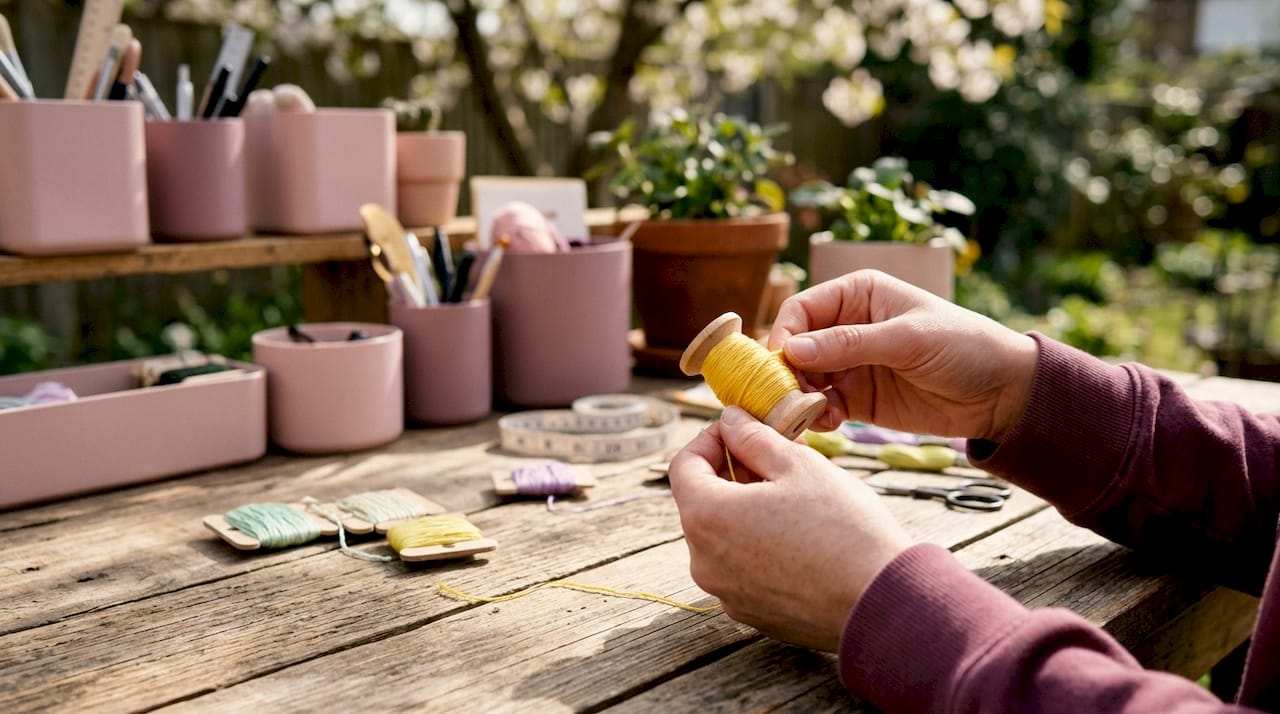
Embroidery Thread Organization Methods That Work ! Hands winding embroidery thread onto bobbins Embroidery thread organization methods are systems for storing and managing thread collections to reduce tangling, maintain thread quality, and speed up project workflow.

Embroidery Thread Organization Methods That Work
Embroidery thread organization methods are systems for storing and managing thread collections to reduce tangling, maintain thread quality, and speed up project workflow. The most effective approaches combine physical storage tools like bobbins, pegboards, and drawer cabinets with project-specific staging to keep your active works-in-progress (WIPs) accessible and your master stash protected. Disorganized storage wastes crafting time and degrades thread quality through UV exposure and humidity. Getting your system right from the start pays off every single time you sit down to stitch.
1. What are the most effective bobbin-based organization methods?
Winding thread onto plastic or cardboard bobbins is the most widely used method for organizing embroidery floss. Bobbins keep individual skeins tangle-free, clearly labeled, and easy to sort in divided plastic boxes. Most crafters write the DMC or Anchor color number directly on the bobbin, which makes pulling the right shade fast and reliable.
The two most common sorting approaches are numerical order and color family grouping. Numerical order works best for pattern-based stitching because you can pull exact codes straight from a chart. Color grouping works better for freeform or creative projects where you want to browse by shade.
- Wind each skein fully before storing it. Partial winds create uneven tension and increase tangling.
- Store bobbins in divided plastic boxes with each slot holding one color.
- Label every bobbin with the brand and color number before it goes in the box.
- Sort boxes by number for your master stash and by color family for active project kits.
Pro Tip: Tuck the thread tail under the last wrap on the bobbin rather than leaving it loose. This prevents the tail from catching on neighboring bobbins and creating knots.
Winding a full thread set takes 30–60 minutes, but that upfront investment pays back every session afterward. Apply FIFO (First-In, First-Out) rotation when you restock: place new skeins behind existing bobbins so older thread gets used first and stays fresh.
2. How wall-mounted pegboards and thread racks improve accessibility
Pegboards and wall-mounted racks give you instant visual access to your entire collection. You can spot a color in seconds without opening a single box. For crafters with large collections in dedicated craft rooms, this method dramatically cuts down search time.
The key installation detail is peg spacing. Pegs need at least 2.5 inches of spacing between them to prevent skeins from tangling against each other. Tighter spacing looks neat but creates exactly the kind of knot-prone situation you are trying to avoid.
Wall racks are visually appealing and fast to use, but they expose thread to dust and UV light. Enclosed systems offer more sustainable long-term preservation, especially for silk and hand-dyed threads that fade quickly.
The main risks with open wall storage are dust accumulation and light damage. Both degrade thread color and fiber strength over time. A few practical fixes:
- Position the pegboard away from windows and direct sunlight.
- Place small silica gel packs near the rack to keep ambient humidity below 60%.
- Dust the rack and threads monthly with a soft brush or lint roller.
- Reserve wall storage for cotton threads you use frequently, not specialty fibers.
Enclosed drawers eliminate UV light and dust, making them the better long-term choice for preserving thread vibrancy and strength. Wall racks work best as a display and quick-access layer for your most-used colors, not as your primary preservation system.
3. What are the advantages of drawer and cabinet storage systems?
Clear-front drawer units are the gold standard for protecting a large thread collection. They block dust and light, allow humidity control, and let you see contents without opening every drawer. Units like the IKEA ALEX, which costs under $100 for dozens of compartments, give you a lot of organized storage at a low price per slot.
The best drawer setups combine two sorting strategies. The top drawers hold threads organized by color family for creative browsing. The lower drawers hold threads sorted by number for pattern work. This hybrid layout means you never have to choose one system over the other.
| Storage method | Environmental protection | Visibility | Portability | Best for |
|---|---|---|---|---|
| Bobbin boxes | Good (closed lid) | High | High | Master stash, travel |
| Wall pegboard | Low (open air) | Very high | None | Dedicated craft rooms |
| Drawer cabinet | Excellent (enclosed) | Medium | Low | Large collections, long-term storage |
| Project pouches | Medium (zip closure) | Low | Very high | Active WIPs, on-the-go stitching |
- Place silica gel packets in each drawer to maintain humidity below 60%.
- Avoid airtight plastic bins for natural fiber threads like cotton, silk, and linen. They need breathable storage to prevent moisture buildup.
- Use small dividers or foam inserts inside drawers to keep bobbins upright and separated.
- Create a dedicated drawer for specialty threads like metallics and silks, which need extra protection.
Metallic threads require anti-tarnish strips and airtight storage, while silk threads need temperature-stable, light-proof drawers. Grouping specialty fibers together in one section of your cabinet makes it easy to apply the right storage conditions without disrupting your main system.
4. How organizing threads by project improves workflow and creativity
Project-specific organization is the method that experienced stitchers credit most for reclaiming creative time. The concept is simple: pull every thread you need for one project, place it in a labeled zip pouch or project bag, and work exclusively from that kit during your sessions.
Separating project threads from your master stash prevents WIP contamination, where threads from different projects tangle together or get misplaced. It also means you can pick up a project bag and start stitching immediately, without hunting through your full collection first.
- Use a zip pouch or small fabric bag for each active project.
- Include the pattern printout, fabric, needle, and all required thread colors in the same bag.
- Label each thread with its color code or DMC number using a small tag or sticker.
- Keep the project bag separate from your master stash at all times.
Pro Tip: When you start a new project, pull threads from your master stash and wind small amounts onto mini bobbins for the project kit. This keeps your master stash intact and gives you just the right quantity for the current work.
Organizing for active projects boosts creativity by removing the friction between inspiration and execution. When everything you need is in one bag, you spend your time stitching instead of searching. Many experienced stitchers run three to five active project bags at once without any confusion between them.
5. What to consider when choosing a thread storage system
The right storage system depends on four factors: your thread collection size, your workspace, the fiber types you use, and how much maintenance time you want to invest. No single method works for every crafter, but most experienced stitchers land on a hybrid approach.
About half of experienced hobbyists use hybrid systems that combine numerical order for the master stash with color grouping for active project kits. This setup gives you the precision of a numbered catalog and the creative accessibility of a color-sorted display at the same time.
Collection size is the first filter. A collection of under 100 colors fits comfortably in two or three bobbin boxes. A collection of 300 or more colors needs a drawer cabinet or pegboard system to stay manageable. Trying to use a small system for a large collection creates exactly the disorganization you are trying to fix.
Fiber type is the second filter. Cotton floss tolerates most storage conditions reasonably well. Silk and hand-dyed threads fade and degrade faster, so they need enclosed, light-proof storage with humidity control. Specialty threads like metallics need airtight containers with anti-tarnish elements to prevent oxidation and brittleness.
Workspace matters more than most crafters expect. A dedicated craft room can support a full pegboard display plus a drawer cabinet. A shared living space or small apartment calls for portable bobbin boxes and project pouches that pack away cleanly. The best system is one you will actually maintain, not the most elaborate one you can build.
Key takeaways
The most effective embroidery thread organization combines a protected master stash sorted by number with project-specific kits sorted by color, supported by humidity control and fiber-appropriate storage.
| Point | Details |
|---|---|
| Bobbins are the foundation | Wind all thread onto labeled bobbins to prevent tangling and enable fast color identification. |
| Match storage to fiber type | Use breathable, enclosed drawers for cotton and silk; airtight containers with anti-tarnish strips for metallics. |
| Separate master stash from project kits | Pull threads into labeled project pouches to eliminate search time during active stitching sessions. |
| Control humidity and light | Keep storage below 60% humidity with silica gel and away from direct sunlight to preserve thread color and strength. |
| Hybrid systems work best | Combine numerical order for your master stash with color grouping for project kits to serve both pattern work and creative browsing. |
Why I stopped choosing between systems and started using both
I spent years trying to pick one perfect method. Numerical order felt clinical. Color sorting felt chaotic when I needed a specific DMC code fast. The answer, which took me longer to accept than it should have, was to stop treating this as an either-or decision.
My master stash lives in a drawer cabinet, sorted by number, with silica gel in every drawer. My active project kits live in zip pouches on a small shelf. When I start a new project, I spend 15 minutes pulling threads from the cabinet and winding small amounts onto mini bobbins for the pouch. That 15 minutes saves me hours of frustration over the life of the project.
The part most articles skip is the digital layer. Knowing what you own physically is only half the problem. Knowing whether you have enough of a specific color for a new pattern, or whether you already bought that skein last month, is where most crafters lose time and money. I use Flossom to track my stash digitally alongside my physical system. It cross-references what my pattern needs against what I already own, which means I never duplicate a purchase or start a project short on a critical color.
The initial setup takes a weekend. The ongoing maintenance takes minutes per session. That ratio is what makes a hybrid system worth building.
— Simone
How Flossom fits into your thread organization system
Physical organization handles the tangles. Digital organization handles the gaps. Flossom is a cross-stitch and embroidery companion built to catalog your thread stash, track WIP progress, and auto-generate shopping lists by comparing what your pattern needs against what you already own.
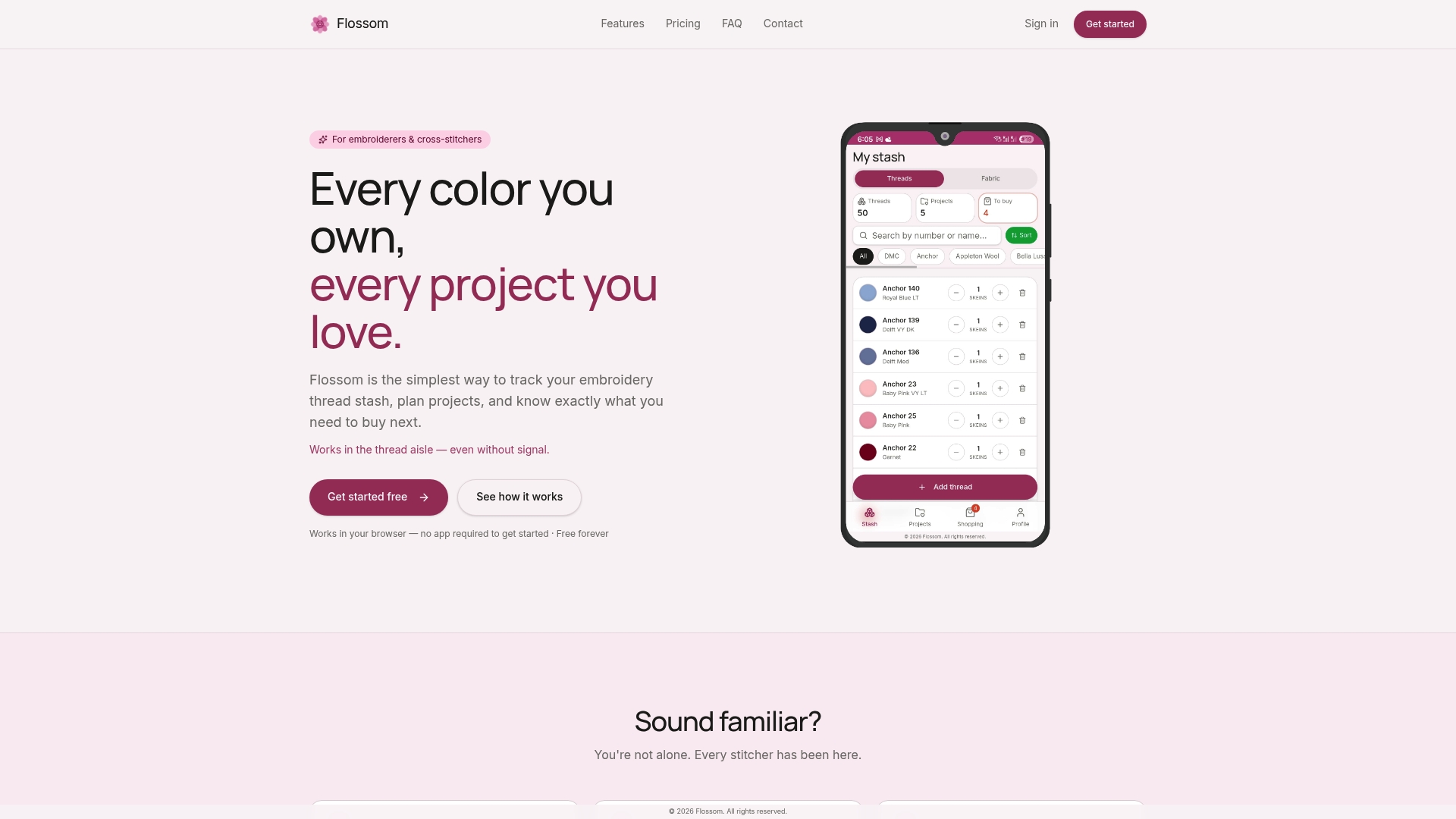
The free tier covers DMC and Anchor catalogs with unlimited stash entries and three active projects. Pro unlocks all 55 supported thread brands, a camera color picker, a barcode scanner, fabric stash tracking, and unlimited projects. You can also use the thread conversion tool to switch between brands without losing your color matches. Everything syncs across devices and exports to CSV, so your digital stash stays as organized as your physical one.
FAQ
What is the best way to organize embroidery thread?
The most effective method combines bobbin-based storage sorted by number for your master stash with project-specific zip pouches for active works-in-progress. This hybrid approach serves both precise pattern work and creative browsing.
How do I prevent embroidery thread from tangling?
Wind thread fully onto labeled bobbins and tuck the tail under the last wrap to prevent loose ends from catching. Store bobbins in divided boxes with one color per slot.
How should I store silk and metallic embroidery threads?
Silk threads need enclosed, light-proof drawers with stable temperature and humidity below 60%. Metallic threads require airtight containers with anti-tarnish strips to prevent oxidation and brittleness.
How do I organize embroidery supplies by project?
Place all threads, the pattern, fabric, and needles for one project into a labeled zip pouch or project bag. Pull thread from your master stash in the exact quantities needed and keep the pouch separate from your main collection.
Does digital tracking replace physical thread organization?
Digital tracking complements physical organization rather than replacing it. Tools like Flossom catalog your stash, flag low-stock colors, and generate shopping lists so your physical system and your project plans stay in sync.
Recommended
We make Flossom — the calm app for cross-stitchers and embroiderers who want their stash, projects, fabric and shopping list in one tidy place.