
Finish Your Embroidery Stash Audit in 90 Minutes With Bobbins and an App
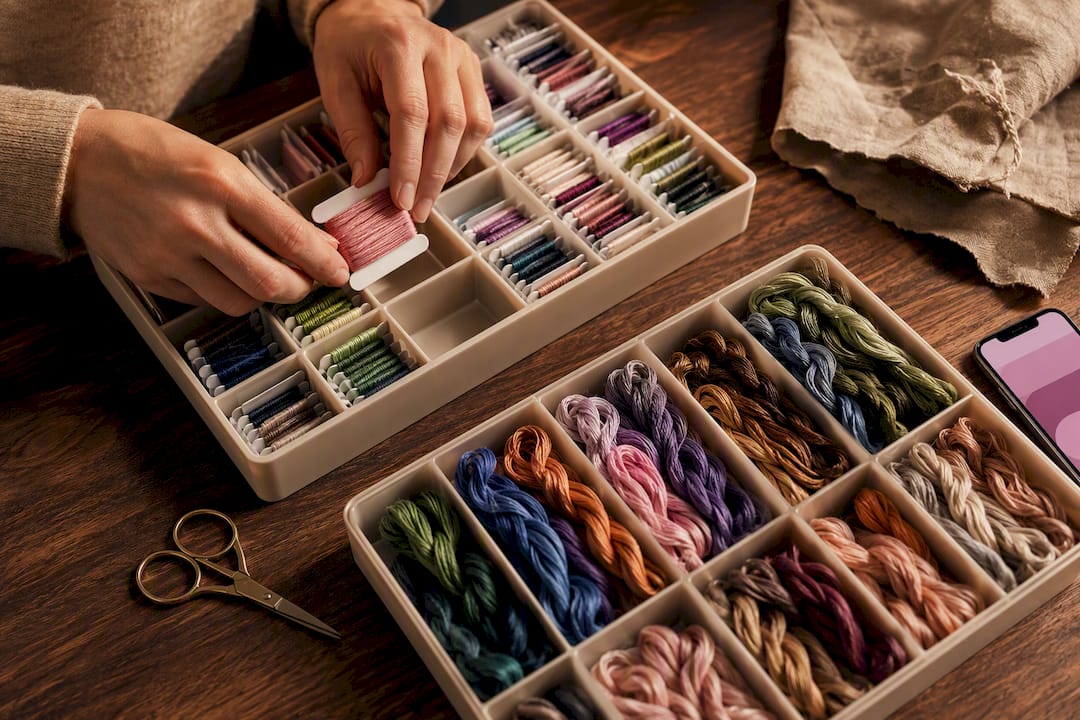
Finish Your Embroidery Stash Audit in 90 Minutes With Bobbins and an App ! Hands sorting embroidery bobbins during stash audit An embroidery stash audit means pulling out every thread, fabric, and pattern you own, sorting it into keep, donate, and discard piles, and logging what survives so you stop buying colors you already have.
Finish Your Embroidery Stash Audit in 90 Minutes With Bobbins and an App
An embroidery stash audit means pulling out every thread, fabric, and pattern you own, sorting it into keep, donate, and discard piles, and logging what survives so you stop buying colors you already have. The payoff is simple: you know your inventory, you catch duplicates before checkout, and future purchases get planned instead of impulsive. Start right now by clearing a table and making those three piles.
Table of Contents
- Quick Starter Checklist: What To Gather Before You Begin
- How Do You Complete a Stash Audit in One Sitting?
- Should You Track Your Stash With Bobbins, a Spreadsheet, or an App?
- Where and How Should You Store Threads and Fabric?
- What Should You Do With Extras You Don't Keep?
- How Often Should You Repeat a Stash Audit?
- What Templates Should You Copy For Your Own System?
- Why Simple Systems Beat Elaborate Ones
- Get Your Stash Logged Once, Not Every Six Months
- Sources
- FAQ
Quick Starter Checklist: What To Gather Before You Begin
Set up in a room with strong, even light (natural daylight is ideal for judging thread color) and a flat surface big enough to spread everything out. Grab these before you start:
- Bobbins, labels, and zip bags for regrouping loose floss.
- A permanent marker or a sheet of stickers for labeling containers.
- Your phone or camera to photograph the stash before you touch it.
- Every storage bin, drawer, and project bag you own, emptied onto the table.
Pull threads, fabric pieces, patterns, and notions like needles and scissors into separate zones. Give yourself 90 minutes to two hours. Anything longer and you'll lose steam before you finish.
How Do You Complete a Stash Audit in One Sitting?
Start by emptying every container you own onto a table, then sort into four rough piles: threads, fabrics, patterns, and notions. Needlework organizations recommend laying everything out and sorting into keep, donate, and discard piles before you decide what stays, because you can't judge condition or spot duplicates when supplies are still buried in bins.
Work through these steps in order:
- Inspect condition. Check floss for fraying, discoloration, or a musty smell. Check fabric for yellowing, mildew spots, or pulled threads.
- Group threads by DMC number or color family. If you use multiple brands, sort by family first (all your blues together) then by number within that family.
- Group fabrics by size, fiber, and count. A 14 count Aida remnant and a 32 count linen cut belong in different bins even if they're both cream.
- Count quantities and flag partials. A full skein and a two-inch scrap of the same number are not interchangeable in your log.
- Apply your keep, donate, discard criteria. A workable rule: keep it if you've used it in the last 12 months or it's earmarked for a queued project; donate specialty items you're unlikely to stitch; discard anything moldy, brittle, or faded.
- Return kept items to labeled homes and write down what you have.
Watch for these common trouble spots as you sort:
- Partial skeins wadded into a junk drawer with no number visible.
- Fabric remnants too small for any realistic project but kept "just in case."
- Duplicate colors from different brands that look identical but aren't cross-referenced.
Pro Tip: Keep a small "partials" box separate from your main stash. Partial skeins are the most common source of hidden duplicates, because it's easy to forget you already own three inches of DMC 310 when it's tangled at the bottom of a bin.
Should You Track Your Stash With Bobbins, a Spreadsheet, or an App?
Winding floss onto numbered bobbins and filing them in labeled boxes by number or color family remains one of the most reliable physical systems stitchers use, and organizing by DMC number keeps colors easy to relocate later. A basic flossbook with a slot for every bobbin works the same way on a smaller scale.
If you'd rather skip a physical card catalog, a spreadsheet is a common, low-effort inventory alternative that many stitchers stick with for years. A workable spreadsheet needs just a handful of columns:
- Brand and color number (DMC 310, Anchor 403)
- Quantity (full skein, half, or specific yardage)
- Storage location (Box 3, Drawer B)
- Linked project (if reserved for a queued pattern)
- Notes (condition, purchase date, dye lot)
Digital apps go a step further. Cataloguing tools that offer photo records and automatic shopping lists cut down on duplicate purchases because you're comparing what a pattern calls for against what's already logged, not against memory. Digital apps can catalogue threads and fabric by brand, convert between multiple thread lines when your pattern calls for a brand you don't stock, and export the whole inventory to CSV if you want a spreadsheet backup alongside the app.
Where and How Should You Store Threads and Fabric?
Direct sunlight fades floss and yellows fabric within months, and humidity invites mildew before you'd notice it by eye. Guides recommend keeping supplies away from sunlight, moisture, and pests, favoring covered containers over open bins.
Build your storage around a few habits:
- Use opaque, lidded boxes or drawers rather than open baskets near windows.
- Tape the original wrapper label onto each bobbin instead of relying on marker, since ink on plastic bobbins tends to rub off over time while a taped label survives handling.
- Store partial skeins in small zip bags labeled with the number, clipped or filed inside the matching numbered box.
- For fabric you're saving long-term, consider acid-free tissue or boxes, which slow yellowing far better than standard cardboard.
What Should You Do With Extras You Don't Keep?
Not everything earns a spot back in your bins. A few practical outlets:
- Donate usable floss and fabric to local guilds, schools, or community stitching programs.
- Sell specialty overdyed threads or barely used fabric on craft marketplaces if the resale effort is worth your time.
- Recycle or toss anything moldy, brittle, or faded beyond use.
- Log the exit in your spreadsheet or app so your inventory count stays accurate.
How Often Should You Repeat a Stash Audit?
A full audit every 6 to 12 months keeps most stashes manageable, and stitching guilds tie this cadence to preventing impulse buying, the leading cause of stash bloat. Between full audits, run a two-minute mini-check before any purchase:
- Search your log for the color number before adding it to a cart.
- Confirm quantity on hand against what the new project actually needs.
- Tie a bigger review to natural triggers, like a holiday sale or the start of a large project, when a periodic "stash refresh" that reviews unused items keeps the whole system from drifting.
What Templates Should You Copy For Your Own System?
A minimal spreadsheet needs five columns: brand, color number, quantity, location, and linked project. A sample row might read: DMC, 3820, 2 full skeins, Box 4, "Autumn Sampler." Keep it that simple and you'll actually update it.
For a printable flossbook, copy over these fields per bobbin: brand, number, quantity, and dye lot. If you're setting up a kit checklist, Flossom's kit contents checklist walks through what to log for pattern, fabric, and thread together. For deeper background on connecting inventory to your queued projects, see this guide to organizing a cross-stitch thread stash. When choosing a digital tool, look for a camera color picker, barcode scanning, brand conversion, and CSV export. Those four features cover most of what a manual system struggles with at scale.
Why Simple Systems Beat Elaborate Ones
The stitchers with the calmest stashes aren't running the fanciest systems. They're running the ones they actually keep updating. A color coded spreadsheet you abandon in March does less for you than a bobbin box you touch every week. Pairing a small physical master set with a digital backup tends to work better long term than either alone, since you get quick visual access and a searchable record that travels with you to the shop.
— Simone
Get Your Stash Logged Once, Not Every Six Months
Flossom is built for exactly the workflow this audit walks through: log what you kept, skip what you already own, and stop guessing at the shop. Once you've sorted your piles, Flossom's catalog handles the entries across all 55 supported thread brands, converts a color number from one brand to another when your pattern calls for something you don't stock, and reads a barcode or a photo to skip manual entry entirely.
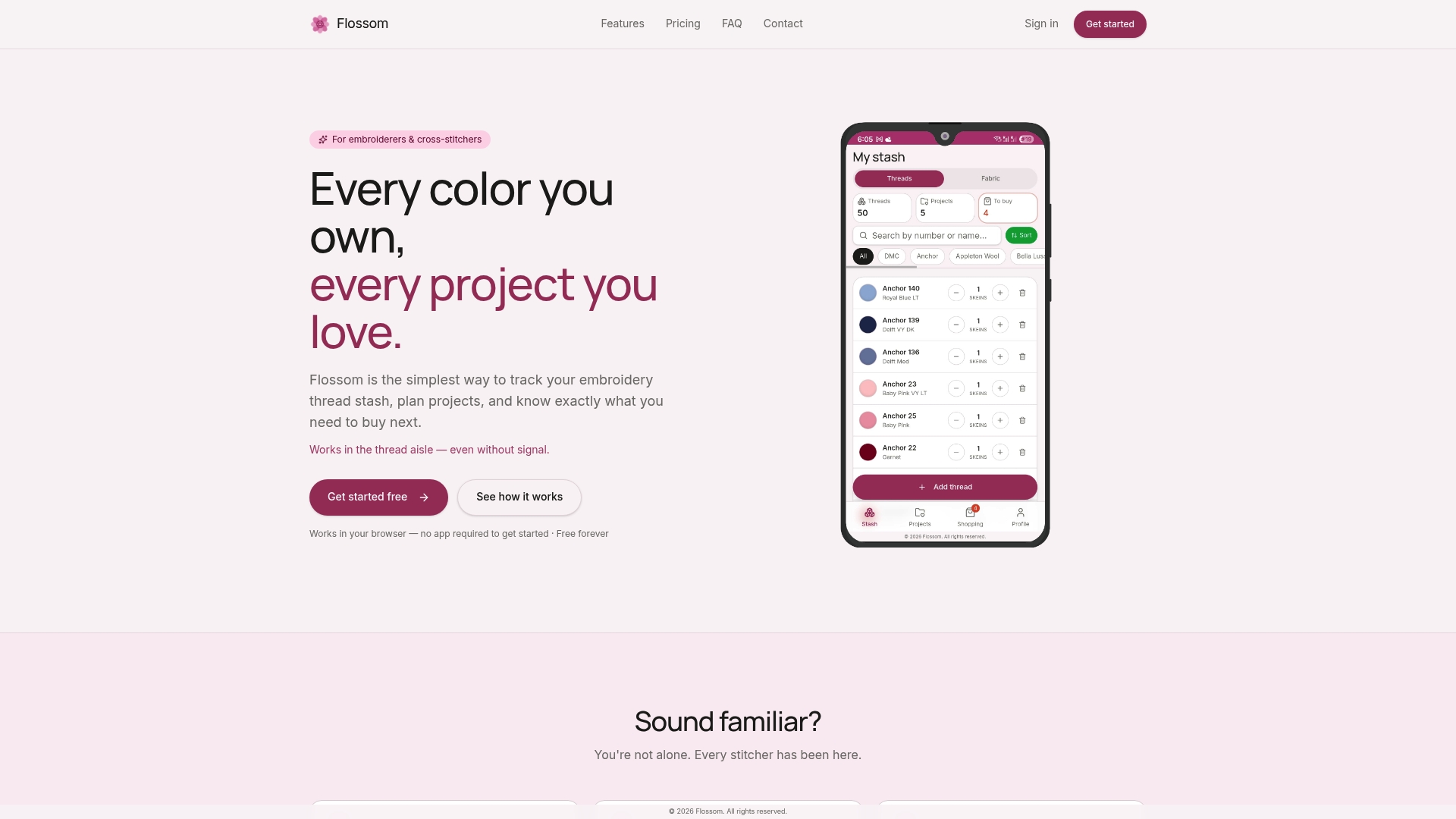
The features map directly onto the steps above: partial skeins get flagged with low-stock alerts so they surface before you rebuy them, kept fabric gets tracked alongside thread, and any shortfall for a queued project becomes an auto-generated shopping list instead of a guessing game at the craft store. Everything exports to CSV if you want a spreadsheet copy too. The free tier covers DMC and Anchor cataloguing with unlimited stash and a limited number of projects; a paid subscription unlocks additional brands, camera color picking, barcode scanning, and fabric tracking. Current prices are available on the pricing page. Check the Flossom pricing page and get your stash logged before your next order.
Sources
- 8 Tips for Organizing a Big Embroidery Stash | Embroiderers’ Guild of America
- Cross Stitch Stash Management: How to Organise Your Thread and Fabric Collection - TheStitcheryCorner
- Embroidery supplies guide | Madeira USA
FAQ
How Should I Store My Embroidery Projects?
Keep works in progress in a covered container away from sunlight and humidity, ideally with the fabric loosely rolled rather than folded to avoid permanent creases.
Is It Better to Embroider Before or After Washing Fabric?
Most stitchers embroider first, then wash the finished piece to remove hoop marks and marking pen lines, since pre-washing can shrink or shift the fabric weave before stitching begins.
What Is the Best Way to Store Embroidery Floss?
Wind floss onto numbered bobbins and file them in labeled boxes by number or color family, keeping the whole set away from direct light and moisture, or log it digitally with a tool like Flossom for faster searching.
How Do I Keep the Back of My Embroidery Neat?
Avoid long thread jumps between sections, weave tails under existing stitches instead of knotting, and trim loose ends close to the fabric as you go rather than waiting until the piece is finished.
Recommended
We make Flossom — the calm app for cross-stitchers and embroiderers who want their stash, projects, fabric and shopping list in one tidy place.