
Organize Floss by Number Without Bobbins or Endless Winding
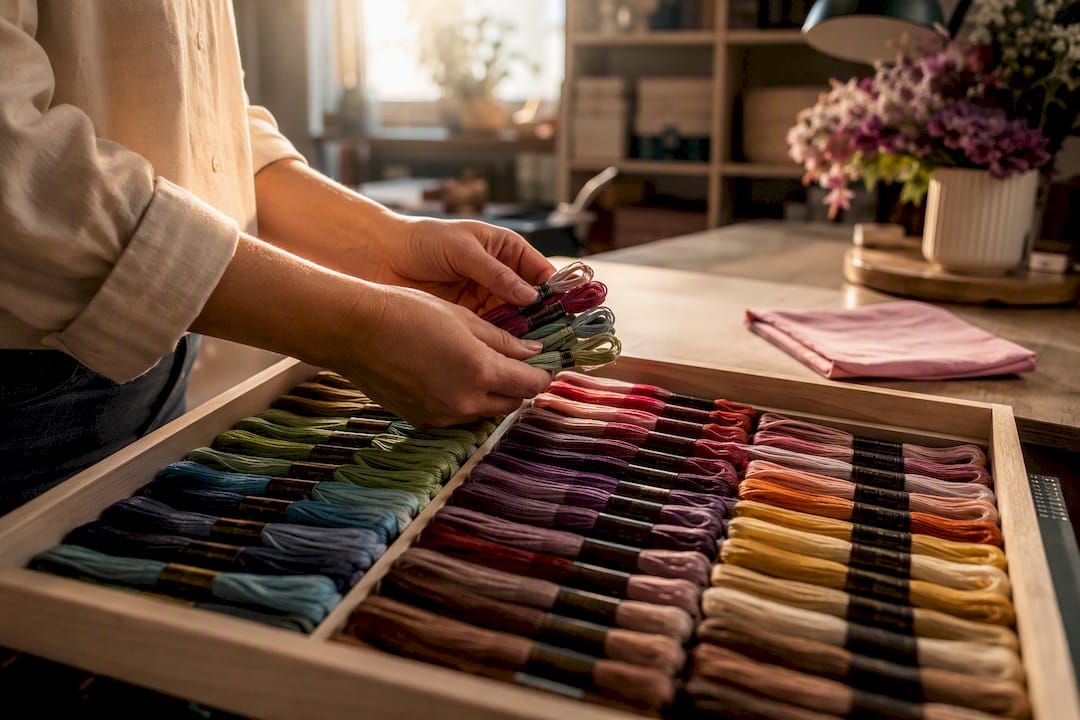
Organize Floss by Number Without Bobbins or Endless Winding ! Hands filing embroidery floss in number order Organize by manufacturer number if you stitch from charts, since patterns list thread by DMC or Anchor codes and number order makes kitting and gap-spotting fast.
Organize Floss by Number Without Bobbins or Endless Winding
Organize by manufacturer number if you stitch from charts, since patterns list thread by DMC or Anchor codes and number order makes kitting and gap-spotting fast. Choose color order only if you plan projects visually or blend shades by eye. Most stitchers do best with a number-ordered master stash plus a small color-swatch reference card, and the easiest way to start is a low-effort physical system, floss cards, floss drops, or snack bags on binder rings, not a full bobbin-winding project.
Table of Contents
- Number Order vs. Color Order: Which One Actually Saves You Time?
- What's the Best Way to Store Floss in Number Order?
- How Do You Sort a Big Pile of Floss by Number?
- How Should You Pull Colors for an Active Project?
- Do Digital Tools Actually Help With Floss Organization?
- How Do You Keep a Number-Ordered Stash From Falling Apart?
- Why I Tell Stitchers to Start With Number Order, Not Color
- Catalog Your Floss by Number Without the Manual Upkeep
- Where to Find Printable Trackers and Step-by-Step Photos
- Sources
- FAQ
Number Order vs. Color Order: Which One Actually Saves You Time?
The honest answer depends on how you shop and how you stitch, not which system looks nicer in photos.
Number order wins when you're working directly from a pattern's thread list. You can scan a chart's key, pull DMC 3325 and 3072 without hunting through blues, and instantly see if you're missing a number before you sit down to stitch. It also makes gap-spotting simple: flip through a number-ordered box and any hole in the sequence jumps out. Colour order or number order comes down exactly to this tradeoff. Correcting the link:
Number order helps most when you're kitting from a pattern's thread list, shopping with a numbered checklist, or auditing your stash for gaps. Color order helps most when you're blending shades for shading and texture, planning a project's palette before you have a pattern, or working the way many designers do, sorting visually while keeping their working stash separate from a color-arranged reference.
That's actually the compromise a lot of designers land on. According to Lost In Cross Stitch, many professionals keep their master stash in number order for shopping and inventory, but lean on DMC's official color card, arranged by shade family, for visual palette planning. You get the speed of numeric lookup without losing the ability to see how colors relate to each other.
Here's a quick decision list if you're stuck choosing:
- Stitch mostly from charts and kits? Go number order. It matches how patterns list their materials.
- Design your own pieces or blend colors freehand? Lean color order, or keep a color card as a companion tool.
- Own more than 100 skeins? Number order almost always wins long term, because color families get crowded and hard to scan.
- Not sure yet? Start number order. It's easier to add a color reference later than to renumber a color-sorted stash once it's grown.
The hybrid approach costs you almost nothing extra: one printed color card or a phone app with swatches, layered on top of a numbered master stash. You get both benefits without doubling your storage work.
What's the Best Way to Store Floss in Number Order?
Storage systems live or die on one thing: whether you'll actually keep using them six months from now. The fanciest bobbin wall does nothing if winding 300 skeins burns you out by skein forty.
Here are the five systems that hold up in real stashes, ranked roughly by effort:
- Floss cards or organizer cards. Wrap each skein around a cardboard or plastic card, punch the number into the top corner, and file cards in a binder or box. Fast to make, cheap, and the number stays visible even when flipping through a stack.
- Snack-size zip bags on binder rings. Drop a full skein into a small zip bag, write the number on the bag with a marker, punch a hole in the corner, and thread it onto a binder ring. One professional organizer built an entire large collection this way, storing bagged skeins in shallow drawers by number, which kept everything visible and easy to expand as the stash grew.
- Bobbins in a labeled box. Compact and tidy, but winding every skein takes real time. Save this for a stash you've already finished growing, not one you're actively building.
- Shallow drawer units or modular storage. Best for large, expanding collections. Assign number ranges to drawers (000 to 500 in drawer one, and so on) so retrieval stays fast even at a thousand-plus colors.
- Floss drops. Small plastic bobbins that hold pre-cut lengths, useful for both master storage and project kits (more on this below).
Pro Tip: Write the number in two places on every card or bag, once on the front and once on the back. Cards flip and slide in storage, and a number visible from only one angle is a number you'll eventually lose.
Whatever you pick, use permanent marker or a printed label directly on the storage item, not a sticky note tucked nearby. Loose notes fall off, and a card with no number on it becomes a guessing game later.
How Do You Sort a Big Pile of Floss by Number?
Sorting a mixed pile of loose skeins is the task most stitchers put off for years. Breaking it into passes instead of trying to do it all at once is what actually gets it finished.
- Stage everything first. Pull skeins from every drawer, bag, and forgotten project bin into one workspace. You need to see the full scope before you sort a single skein.
- Run a quick triage pass. Set aside damaged or tangled scraps, and pull out any skein with a missing or worn-off number tag into a separate "identify later" pile.
- Sort coarse families first. Group into rough color families, blues, greens, reds, before worrying about exact numbers. This cuts search time dramatically on the next pass.
- Sequence numerically within each family. Now arrange each color group in ascending numeric order. This is the slow pass, so don't rush it.
- File into cards, bags, or drawers in that same order. Punch holes, write numbers clearly, and load onto rings or into drawers as you go rather than sorting everything first and filing later.
Pro Tip: Work in 30 to 60 minute sessions instead of marathon sorting days. Floss organization is one of those tasks where fatigue causes mistakes, mislabeled cards, wrong bins, skipped numbers, and those mistakes cost more time to fix than the sorting itself.
Scale changes the math here. A 50-skein starter stash is a single afternoon project. A 500-skein collection built up over years of sales and kit purchases is a multi-session job, and treating it that way prevents burnout. Do the triage and coarse-family sort in one sitting, then knock out the numeric sequencing and filing in shorter, separate sessions over a week or two. There's no prize for finishing in one exhausting weekend, and a system you abandon halfway through is worse than the mess you started with.
How Should You Pull Colors for an Active Project?
Once your master stash is sorted, the next skill is pulling what you need without tearing your organized system apart every time you start a new piece.
The standard move is decanting: transferring a working length from the master skein into a small, portable container instead of hauling the whole skein to your stitching chair. Stitchers commonly decant needed colors into floss drops or small project bags, which keeps the master stash intact while giving you a grab-and-go kit for the piece in progress.
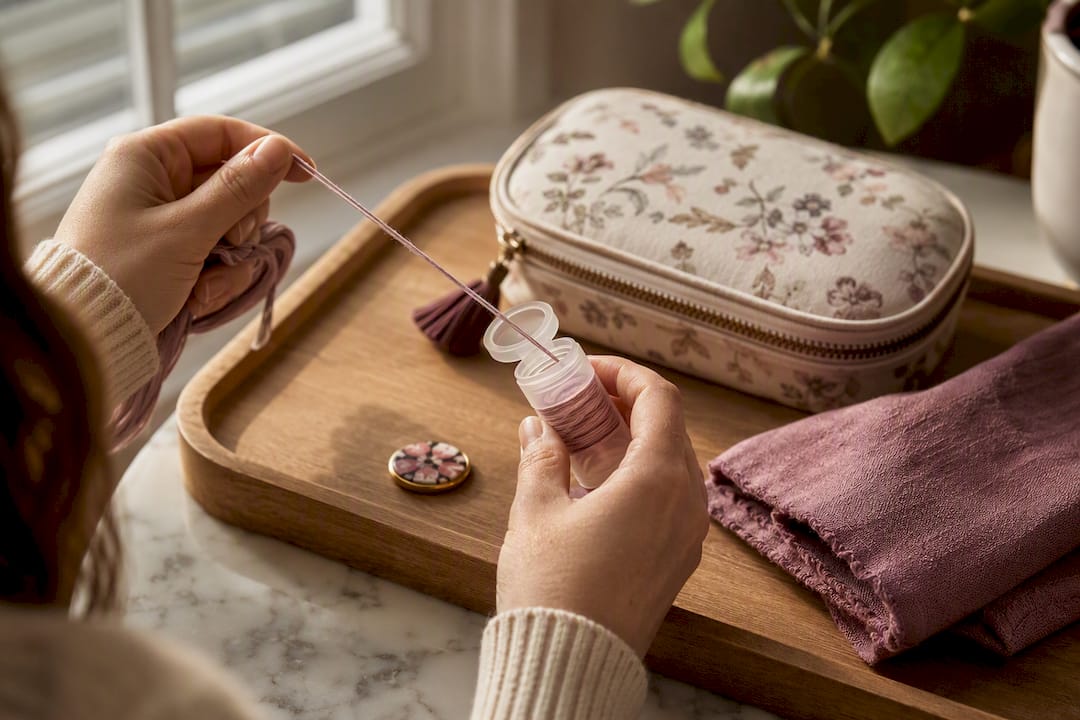
Floss drops work especially well for this. A single drop typically holds about eight 1-meter lengths when you fold a skein into thirds before winding it on, enough for most small to mid-size project needs without touching the master skein again.
A few habits make this workflow run smoother:
- Pre-cut working lengths before you start stitching, so you're not measuring thread mid-session.
- Mark which side of the drop is "working thread" versus "stash reserve" with a small dot or tape flag, so you know at a glance how much is left.
- Label project packs with the pattern's own symbol key, not just the DMC number, if your chart uses shorthand symbols. It saves a lookup every time you switch colors.
- Keep a short shared-supply note, even a sticky note or a phone memo, listing which numbers are currently checked out to which project if you juggle more than two WIPs at once.
Pro Tip: If you're stitching three projects at once and all three need DMC 310 black, decant enough for all three into one shared drop rather than three separate ones. It's one less place for a number to get lost, and it keeps your master stash from getting raided three separate times.
That last point matters more than it sounds. The single biggest failure mode in multi-WIP stitching isn't running out of floss, it's forgetting you already pulled a color for a different project and buying a duplicate skein you didn't need.
Do Digital Tools Actually Help With Floss Organization?
A physical, number-ordered stash solves storage. It doesn't solve the question that comes up every single shopping trip: "Do I already own this color?"
That's the gap digital cataloging fills. A searchable digital record of your stash, indexed by number, lets you check ownership from your phone in a craft store aisle instead of guessing or buying a duplicate you'll discover at home. Good tools also generate gap reports (which numbers in a range you're missing), build shopping lists automatically from a pattern's thread requirements, and convert between thread brands when a pattern calls for a code your usual brand doesn't use.
Features worth prioritizing in any tool you consider:
- Barcode scanning, so adding a skein takes seconds instead of manual typing.
- A camera color picker, for matching an unlabeled or worn-tag skein to its actual number.
- Project kitting that compares a pattern's needs against your existing stash automatically.
- Low-stock alerts before you run out mid-project.
- CSV export, so your catalog isn't trapped in one app forever.
The realistic way to start is small: catalog one drawer or one binder, not your entire collection in one sitting. Use the app for your next shopping trip and your next project kit, and let the catalog grow naturally as you sort.
| What you get | Why it matters |
|---|---|
| Searchable number-based catalog | Check ownership before buying, from anywhere |
| Automated shopping lists | Compares a pattern's needs to what you own |
| Multi-brand conversion | Useful when a pattern calls for a code outside your usual brand |
| Gap and low-stock alerts | Flags missing numbers before you're mid-stitch |
Flossom catalogs your stash by number across DMC and Anchor on its free tier, with barcode scanning and a camera color picker available on Pro. If you're deciding whether digital tracking is worth the switch at all, this breakdown of organization methods covers both physical and app-based approaches side by side.
How Do You Keep a Number-Ordered Stash From Falling Apart?
Every organized stash degrades the same way: one unlabeled skein at a time. The fix isn't a better system, it's a habit you actually keep up.
- Label on arrival. Write the number on a new skein's card or bag before it ever touches your storage box. A skein that goes in unlabeled is a skein you'll be guessing about in six months.
- Run a 10 to 15 minute micro-inventory after every shopping trip or finished project. Update your physical labels and your digital catalog together, while the details are still fresh.
- Do a quarterly gap check. Flip through your number sequence looking for holes, then turn that gap list straight into your next shopping list.
- Migrate storage in chunks, not all at once. Moving from cards to a drawer system? Convert one hundred numbers at a time instead of stopping mid-project to redo everything.
Consistency beats complexity here. Cross-stitch organization advice from Awesome Pattern Studio makes the same point: systems don't fail because the method was wrong, they fail because a skein went into storage unlabeled and got lost in the shuffle.
Why I Tell Stitchers to Start With Number Order, Not Color
Color-ordered stashes look better in photos. That's about the only advantage they have over number order once your collection crosses a couple of hundred skeins, and it's the reason I push number order as the default even for stitchers who insist they're "visual people."
Here's the thing nobody mentions: a color-sorted stash forces you to make a subjective call, is this a blue or a green, every single time you file or retrieve a skein. Multiply that by a few hundred skeins and you've built a system that runs on your mood that day. Number order removes the judgment call entirely. DMC 3325 always goes in the same slot, no matter how tired you are or how the light hits it.
If you're not convinced, run a one-week test before committing either way. Pick one small binder or drawer, convert it to strict number order, and kit your next project pulling only from that section. Time yourself. Most stitchers find kitting from a numbered section takes half the time of hunting through a loosely color-grouped pile, especially once a chart calls for four or five specific codes at once.
Keep whatever part of your old system still works, maybe that's a color card for palette planning, maybe it's a particular box you love. Ditch the rest without guilt. The goal is a system you'll still be using next year, not one that photographs well today.
— Simone
Catalog Your Floss by Number Without the Manual Upkeep
Flossom is built around the same principle this whole guide pushes: number order for your master stash, with visual tools layered on top instead of replacing it. The free tier catalogs DMC and Anchor collections by number with limits on projects.
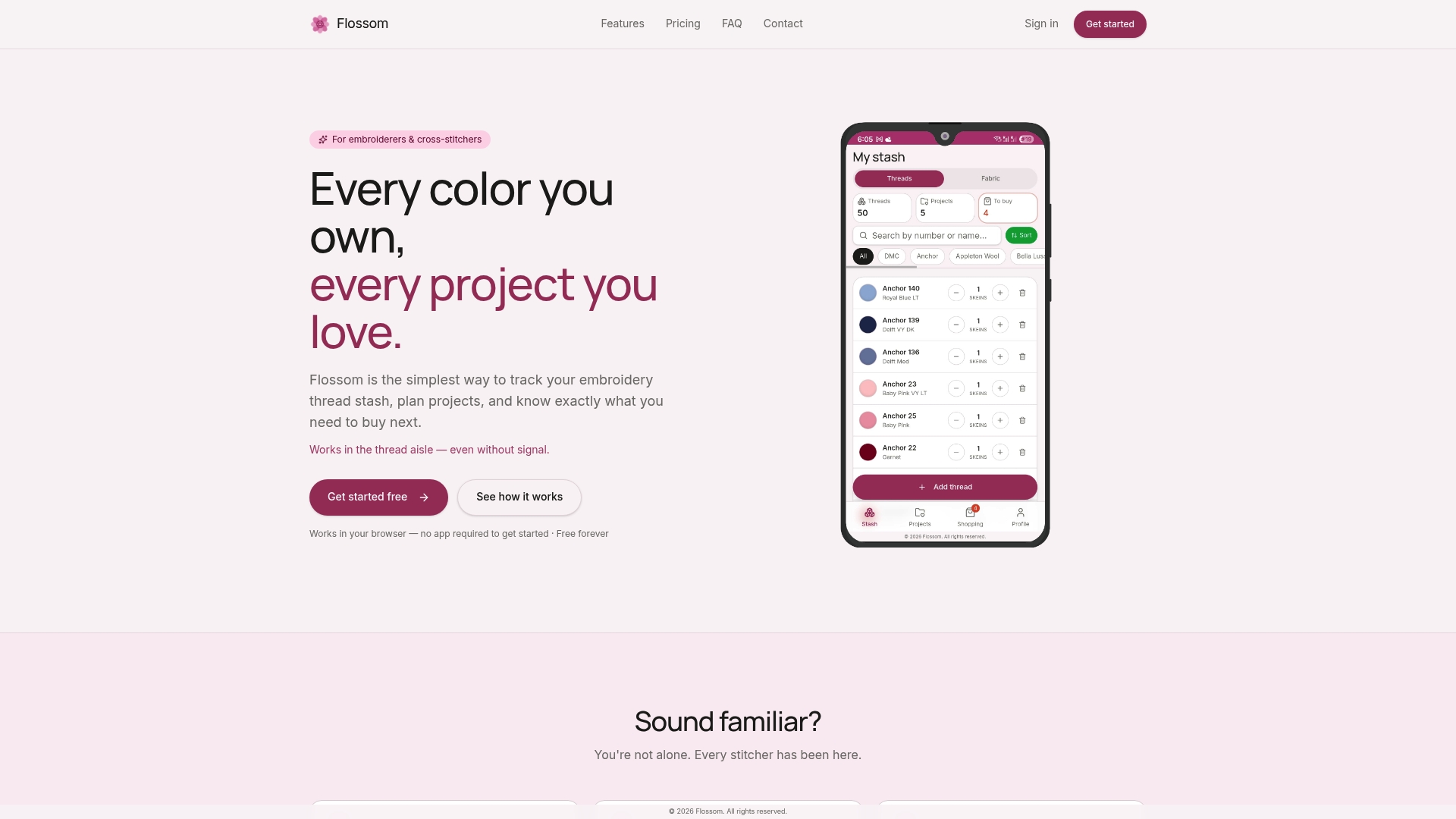
Pro unlocks the parts that save the most manual work: barcode scanning to add skeins in seconds, a camera color picker for matching worn or unlabeled tags, fabric stash tracking, and unlimited projects, all for $14.99 per year. Every catalog syncs across your devices, works offline, and exports to CSV, so your numbered inventory never gets locked into one app or one device.
Start small. Catalog one drawer or one project's worth of colors, then run a shopping list against a pattern you're planning next using the floss calculator and project tools. If the free tier meets your needs, you can continue using it. For users managing multiple projects, upgrading to a paid tier may help prevent duplicate purchases.
Where to Find Printable Trackers and Step-by-Step Photos
A few sources cover the physical side of this topic in more depth than fits here, particularly if you want printable templates or photo walkthroughs of a specific storage build.
A Jones For Organizing documents a real large-scale stash built from snack bags and shallow drawers, with step photos of the full setup.
Craft With Cartwright offers a free printable DMC checklist you can mark up while shopping to avoid buying colors you already own.
Lost In Cross Stitch's thread tracker provides a pocket-sized printable for carrying a number-ordered checklist to the craft store.
Catkin & Lillie walks through building floss drops step by step, including how much thread each drop realistically holds.
Sources
- Colour order or number order — Lost In Cross Stitch
- Embroidery floss storage and organization — A Jones For Organizing
- Thread organization tips — Cross-Stitched
- How to floss drops for cross-stitch thread storage and projects — Catkin & Lillie
FAQ
Can I Order DMC Floss by Color Number?
Yes. DMC assigns every shade a unique code (like 310 or 3325), and organizing your stash in ascending numeric order is the most common method among stitchers who work from charts. It matches how patterns list materials, so kitting a project means pulling numbers straight off the thread key.
Is There a List of DMC Colors by Number?
Yes, DMC publishes an official numbered color card, and several sites offer free printable checklists organized the same way. Craft With Cartwright's printable checklist lets you mark owned colors so you can check your stash against a pattern's list before you shop.
What Is the Best Way to Organize Cross-Stitch Floss?
For most stitchers, a number-ordered master stash stored in floss cards, bagged rings, or drawers works best, paired with a small color-swatch reference for visual planning. Low-effort systems like cards or bagged rings tend to outlast fussier setups like full bobbin winding, since they take less time to maintain as your stash grows. Flossom can back up that physical system with a digital catalog, so you always know what you own before you shop.
How Do You Divide Embroidery Floss for a Project?
Fold the skein into thirds and wind sections onto a floss drop, which typically holds about eight 1-meter lengths per drop. This decanting method lets you carry a working supply of each color without unwinding your entire master skein for every stitching session.
Does Flossom Track Floss by Number for Free?
Yes. Flossom's free tier catalogs your full DMC and Anchor stash by number with no stash size limit, covering up to three active projects. Barcode scanning, camera color picking, and unlimited projects are part of Flossom Pro, priced at $14.99 per year.
Recommended
We make Flossom — the calm app for cross-stitchers and embroiderers who want their stash, projects, fabric and shopping list in one tidy place.